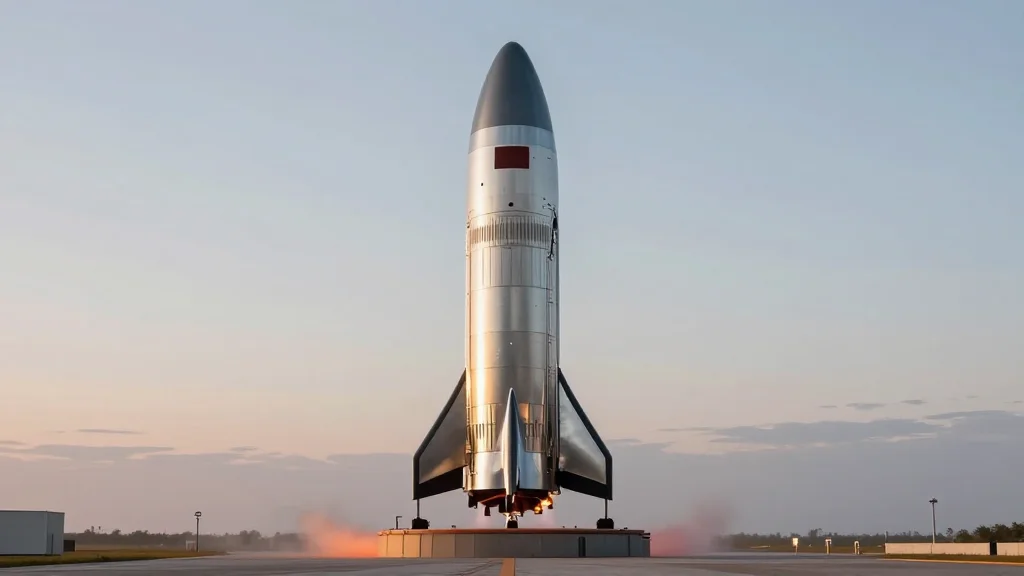
A Review of What Happened and What’s Next for Starship/Superheavy
Companies Mentioned
Why It Matters
The successful Flight 12 keeps SpaceX on track for its near‑term lunar crewed launch and accelerates development of the lunar Starlink network, both of which could reshape commercial space logistics and deep‑space tourism.
Key Takeaways
- •Starship Flight 12 completed with clean booster separation and re‑entries.
- •No major anomalies; data will guide refinements for upcoming tests.
- •Next test: Booster 20 and Ship 40 slated for July‑August 2026.
- •SpaceX announced lunar Starlink constellation and crewed Mars flyby plans.
Pulse Analysis
SpaceX’s latest Starship test underscored the rapid maturation of its fully reusable launch system. By achieving a clean separation of the Super‑Heavy booster and flawless re‑entry burns, the company demonstrated that the vehicle’s core propulsion and aerodynamic controls are converging toward operational reliability. The data harvested from Flight 12 will feed into software tweaks and structural refinements, shortening the feedback loop that has historically slowed heavy‑lift development cycles.
Looking ahead, the schedule now points to Booster 20 and Ship 40, targeted for a July‑August 2026 launch. The launch pad’s current health removes a potential bottleneck, allowing static‑fire testing to proceed without major delays. This cadence suggests SpaceX aims to compress its test cadence, a strategy that could shave months off the timeline for crewed lunar missions slated for 2034. Maintaining this momentum will be critical as the company balances rapid iteration with the safety standards required for human flight.
Beyond the hardware, SpaceX’s announcement of a lunar Starlink constellation and a two‑year Mars flyby mission signals a strategic pivot toward deep‑space services. A laser‑linked relay network around the Moon would enable high‑bandwidth communications for both government and commercial customers, opening new revenue streams. Simultaneously, securing a commander for the first interplanetary crewed flight positions SpaceX as a frontrunner in the emerging market for private Mars tourism and scientific exploration, potentially reshaping the economics of space travel for the next decade.
A review of what happened and what’s next for Starship/Superheavy
Comments
Want to join the conversation?
Loading comments...