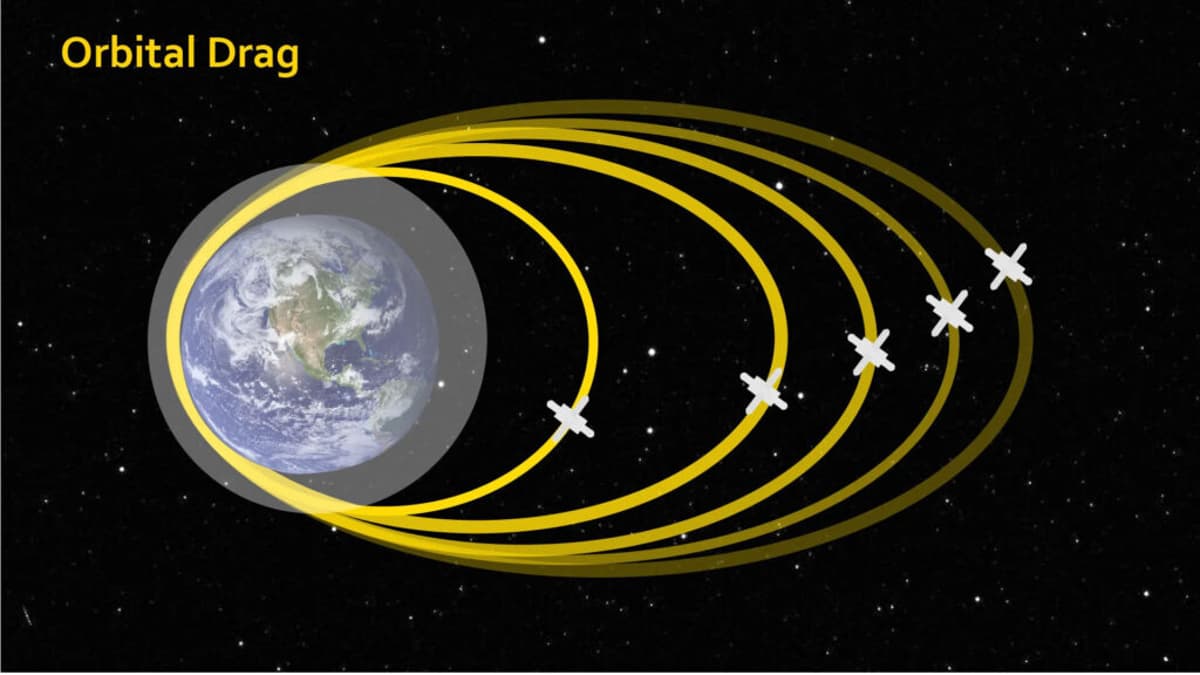
Why It Matters
The premature re‑entry demonstrates how solar‑driven atmospheric changes can both mitigate space debris and disrupt LEO traffic planning, underscoring the need for adaptive mitigation strategies across the satellite industry.
Key Takeaways
- •Solar activity accelerated Probe A's re‑entry by eight years
- •Atmospheric drag acted as natural debris remover
- •Unpredictable drag complicates LEO traffic management
- •Early perigee‑lowering maneuvers ensured responsible disposal
- •Ground impact risk estimated at 1 in 4,200
Pulse Analysis
The Van Allen Probe A’s unexpected descent provides a vivid case study of solar‑induced atmospheric drag, a phenomenon long theorized but rarely observed at this scale. During Solar Cycle 25’s peak, flares and coronal mass ejections heated the thermosphere, causing it to expand and increase density at altitudes once deemed safe for long‑term satellites. For a spacecraft in a highly elliptical orbit, this heightened drag at perigee acted like a brake, pulling the apogee inward and shortening the satellite’s lifetime by nearly a decade. The event shows how space weather can directly reshape orbital dynamics, turning the upper atmosphere into a natural de‑orbiting agent.
The incident highlights a paradox in Low Earth Orbit sustainability. Atmospheric expansion acts as an inadvertent ‘janitor,’ pulling defunct hardware and debris back into the flame and preserving orbital slots for new constellations. Simultaneously, the same expansion injects uncertainty into trajectory forecasts, complicating altitude control and collision avoidance in crowded shells. The Van Allen probes’ early perigee‑lowering burns demonstrate how proactive end‑of‑life planning can harness natural forces while mitigating unpredictable drag spikes, offering a template for responsible debris management.
Future satellite operations must embed real‑time space‑weather modeling into design and mitigation protocols. Agencies are improving atmospheric density forecasts, but broader adoption requires standardized data sharing and automated orbit‑adjustment for commercial fleets. The Van Allen scientific data continue to refine radiation‑belt models that shield next‑generation satellites from the solar events that hastened Probe A’s demise. Treating solar drag as both a tool and a variable enables operators to balance efficiency with responsible stewardship of the orbital environment.
A Satellite Crashes Home a Bit Too Soon
0
Comments
Want to join the conversation?
Loading comments...