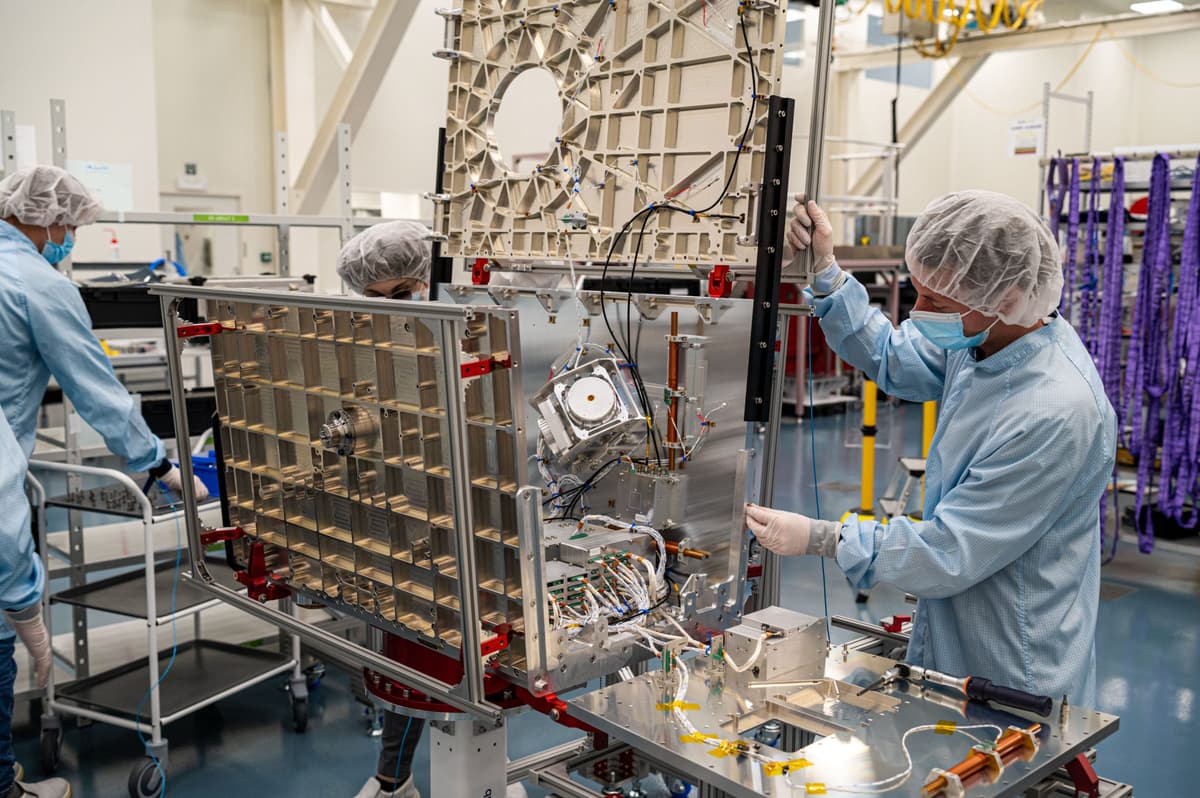
Aerospacelab to Build Eight Satellites for Xona’s Navigation Constellation
•January 13, 2026
0
Companies Mentioned

Why It Matters
The partnership accelerates deployment of a resilient LEO‑based PNT service, offering critical redundancy for both civilian and defense users as GPS vulnerabilities rise.
Key Takeaways
- •Aerospacelab builds eight LEO satellites for Xona's Pulsar
- •Pulsar aims to augment GPS with resilient PNT signals
- •Four satellites launch 2025; full constellation by 2027
- •Xona secured $4.6M Air Force contract for GPS‑challenged tests
Pulse Analysis
The surge in demand for low‑Earth‑orbit positioning, navigation and timing (PNT) solutions reflects growing concerns over GPS susceptibility to jamming, spoofing, and signal loss. LEO constellations can deliver stronger, more resilient signals with lower latency, making them attractive for critical infrastructure, autonomous vehicles, and defense applications. Xona’s Pulsar aims to fill this gap by providing a complementary layer that can operate when traditional GPS signals are degraded, positioning the company at the forefront of a rapidly expanding market.
Aerospacelab’s role as Xona’s transition manufacturing partner underscores a strategic approach to scaling satellite production. By leveraging Aerospacelab’s proven platform expertise, Xona can fast‑track early deployments while building its own California‑based factory for long‑term vertical integration. This hybrid model reduces time‑to‑market and spreads capital risk, a tactic increasingly adopted by space startups seeking rapid growth without sacrificing control over later‑stage manufacturing.
The collaboration carries significant implications for both commercial and defense sectors. Xona’s $4.6 million Air Force Research Laboratory award validates the technology’s potential in contested environments, signaling broader military interest in LEO‑based PNT. As the full eight‑satellite constellation becomes operational by 2027, the service could attract customers seeking redundancy for critical operations, driving competition among emerging PNT providers and prompting legacy GPS operators to consider hybrid solutions. The move also highlights Europe’s growing influence in satellite manufacturing, with Aerospacelab expanding its footprint through new facilities in Belgium and California.
Aerospacelab to build eight satellites for Xona’s navigation constellation
0
Comments
Want to join the conversation?
Loading comments...