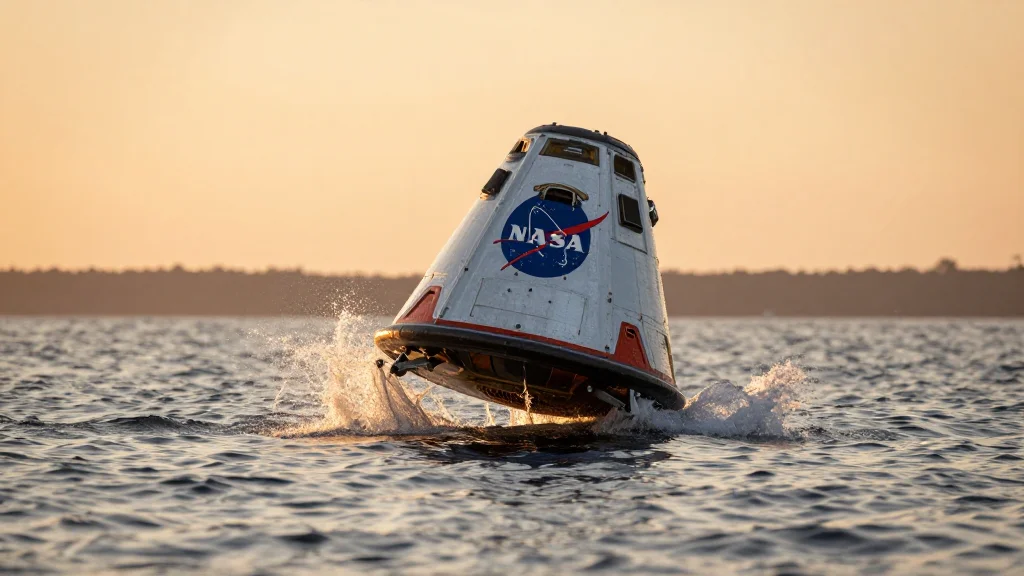
After More than 9 Days in Flight, NASA's Artemis II Is Set to Return to Earth
Companies Mentioned

Why It Matters
Artemis II proves the Orion system can safely carry humans around the moon, clearing a critical hurdle for NASA’s goal of returning humans to the lunar surface and establishing a sustainable presence.
Key Takeaways
- •Artemis II completed a 10‑day lunar flyby, splashing down near San Diego
- •Orion capsule endured 5,000 °F heat shield re‑entry, confirming design fixes
- •Crew included first woman and first person of color orbiting moon
- •NASA teamed with ESA and CSA; Europe built service module
Pulse Analysis
The Artemis II flight marked the first crewed deep‑space test of NASA’s Orion spacecraft since the Apollo era, delivering a near‑record re‑entry speed of more than 24,000 mph. Unlike the shuttle’s runway landings, Orion returned to the ocean, a deliberate design choice that simplifies recovery and reduces infrastructure demands. The successful splashdown off California, captured by live video feeds, reassured both engineers and the public that the vehicle’s thermal protection system—upgraded after the Artemis I heat‑shield anomaly—performed as intended during the six‑minute communications blackout.
Beyond the hardware, Artemis II showcased an unprecedented level of international collaboration. The European Space Agency supplied the service module’s solar arrays and main engine, while the Canadian Space Agency contributed astronaut Jeremy Hansen, highlighting a shift from the all‑American crews of Apollo. The crew’s diversity—featuring Christina Koch, the first woman to travel beyond low Earth orbit, and Victor Glover, the first person of color to orbit the moon—signals NASA’s broader commitment to inclusive exploration. Data gathered from thousands of images and hours of audio will feed into design refinements for the lunar lander and deep‑space habitats slated for future missions.
Looking ahead, Artemis III aims to land astronauts on the lunar South Pole as early as 2028, though schedule optimism remains tempered by typical program delays. NASA plans a 2027 test flight to validate the integrated lunar lander in Earth orbit, leveraging commercial partners such as SpaceX and Blue Origin. Successful execution of Artemis II not only de‑risky the Orion platform but also strengthens the commercial and geopolitical case for a sustained lunar economy, positioning the United States to lead future Artemis‑based ventures and potential Mars missions.
After more than 9 days in flight, NASA's Artemis II is set to return to Earth
Comments
Want to join the conversation?
Loading comments...