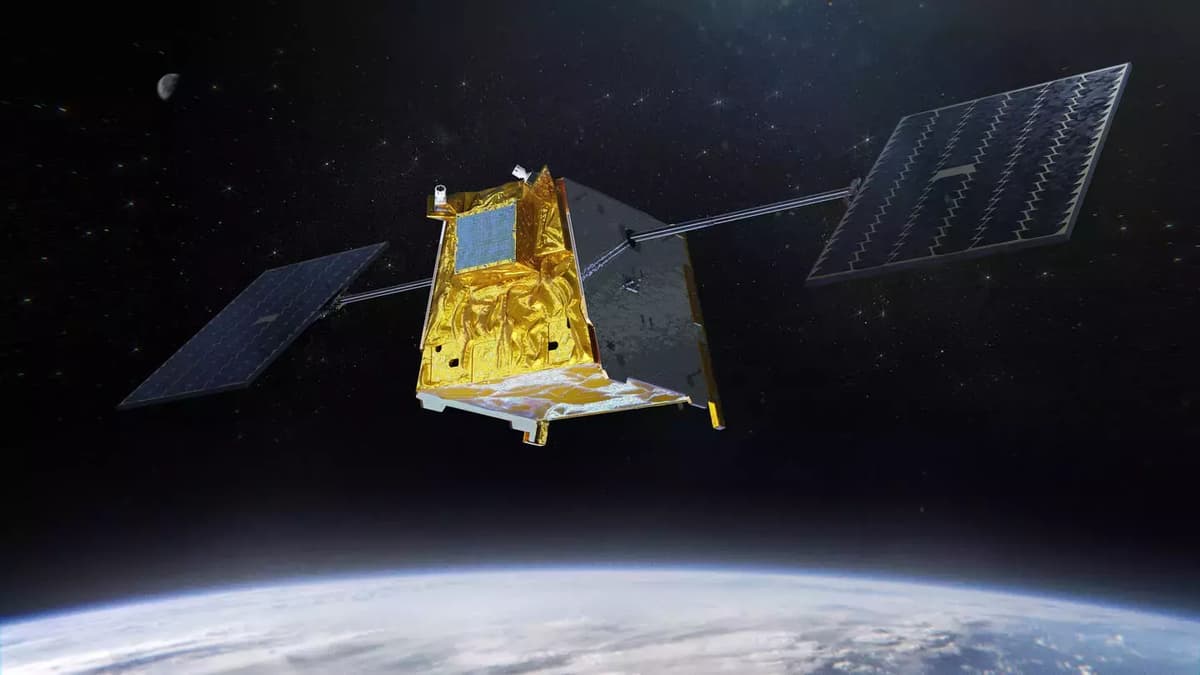
Airbus Plans Space Radio Access Network Demonstrator With Tech Partners
•January 14, 2026
0
Companies Mentioned


Why It Matters
A standardized 5G NTN will accelerate global connectivity and lower reliance on proprietary satellite solutions, opening new markets for operators and defense customers.
Key Takeaways
- •Airbus launches SpaceRAN demo for 5G satellite connectivity.
- •Ground test simulates two LEO satellites with handover scenarios.
- •In‑orbit payload slated for 2027 launch, testing 2028.
- •Partners include Deutsche Telekom, Eutelsat, and Keysight.
- •Aims to create open, non‑proprietary NTN standards.
Pulse Analysis
The race to extend 5G beyond terrestrial cells has accelerated as operators seek truly global coverage. Non‑terrestrial networks (NTN) promise to bridge the connectivity gap in remote regions, maritime routes, and high‑altitude platforms. Airbus, leveraging its Arrow platform and deep satellite heritage, announced the UpNext SpaceRAN demonstrator to validate a software‑defined 5G base station in low‑Earth orbit. By combining a ground‑based emulation of a two‑satellite constellation with an upcoming in‑orbit payload, the program targets the practical challenges of beam steering, handover latency, and spectrum coordination that have limited earlier trials.
A core element of the testbed is Aalyria’s Spacetime RIC, which injects artificial‑intelligence‑driven control loops into the radio access network. The controller continuously optimizes beam patterns, power allocation, and handover decisions based on real‑time telemetry, promising higher throughput and lower latency than static configurations. Collaborators such as Deutsche Telekom, Eutelsat, Keysight, and ST Engineering iDirect contribute ground‑segment equipment, RF testing rigs, and integration expertise, creating an ecosystem that mirrors a future open‑standard marketplace. By eschewing proprietary firmware, the consortium hopes to lower entry barriers for new satellite operators and accelerate innovation cycles.
If successful, SpaceRAN could reshape the commercial and defense communications landscape. An open 5G NTN standard would enable seamless roaming between terrestrial and satellite cells, allowing mobile operators to offer truly ubiquitous service without negotiating multiple vendor contracts. Military users would gain sovereign, secure links that are less vulnerable to ground‑based infrastructure disruptions. The 2027 launch window aligns with broader industry milestones, including the FCC’s 2026 decision to allocate additional spectrum for satellite‑based 5G. Airbus’s leadership in this arena positions it to capture a growing share of the multi‑billion‑dollar space‑based connectivity market.
Airbus Plans Space Radio Access Network Demonstrator With Tech Partners
0
Comments
Want to join the conversation?
Loading comments...