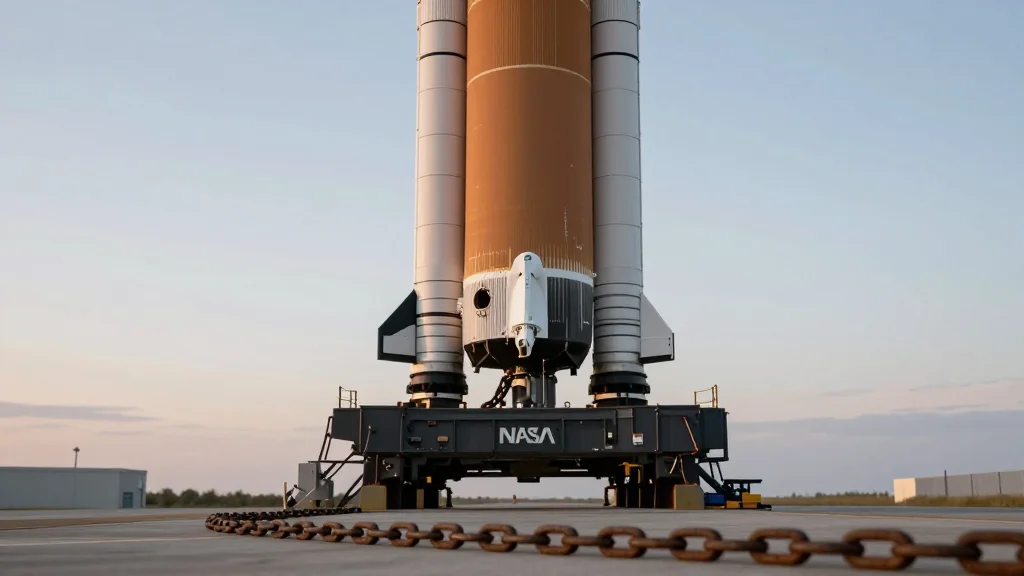
America Is Preparing to Land Humans on the Moon While Quietly Proposing to Terminate 53 Science Missions, Lay Off Thousands of Researchers, and Cancel Every Partnership with Europe — and Calling What Remains a Leaner, More Focused Program
Why It Matters
The proposed cuts threaten U.S. leadership in space science, jeopardize critical climate and planetary data, and risk dismantling long‑standing international collaborations. A reduced science portfolio could also erode the domestic research workforce and diminish the strategic value of the Artemis program.
Key Takeaways
- •NASA FY2027 budget cuts total 23% to $18.8 billion
- •Science Mission Directorate slashed 46%, losing $3.36 billion
- •53 science missions, including Juno and New Horizons, face termination
- •Artemis-related missions stay funded, highlighting exploration priority
- •Bipartisan Congress likely to reject deepest cuts
Pulse Analysis
The FY 2027 budget request marks a stark pivot for NASA, reallocating resources toward the Artemis lunar agenda while slashing the agency’s scientific engine. By trimming the Science Mission Directorate by nearly half, the administration aims to concentrate funding on human exploration, yet this strategy overlooks the long‑term value of discovery missions that drive technology spin‑offs and inspire the next generation of engineers. The proposed $13.2 billion in lifecycle costs for the 53 at‑risk missions underscores the scale of the potential loss, spanning flagship observatories, planetary probes, and climate monitors.
Beyond the immediate scientific setbacks, the cuts threaten a web of international partnerships that have become essential to large‑scale space endeavors. Projects such as the ESA‑led Rosalind Franklin rover, the LISA gravitational‑wave observatory, and the EU’s Euclid telescope rely on U.S. hardware and launch contributions; their termination would strain diplomatic ties and set a precedent for unilateral disengagement. Domestically, the elimination of the Office of STEM Engagement and the looming layoffs of thousands of researchers risk a talent drain, weakening the United States’ capacity to innovate and maintain a competitive edge in the burgeoning commercial space sector.
Congressional reaction has already coalesced around a bipartisan defense of NASA science, with letters from over 100 lawmakers urging a $9 billion allocation for the Science Mission Directorate. The House subcommittee’s proposal to keep the overall NASA budget flat while only modestly trimming science funding reflects a pragmatic compromise that could preserve critical missions and partnerships. As the appropriations process unfolds, the outcome will signal whether the United States can balance its ambition to return humans to the Moon with the imperative to sustain a vibrant, collaborative space science enterprise that underpins both national security and global scientific progress.
America is preparing to land humans on the Moon while quietly proposing to terminate 53 science missions, lay off thousands of researchers, and cancel every partnership with Europe — and calling what remains a leaner, more focused program
Comments
Want to join the conversation?
Loading comments...