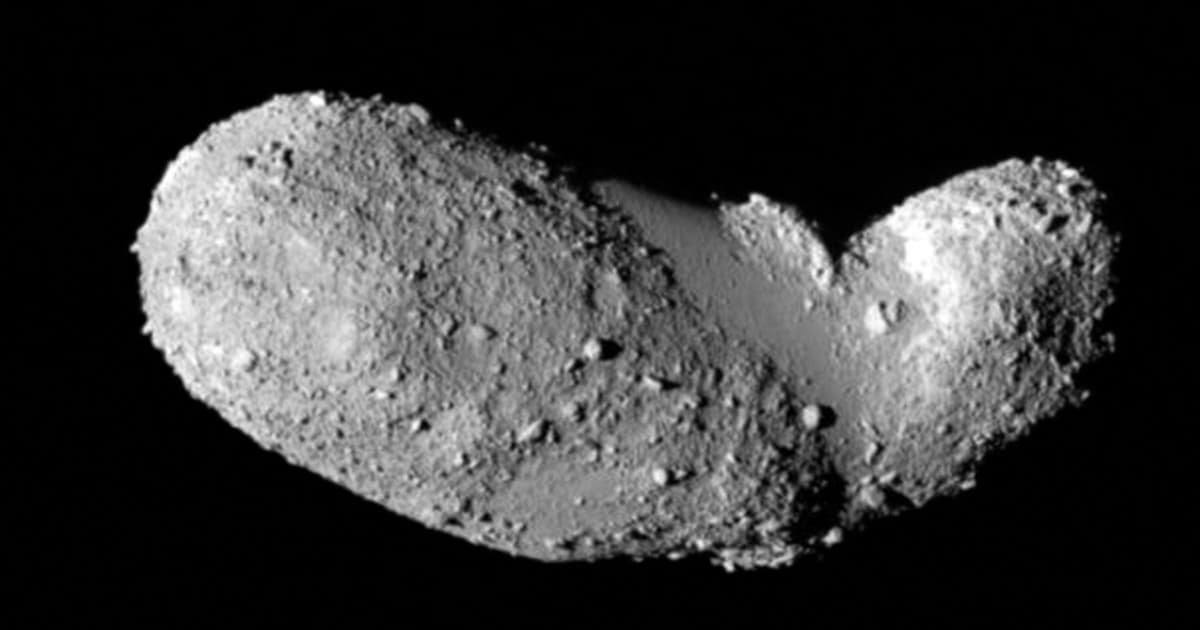
An Asteroid Long Thought to Be a Chunk of the Moon May Be Ordinary Space Rock Instead, a New Study Finds, as China’s Tianwen-2 Circles It to Grab a Sample
Why It Matters
The asteroid’s origin determines whether the sample will be a rare lunar far‑side specimen or a pristine early‑Solar‑System chondrite, influencing scientific priorities and commercial interest in asteroid mining. Resolving the debate also validates space‑weathering models and showcases China’s growing deep‑space capabilities.
Key Takeaways
- •Study links Kamoʻoalewa to Flora family LL chondrite, not lunar.
- •1.001 µm absorption matches common stony meteorites, not Moon rock.
- •Lab‑weathered chondrite powder reproduces asteroid’s red spectrum.
- •Tianwen‑2 will return samples by 2027, settling origin debate.
- •Quasi‑satellite may stay near Earth for centuries, offering rare access.
Pulse Analysis
Kamoʻoalewa, discovered in 2016, belongs to a rare class of quasi‑satellites that orbit the Sun yet linger near Earth for centuries. Its proximity and brightness make it a unique laboratory for studying early Solar System material, prompting speculation that it could be a fragment of the Moon’s far side. The asteroid’s modest size—roughly 40 to 100 metres—combined with a rapid 28‑minute rotation, has kept it in the spotlight as scientists race to decipher its true nature.
The breakthrough came from a multinational team publishing in Nature Communications, which re‑examined the asteroid’s reflectance spectrum and identified a diagnostic absorption at 1.001 µm. This feature aligns with LL‑chondrite meteorites, the most common stony rocks, rather than lunar basalt. By laser‑irradiating LL‑chondrite samples to simulate space weathering, the researchers reproduced Kamoʻoalewa’s reddish hue only when the material was reduced to fine powder, highlighting grain‑size effects over composition. Dynamical modeling traced a plausible delivery path through the ν6 secular resonance, linking the rock to the Flora family in the inner asteroid belt.
The stakes are high because Tianwen‑2, China’s first asteroid‑sample mission, will retrieve material from Kamoʻoalewa and return it to Earth by 2027. If isotopic and mineral analyses confirm a lunar signature, the mission would deliver the first far‑side Moon sample without a crewed landing, reshaping lunar science and potential commercial exploitation. Conversely, a chondritic result would provide a pristine record of early Solar System processes and validate models of space‑weathering that can mask an asteroid’s true identity. Either outcome underscores the growing strategic importance of sample‑return missions and positions China as a key player in deep‑space exploration.
An asteroid long thought to be a chunk of the Moon may be ordinary space rock instead, a new study finds, as China’s Tianwen-2 circles it to grab a sample
Comments
Want to join the conversation?
Loading comments...