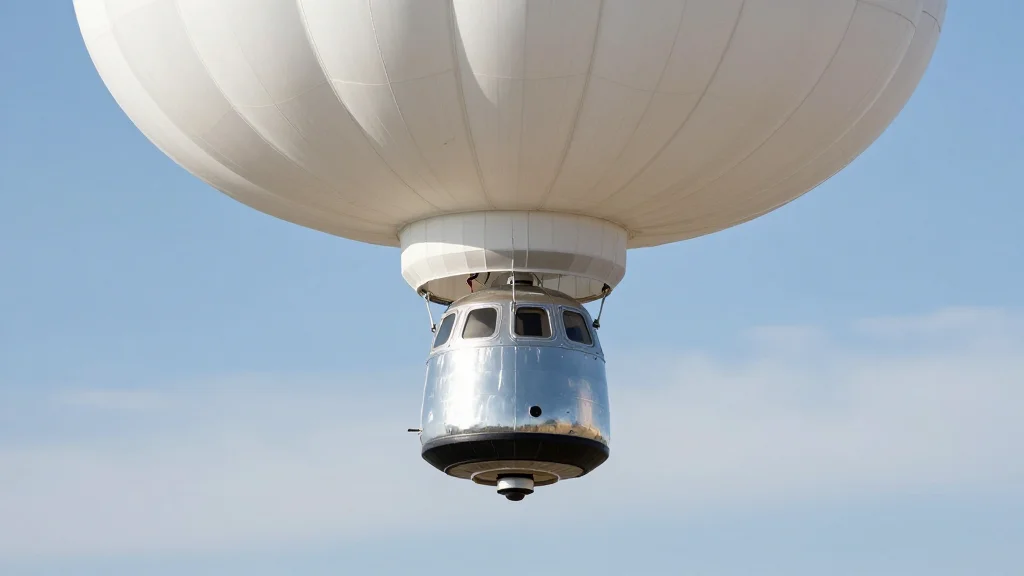
AnduraX to Fly India's First Private Re‑entry Vehicle Test in June 2026

Why It Matters
AnduraX’s test represents a tangible shift from government‑only re‑entry capabilities to a private sector that can offer end‑to‑end payload services, from launch to return. By demonstrating low‑G, runway‑style landings, the startup could lower the cost and turnaround time for microgravity research, making India a more attractive destination for biotech and advanced materials firms. The broader impact extends to national security and strategic autonomy. A domestic reusable re‑entry platform reduces reliance on foreign return‑to‑Earth services, aligning with India’s ambition to build a self‑sufficient space ecosystem that supports both commercial and scientific missions.
Key Takeaways
- •ADM‑01 balloon‑drop test scheduled for the first week of June 2026 at 25,000 m altitude
- •ARES vehicle designed for 100 kg payloads targeting microgravity research and in‑space manufacturing
- •AnduraX aims for its first orbital re‑entry mission by 2028
- •Supported by government schemes (NIDHI PRAYAS, SISFS, MeitY TIDE) and KickSky Space Lab accelerator
- •India’s BioE3 Policy allocates ~₹92 billion ($1.1 billion) for biomanufacturing and space research
Pulse Analysis
AnduraX’s approach mirrors the incremental path taken by early SpaceX and Blue Origin programs, using low‑cost high‑altitude balloon drops to validate critical subsystems before committing to orbital flights. The decision to focus on low‑G re‑entry and runway landings reflects a pragmatic assessment of India’s existing aerospace infrastructure, which already supports conventional aircraft operations. By leveraging runway recovery, AnduraX sidesteps the need for complex parachute or ocean splash‑down systems, potentially reducing mass and cost.
The timing aligns with a broader inflection point in India’s space policy. Recent reforms have streamlined licensing for private launch providers and opened up spectrum for satellite constellations, creating a fertile environment for ancillary services like payload return. If AnduraX can demonstrate reliable re‑entry, it could catalyze a new market segment, encouraging startups to design experiments specifically for return‑to‑Earth analysis, much as the U.S. commercial cargo market blossomed after SpaceX’s Dragon proved its capability.
However, challenges remain. Scaling from a 100 kg demonstrator to a commercially viable service will require significant capital, robust supply chains for heat‑shield materials, and sustained regulatory support. Competition from established players in Europe and the United States, which are also developing reusable return vehicles, could pressure AnduraX to accelerate its timeline or seek strategic partnerships. The outcome of the ADM‑01 test will be a bellwether for whether India can nurture a home‑grown re‑entry industry that competes on the global stage.
AnduraX to Fly India's First Private Re‑entry Vehicle Test in June 2026
Comments
Want to join the conversation?
Loading comments...