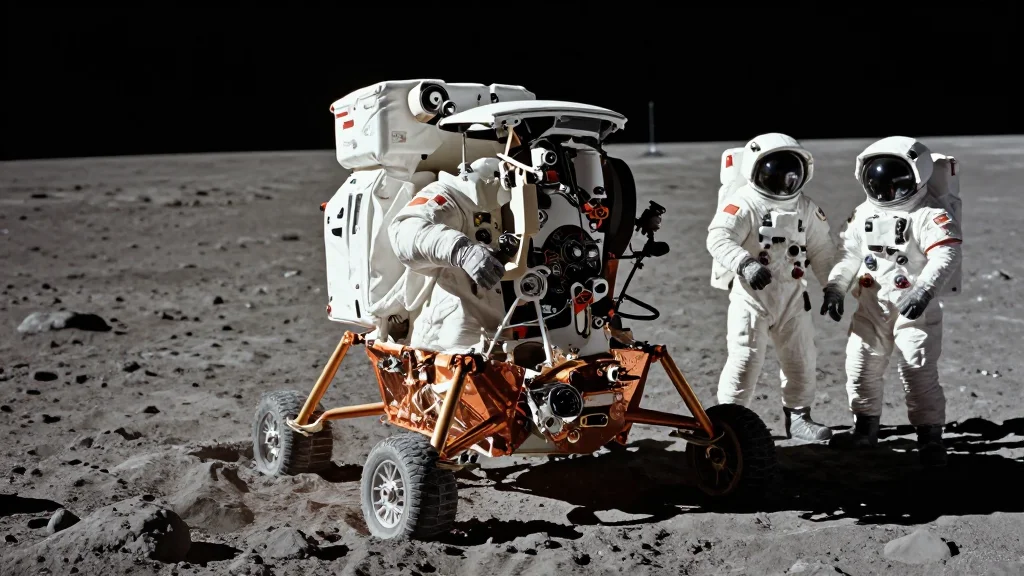
April 16, 1972: Apollo 16 Launches
Why It Matters
Apollo 16’s highland landing delivered unique geological samples that reshaped understanding of lunar evolution, while its timing highlighted the fiscal and political challenges that would end the Apollo era.
Key Takeaways
- •Apollo 16 launched April 16, 1972, crewed by John Young and Charlie Duke.
- •First Moon landing in lunar highlands at Descartes region.
- •Mission collected older volcanic rocks, expanding lunar geology knowledge.
- •Lunar Roving Vehicle enabled astronauts to travel farther on Moon.
- •NASA’s waning political backing signaled upcoming end of Apollo program.
Pulse Analysis
The April 16, 1972 launch of Apollo 16 marked a turning point in NASA’s lunar program. After two successful high‑profile missions, commander John Young and rookie Lunar Module pilot Charlie Duke set their sights on the Descartes highlands, a region over 7,400 feet higher than the Sea of Tranquillity. Their objective was to retrieve samples from ancient volcanic flows, a goal that required the newly introduced Lunar Roving Vehicle to cover distances previously unreachable on the Moon’s surface. The mission’s meticulous planning and execution demonstrated the agency’s growing confidence in complex extravehicular activities.
Scientific returns from Apollo 16 exceeded expectations. The crew returned over 95 kilograms of lunar material, including the famed “orange soil” and high‑land basaltic rocks that pre‑date the mare basalts collected on earlier flights. These specimens provided direct evidence of prolonged volcanic activity and a more intricate thermal history for the Moon, prompting revisions to models of lunar crust formation. By analyzing isotopic ages and mineral compositions, researchers could trace the timeline of lunar differentiation, offering insights that still inform current Artemis sample‑return strategies.
Yet the mission unfolded against a backdrop of diminishing political support. Vice President Spiro Agnew’s off‑hand remark at launch underscored a growing public fatigue with costly space endeavors. Budgetary pressures and shifting national priorities accelerated the decision to wind down Apollo, making Apollo 16 one of the program’s final triumphs. Its legacy lives on, shaping today’s commercial and governmental plans for sustainable lunar exploration and reinforcing the value of high‑land science for future missions.
April 16, 1972: Apollo 16 launches
Comments
Want to join the conversation?
Loading comments...