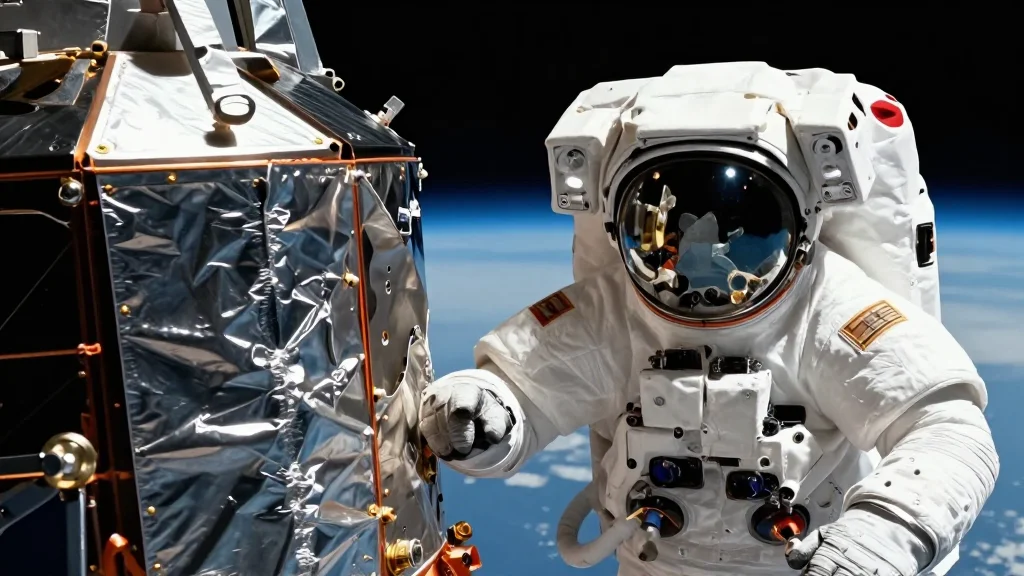
April 7, 1991: Compton Gamma Ray Observatory Is Deployed
Companies Mentioned

NASA
Why It Matters
CGRO’s unprecedented gamma‑ray sensitivity opened a new window on high‑energy astrophysics, shaping research priorities and informing the design of subsequent space telescopes. Its legacy underpins today’s multi‑messenger astronomy initiatives.
Key Takeaways
- •CGRO launched aboard Space Shuttle Atlantis in April 1991.
- •Thermal blanket snag required unscheduled spacewalk to fix antenna.
- •Four instruments achieved ten‑fold sensitivity over prior missions.
- •Mission revealed gamma‑ray bursts, blazars, and antimatter sources.
Pulse Analysis
The early 1990s marked a transformative era for NASA as it rolled out the Great Observatories program, a suite of space‑based telescopes each tuned to a distinct slice of the electromagnetic spectrum. While Hubble captured visible light and Chandra later probed X‑rays, the Compton Gamma Ray Observatory (CGRO) was tasked with the most energetic photons—gamma rays. Launched aboard Space Shuttle Atlantis on April 5, 1991, CGRO’s deployment on April 7 encountered an unexpected snag: a thermal blanket caught on a bolt, preventing the high‑gain antenna from deploying. Astronauts Jerry Ross and Jay Apt performed an impromptu EVA to free the blanket, a maneuver that underscored the mission’s high stakes and the crew’s adaptability.
Once operational, CGRO’s four scientific instruments—BATSE, OSSE, COMPTEL, and EGRET—delivered sensitivity roughly ten times greater than any predecessor, enabling the first systematic survey of the gamma‑ray sky. The Burst and Transient Source Experiment (BATSE) cataloged thousands of gamma‑ray bursts, revealing their isotropic distribution and hinting at a cosmological origin. EGRET mapped blazar jets and identified unexpected antimatter annihilation signatures near the Galactic center. These findings forced theorists to revise models of particle acceleration and high‑energy emission, cementing CGRO as a catalyst for the emerging field of high‑energy astrophysics.
The observatory’s premature retirement in 1999, prompted by a gyroscope failure, did not diminish its scientific footprint. Data archives continue to support contemporary multi‑messenger studies, where gamma‑ray observations are combined with neutrino and gravitational‑wave detections. Lessons learned from CGRO’s instrumentation and operational challenges directly informed the design of successors such as the Fermi Gamma‑ray Space Telescope, launched in 2008. As the industry pushes toward ever‑more sensitive detectors, CGRO’s legacy remains a benchmark for performance, risk mitigation, and the value of cross‑wavelength collaboration.
April 7, 1991: Compton Gamma Ray Observatory is deployed
Comments
Want to join the conversation?
Loading comments...