Arctic Weather Satellite Paves Way for Constellation
•January 22, 2026
0
Companies Mentioned


Why It Matters
The increased observation frequency will improve forecasts of rapid weather events, especially in the fast‑warming Arctic and vulnerable regions like the Mediterranean. It also validates a rapid, budget‑constrained satellite development approach for future European meteorological missions.
Key Takeaways
- •Prototype proved small satellite can support operational forecasts
- •EPS‑Sterna constellation slated for 2029 launch, 20 satellites total
- •Revisit time under three hours, improving Arctic data frequency
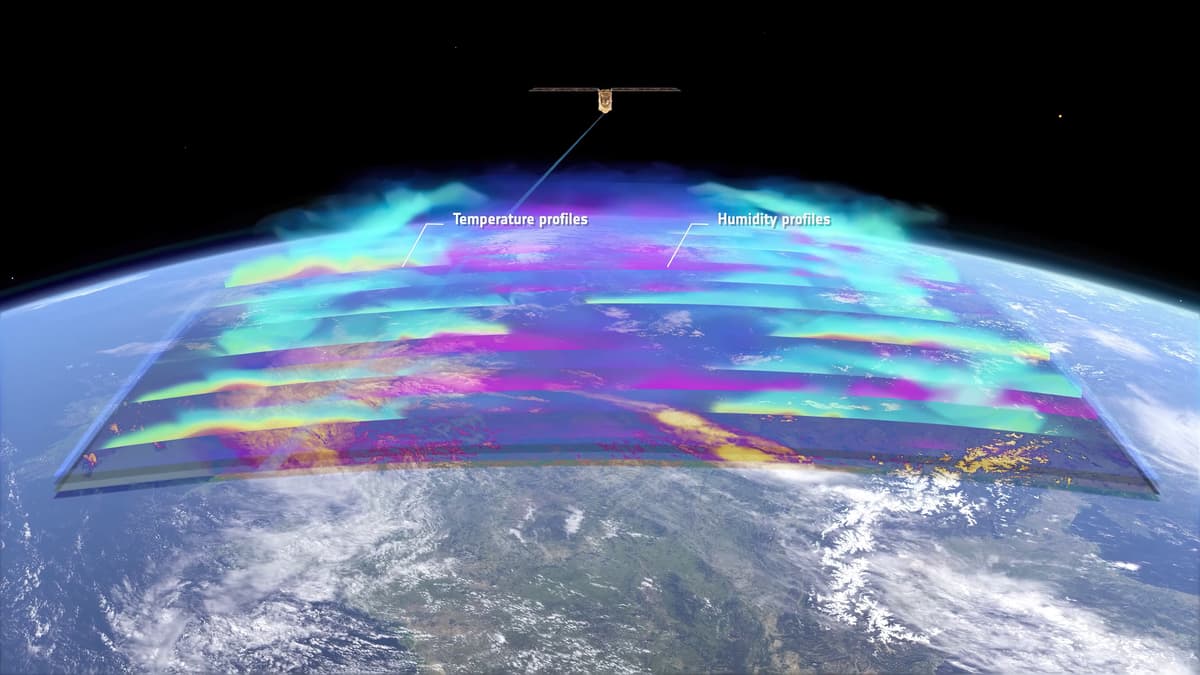
- •Microwave radiometer measures humidity, enhancing short‑term forecasts
- •ESA‑Eumetsat partnership mirrors Meteosat, MetOp cooperation model
Pulse Analysis
Climate‑driven volatility in the Arctic has turned the region into a data‑starved frontier for meteorologists. Traditional polar‑orbiting platforms revisit a given spot only twice daily, limiting the ability to capture fast‑changing water‑vapour concentrations that drive storm development. By embracing a New Space philosophy—rapid development, modest budgets, and modular design—ESA demonstrated that a miniature satellite can fill this gap, delivering high‑resolution humidity profiles that feed directly into short‑range models. This paradigm shift not only accelerates innovation but also reduces reliance on legacy, costly missions.
The Arctic Weather Satellite’s cross‑track scanning microwave radiometer operates alongside larger sensors from EUMETSAT, NOAA and CMA, creating a synergistic observation network. ECMWF’s decision to ingest its data into operational forecasts underscores the instrument’s accuracy and the value of diversified sensor suites. Such integration enhances model initialization, sharpening nowcasts and improving the predictability of severe events. Moreover, the satellite’s success validates the feasibility of scaling prototype technology into a full constellation without sacrificing data quality.
Looking ahead, the EPS‑Sterna constellation will expand coverage dramatically, offering global observations with less than three‑hour revisit intervals and data availability within an hour of acquisition. This cadence promises more timely warnings for extreme weather, benefiting sectors from aviation to agriculture across Europe and beyond. The partnership model—mirroring Europe’s Meteosat and MetOp programs—ensures shared risk and streamlined procurement, positioning the constellation as a cornerstone of the continent’s future meteorological infrastructure.
Arctic Weather Satellite paves way for constellation
0
Comments
Want to join the conversation?
Loading comments...