Companies Mentioned


Why It Matters
The mission revives Arianespace’s launch schedule, reinforcing Europe’s position in the competitive commercial launch market. It also highlights the rising demand for satellite life‑extension services that can defer costly replacements.
Key Takeaways
- •Ariane 5 lifted off from Kourou on Aug 22, 2020
- •Launched Galaxy‑30, MEV‑2, BSAT‑4b into GTO
- •First Arianespace launch since pandemic‑induced shutdown
- •MEV‑2 extends Intelsat 10‑02 operational life
- •Shows robust demand for GEO communications satellites
Pulse Analysis
The August 2020 Ariane 5 flight was more than a routine lift‑off; it represented a strategic recovery for Europe’s launch industry after months of pandemic‑driven inactivity. Kourou’s temporary closure forced Arianespace to postpone several missions, and a scrubbed attempt two weeks earlier highlighted the operational fragility of spaceports during global crises. By successfully delivering three payloads, the company demonstrated resilience, re‑establishing its cadence at a time when commercial launch capacity is under intense pressure from both legacy providers and emerging entrants.
Galaxy 30 and BSAT‑4b cater to the ever‑growing demand for high‑throughput communications services, serving Intelsat’s global network and Japan’s broadcasting needs respectively. Their placement into geostationary transfer orbit paves the way for expanded broadband coverage, especially in underserved regions. Meanwhile, MEV‑2, a satellite‑life‑extension vehicle built by Northrop Grumman, underscores a shift toward cost‑effective asset management. By docking with Intelsat 10‑02 and providing additional fuel and maneuvering capability, MEV‑2 can extend the host satellite’s service life by several years, delaying the need for a costly replacement and illustrating the commercial viability of on‑orbit servicing.
The broader implication for the space sector is clear: demand for GEO capacity remains robust, and operators are increasingly seeking innovative solutions to maximize the return on existing hardware. Arianespace’s ability to launch both traditional communications satellites and a servicing platform in a single mission signals flexibility that appeals to a diversified client base. As satellite constellations proliferate and the market for on‑orbit servicing matures, launch providers that can accommodate mixed payloads will likely capture a larger share of the evolving commercial space economy.
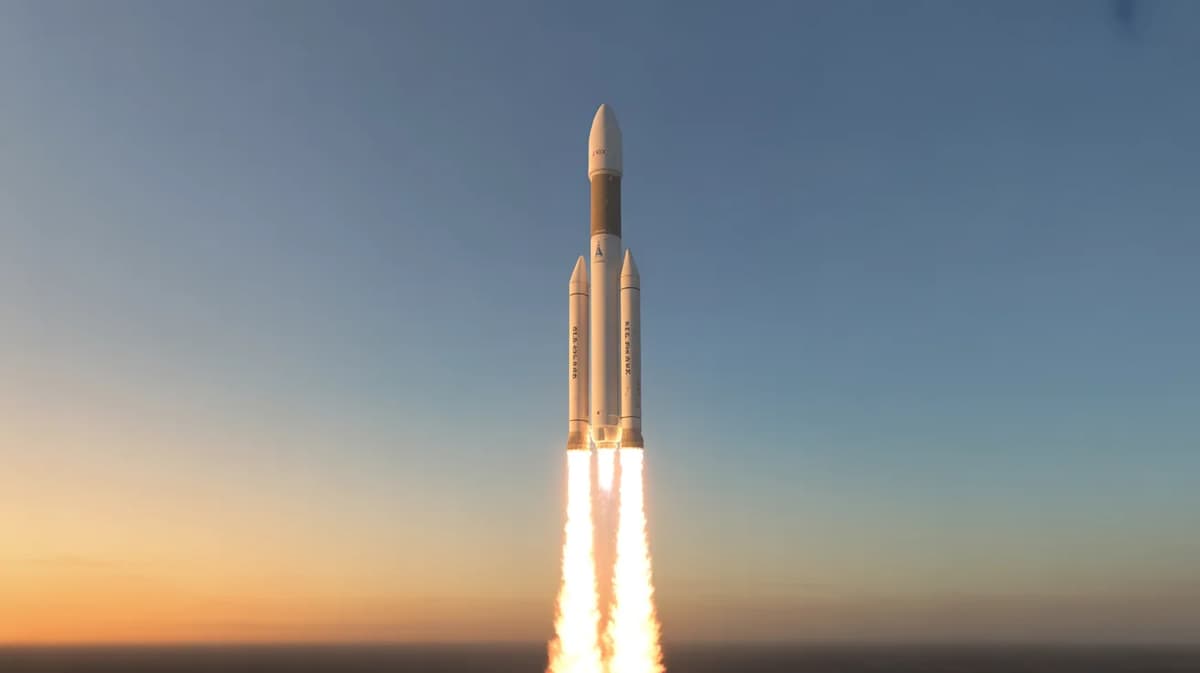
Ariane 5 launches three satellites
0
Comments
Want to join the conversation?
Loading comments...