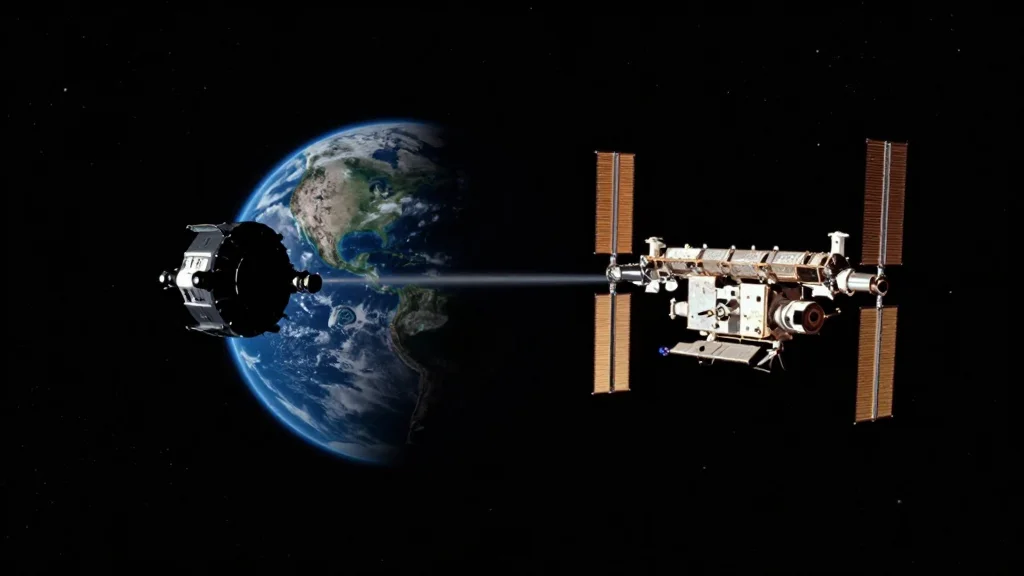
Artemis 2 and Tiangong Crews Set Record for Greatest Human Separation in Space

Companies Mentioned

NASA
Why It Matters
The record demonstrates that human spaceflight is transitioning from a single‑orbit paradigm to a multi‑node network spanning low‑Earth orbit, cislunar space, and eventually deep‑space destinations. This shift demands new technical standards for communication, navigation, and safety, prompting agencies and commercial players to collaborate on interoperable infrastructure. Moreover, the milestone underscores the geopolitical dimension of space exploration. As NASA and CNSA each operate crewed platforms at opposite ends of the Earth‑Moon system, the record highlights both competition and the potential for coordinated scientific endeavors, setting the stage for future joint missions or at least shared situational awareness.
Key Takeaways
- •Artemis 2 Orion capsule and Tiangong crew were 260,754 miles (419,643 km) apart on April 6, the farthest human separation ever recorded.
- •The previous record, set by Apollo 13 in April 1970, stood for 54 years.
- •NASA’s Johnson Space Center may verify the distance calculations performed by astrophysicist Jonathan McDowell.
- •The record signals a shift toward a distributed human presence across low‑Earth orbit and cislunar space.
- •Future missions like Artemis 3 and China’s higher‑inclination Tiangong module could push the separation beyond 300,000 miles.
Pulse Analysis
The Artemis 2–Tiangong distance record is less a headline stunt than a tangible metric of how space architecture is evolving. Historically, human presence was anchored to a single orbital platform—the ISS—making distance a function of altitude alone. With two active crewed stations on opposite sides of the Earth‑Moon system, the geometry now creates a triangle that expands the human footprint. This has practical implications: communication latency between the Moon‑orbiting Orion and Tiangong will approach two seconds, demanding more autonomous onboard decision‑making and robust cross‑agency data links.
From a market perspective, the record validates the business case for satellite constellations that provide low‑latency, high‑bandwidth links between cislunar assets. Companies like SpaceX and OneWeb are already positioning themselves to service both LEO and lunar relay needs. As agencies plan for lunar gateways and surface habitats, the demand for reliable inter‑node connectivity will accelerate, opening revenue streams for commercial providers that can meet stringent security and interoperability standards.
Strategically, the achievement underscores a subtle but growing competition between the United States and China in the crewed space domain. While both nations have pledged cooperation in certain scientific areas, the record illustrates how each is extending its operational envelope. The next logical step—coordinated tracking and collision avoidance for assets separated by hundreds of thousands of miles—will require diplomatic frameworks that go beyond the current bilateral agreements. The record thus serves as both a technical milestone and a diplomatic barometer for the next decade of human spaceflight.
Artemis 2 and Tiangong Crews Set Record for Greatest Human Separation in Space
Comments
Want to join the conversation?
Loading comments...