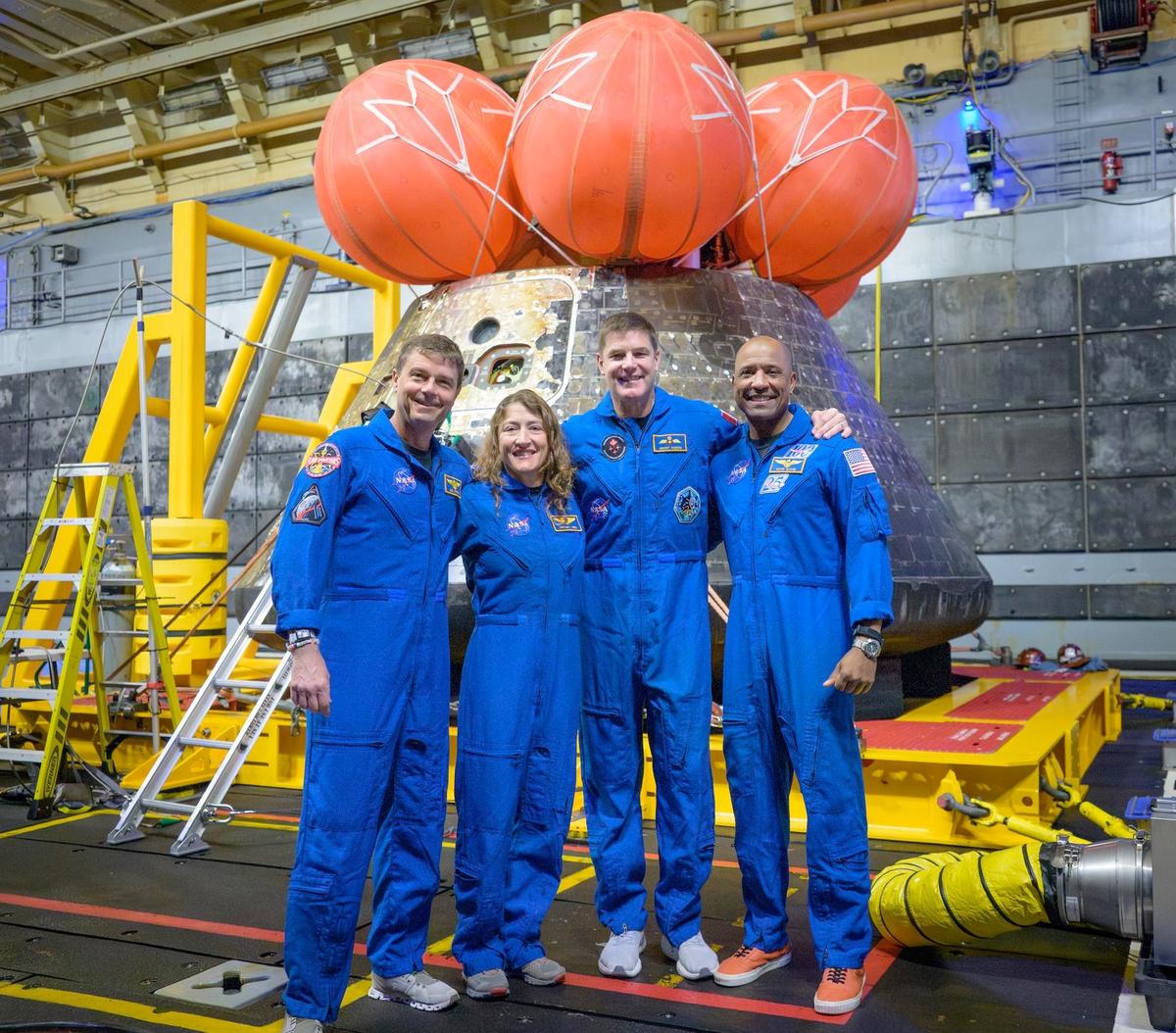
Artemis 2 Came Home in Triumph. Artemis 3 Must Survive the Real Test.
Why It Matters
Artemis 3 will prove the United States can integrate public‑private lunar operations at scale, while unresolved cost and cybersecurity compliance risks could stall the entire Artemis architecture.
Key Takeaways
- •Artemis 2 crew splashed down after 252,760‑mile lunar flyby.
- •Artemis 3 targets south‑pole landing using SpaceX Starship HLS.
- •NASA committed $228 M for Axiom AxEMU suits, testing in 2027.
- •CMMC compliance gap threatens 80‑118 k contractors, risking program schedule.
- •Artemis launch cost tops $4 B per mission, prompting budget cuts.
Pulse Analysis
The successful return of Orion and its four‑person crew not only ended a 50‑year hiatus but also delivered a powerful public narrative for NASA. By achieving a record‑breaking distance and showcasing diverse astronauts, Artemis 2 reinforced political and public support, laying a foundation for the more ambitious Artemis 3 objectives. The mission’s next phase shifts focus from orbital demonstration to a surface operation at the lunar south pole, a region rich in water ice that could sustain long‑term habitation. NASA’s reliance on SpaceX’s Starship Human Landing System—backed by a $2.89 billion contract—introduces both speed and uncertainty, as the vehicle has yet to perform a lunar touchdown or on‑orbit propellant transfer. Parallel development of Blue Origin’s Blue Moon adds strategic redundancy but also inflates the lander budget, now exceeding $6 billion for both providers.
Beyond hardware, Artemis 3’s success hinges on the health of the aerospace supply chain. The Cybersecurity Maturity Model Certification (CMMC) now mandates Level 2 compliance for tens of thousands of contractors, yet only a few hundred assessors are available. This bottleneck threatens to delay critical components, from suit fabrics to propulsion subsystems, and could force small firms—who make up 88 % of the sector—out of the market. With compliance audits costing over $100,000 for modest suppliers, the financial strain compounds an already hefty $4.1 billion per‑mission launch price for SLS/Orion. A projected 23 % cut to NASA’s budget would exacerbate these pressures, jeopardizing both current and future Artemis milestones.
Policymakers therefore face a three‑pronged decision: expand CMMC assessor capacity, provide clear timelines for certification milestones, and alleviate the regulatory cost burden on small businesses. Aligning NASA’s and DoD’s cybersecurity requirements through initiatives like the Revolutionary FAR Overhaul could streamline audits and preserve a robust industrial base. Without such interventions, the Artemis program risks stalling not because of engineering challenges on the Moon, but due to supply‑chain fragility on Earth, undermining the United States’ long‑term lunar ambitions.
Artemis 2 came home in triumph. Artemis 3 must survive the real test.
Comments
Want to join the conversation?
Loading comments...