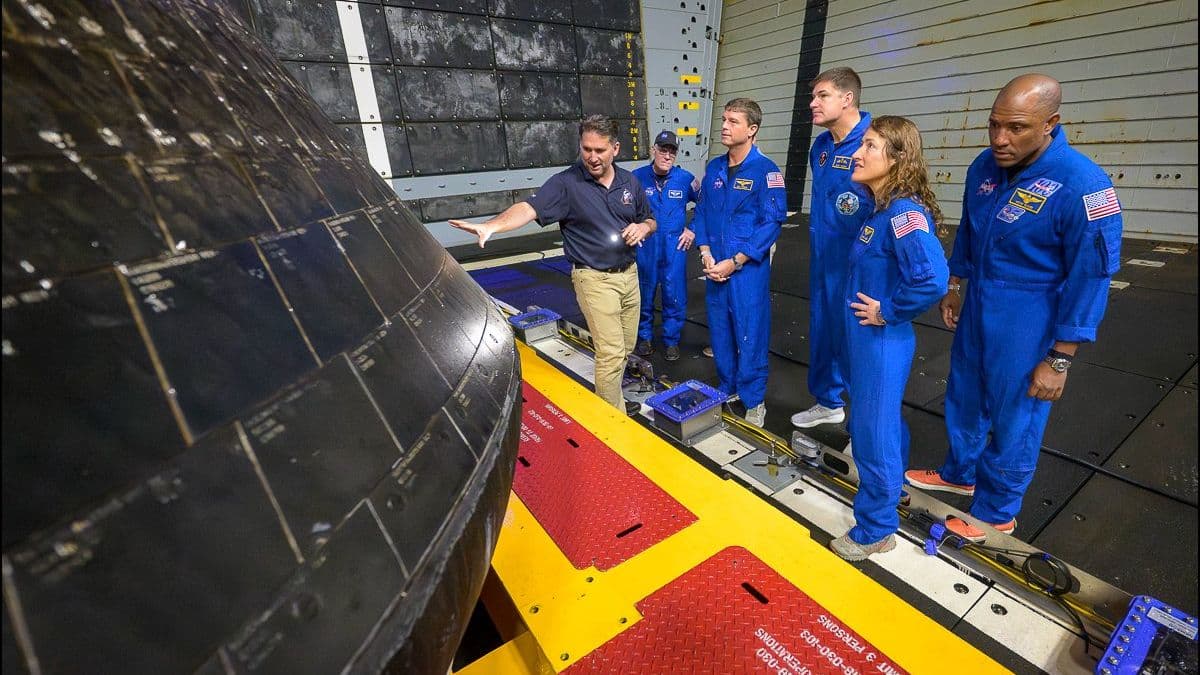
Artemis 2's Heat Shield Seems to Have Aced Its Trial by Fire
Companies Mentioned

Why It Matters
A reliable heat shield is critical for crew safety and mission success, and Artemis 2’s performance restores confidence in NASA’s lunar return architecture. The results will shape design choices for Artemis 3’s orbital tests and Artemis 4’s lunar surface operations.
Key Takeaways
- •Artemis 2 heat shield survived re‑entry with minimal damage
- •NASA altered trajectory to reduce exposure time at extreme temperatures
- •Artemis 1 heat shield suffered unexpected damage, prompting design scrutiny
- •Future Artemis missions will adopt new heat shield designs
- •Artemis 3 will test docking in Earth orbit; Artemis 4 targets lunar south pole
Pulse Analysis
Re‑entering Earth from lunar velocity subjects a spacecraft to some of the most hostile environments in aerospace. The Orion capsule’s ablative heat shield, measuring 16.5 feet across, must absorb and dissipate temperatures that can exceed 5,000 °F (2,800 °C) while maintaining structural integrity. Artemis 1, the program’s first uncrewed test in late 2022, demonstrated the shield’s capability but also revealed unexpected surface erosion and deeper material loss, sparking a debate among engineers about whether a redesign was necessary for crewed flights. Advances in ablative composites and precise thermal modeling have been crucial to achieving this resilience.
For Artemis 2, NASA elected to retain the proven shield geometry but altered the flight path, entering the atmosphere at a steeper angle to cut the time spent in the hottest regime. The four‑person crew—Commander Reid Wiseman, Victor Glover, Christina Koch and CSA astronaut Jeremy Hansen—conducted a hands‑on inspection shortly after the April 10 splashdown. Their assessment noted only a small char strip along the shoulder joint, while the main heat‑shield surface appeared “wonderful,” confirming that the trajectory tweak effectively protected the vehicle. The crew’s visual confirmation also eases the certification timeline for subsequent crewed flights.
The successful heat‑shield performance restores confidence for the next phases of the Artemis program. Artemis 3 will remain in Earth orbit, focusing on docking procedures with the upcoming SpaceX Starship and Blue Origin Blue Moon lunar landers, while Artemis 4 will venture to the lunar south pole, demanding another high‑temperature re‑entry. NASA’s decision to develop a new shield architecture for those missions reflects lessons learned, and the data will inform commercial partners and future deep‑space crewed vehicles, reinforcing the United States’ leadership in human space exploration. With Artemis 3 slated for late 2026 and Artemis 4 for early 2028, the shield data will shape budgeting and procurement decisions across NASA and its industrial partners.
Artemis 2's heat shield seems to have aced its trial by fire
Comments
Want to join the conversation?
Loading comments...