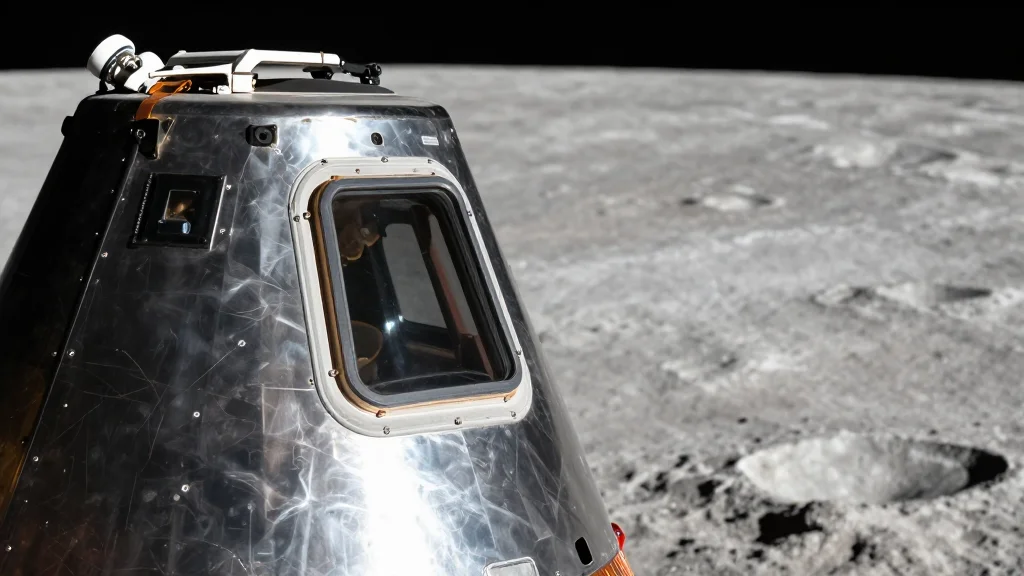
Artemis II Crew Nears Moon as Spacecraft Enters Lunar Orbit Phase
Why It Matters
Artemis II proves NASA’s crewed deep‑space capabilities, unlocking commercial lunar opportunities and advancing the United States’ strategic presence beyond low Earth orbit.
Key Takeaways
- •Artemis II launched April 1, 2026, from Kennedy Space Center.
- •Four astronauts entered lunar sphere of influence on Monday.
- •First crewed lunar flyby since 1972, 53‑year gap.
- •Mission validates Orion capsule and SLS rocket for deep space.
- •Stimulates commercial lunar market and future NASA partnerships.
Pulse Analysis
The Artemis II flight marks a watershed moment for NASA’s return to crewed lunar exploration. After a decade of development, the SLS super‑heavy lift vehicle and Orion crew capsule have finally demonstrated their combined performance in a real‑world environment. By achieving lunar orbit insertion, the mission validates critical navigation, communications, and life‑support systems that will underpin the agency’s broader Artemis roadmap, which envisions sustainable presence on the Moon by the late 2020s.
Technically, the spacecraft’s entry into the Moon’s sphere of influence triggers a gravitational assist that accelerates the Orion module for a high‑speed flyby. This maneuver tests the precision of trajectory calculations and the robustness of the crew’s exposure to deep‑space radiation. The mission also gathers valuable data on thermal control and propulsion performance during the high‑energy lunar swing‑by, informing design refinements for Artemis III’s planned landing and future Mars transit concepts.
Beyond the science, Artemis II energizes the commercial space sector. Contractors such as Boeing, Lockheed Martin, and SpaceX stand to benefit from increased demand for launch services, lunar lander development, and in‑space logistics. The successful crewed flyby signals to investors that a viable lunar economy—spanning mining, tourism, and research habitats—is moving from concept to reality, prompting heightened capital flow into related technologies. As the United States reasserts its leadership in deep‑space exploration, the mission’s outcomes will shape policy, funding, and partnership models for the next decade.
Artemis II Crew Nears Moon as Spacecraft Enters Lunar Orbit Phase
Comments
Want to join the conversation?
Loading comments...