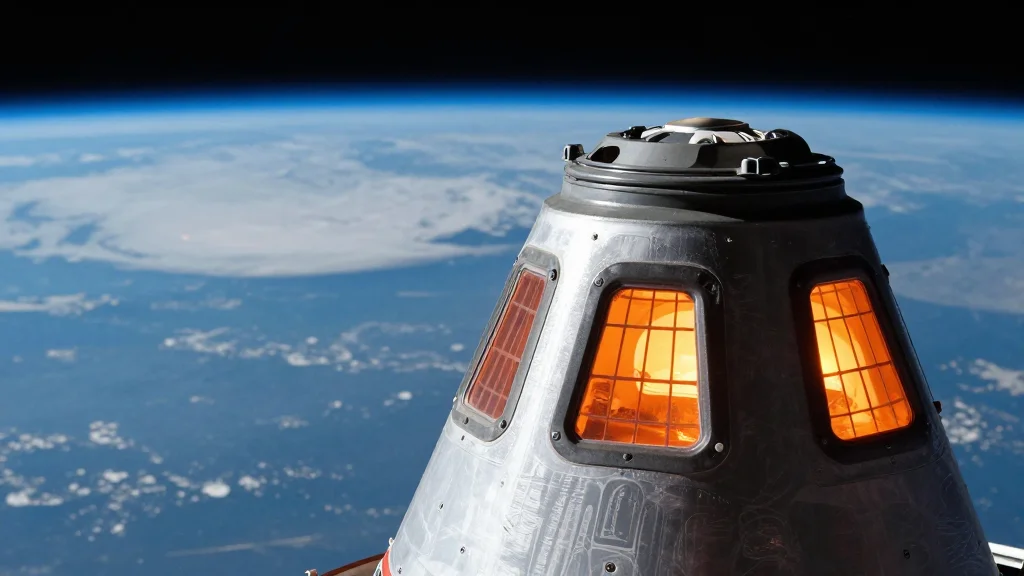
Artemis II Crew Returns, Hails Orion Heat Shield and Calls Artemis III Ready for Launch

Companies Mentioned

Why It Matters
Artemis II marks the first crewed deep‑space flight since Apollo 17, proving that NASA’s new launch architecture can safely carry humans beyond low‑Earth orbit. The mission’s heat‑shield performance directly addresses a critical safety concern that delayed the earlier uncrewed test, thereby restoring confidence in the program’s schedule. Successful validation of Orion and SLS paves the way for Artemis III’s lunar landing, a cornerstone of NASA’s broader goal to establish a sustainable presence on the Moon and eventually send crew to Mars. Beyond technical validation, the crew’s reflections underscore the human‑in‑the‑loop aspect of deep‑space exploration. Their emotional responses and public outreach help maintain political and public support, which is essential for securing continued funding in a competitive federal budget environment. The mission also demonstrates international collaboration, with a Canadian astronaut on board, reinforcing the diplomatic value of the Artemis program.
Key Takeaways
- •Artemis II crew splashed down after a 10‑day, 694,481‑mile lunar flyby.
- •Orion’s heat shield showed only minor char loss during re‑entry at >24,000 mph.
- •Commander Reid Wiseman said the spacecraft is ready for Artemis III, targeted for 2027.
- •Crew observed the far side of the Moon and a total lunar eclipse, setting new visual records.
- •NASA will conduct a detailed heat‑shield analysis and a crewed test of the new design in late 2025.
Pulse Analysis
The Artemis II return is more than a symbolic milestone; it is a technical validation that de‑risky the Artemis pipeline. The heat‑shield issue that plagued the 2022 uncrewed test had threatened to push Artemis III back by years. By demonstrating that the shield can survive a high‑energy re‑entry with only superficial damage, NASA has effectively removed a major bottleneck. This reduces the need for costly redesigns and keeps the SLS‑Orion stack on its projected 2027 launch window.
From a market perspective, the mission’s success is likely to accelerate commercial lunar initiatives. Companies such as SpaceX, Blue Origin, and Astrobotic are already positioning themselves as lunar lander providers for the Artemis program. A reliable crew transport system lowers the risk premium for these downstream contracts, potentially unlocking additional private investment. Moreover, the surge in public interest—evidenced by a 42 % jump in NASA’s social‑media following—creates a broader audience for commercial payloads, from scientific experiments to tourism concepts.
Looking ahead, the real test will be how quickly NASA can translate the heat‑shield data into a certified design for Artemis III. If the agency meets its 2025 test‑flight milestone, it will reinforce confidence among congressional appropriators and sustain the $86 billion budget trajectory. Conversely, any setbacks could reignite the budgetary debates that have historically plagued deep‑space programs. The crew’s unanimous endorsement of Orion’s readiness, however, provides a strong narrative for policymakers: the hardware works, the team is cohesive, and the next step—landing humans on the Moon—appears within reach.
Artemis II Crew Returns, Hails Orion Heat Shield and Calls Artemis III Ready for Launch
Comments
Want to join the conversation?
Loading comments...