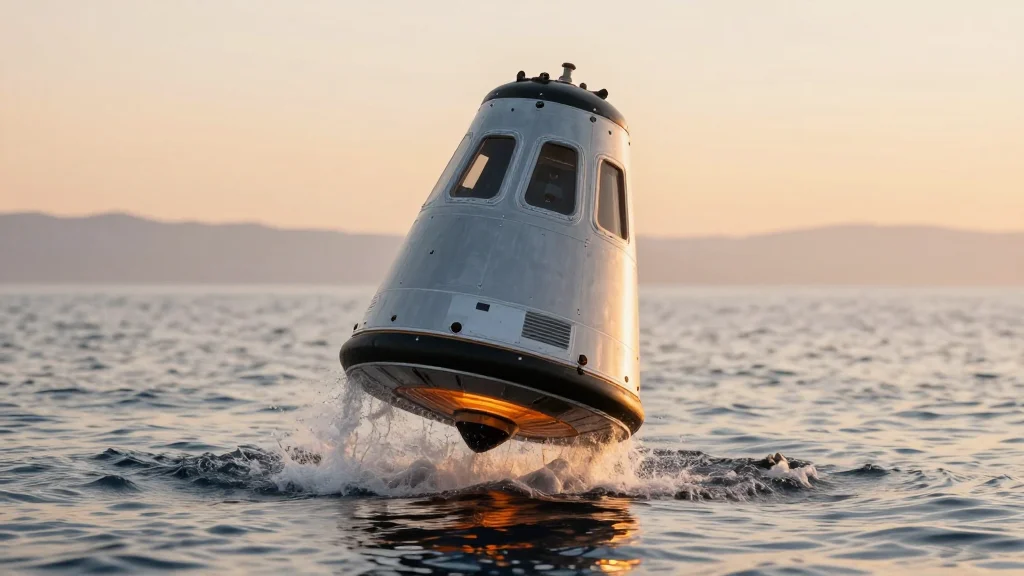
Artemis II Crew Set for Pacific Splashdown as NASA Eyes Safe Return

Why It Matters
Artemis II’s splashdown is a litmus test for NASA’s Orion system, confirming that the spacecraft can safely transport humans beyond low Earth orbit and return them through the most extreme re‑entry conditions. Success will unlock funding and commercial confidence for the Artemis program, encouraging private sector investment in lunar landers, habitats, and in‑space logistics. Moreover, the mission’s international crew signals a collaborative approach to deep‑space exploration, setting a precedent for future joint missions with partners such as the Canadian Space Agency. The heat‑shield validation is especially critical because it addresses the primary technical risk identified after Artemis I. Demonstrating reliable thermal protection paves the way for more ambitious missions, including crewed landings at the Moon’s south pole and eventual crewed missions to Mars. The public’s fascination, amplified by vivid lunar photography, also sustains political and fiscal support for the United States’ long‑term presence in space.
Key Takeaways
- •Artemis II crew (Wiseman, Glover, Koch, Hansen) to splash down off San Diego at 5:07 pm local on Saturday
- •Re‑entry will reach 10,657 m/s and temperatures of ~2,760 °C
- •NASA cites "high confidence" in Orion’s heat shield after Artemis I issues
- •Mission captured first close‑up lunar crater photo on 6 April 2026
- •Successful return critical for Artemis III lunar landing slated for 2028
Pulse Analysis
NASA’s Artemis II return is more than a procedural splashdown; it is a decisive validation of the Orion crew capsule’s thermal protection system under real‑world conditions. The agency’s decision to alter the re‑entry corridor after Artemis I’s heat‑shield erosion demonstrates a risk‑averse yet adaptive engineering culture, essential for maintaining schedule integrity across the Artemis pipeline. By publicly emphasizing confidence in the heat shield, NASA aims to reassure both congressional overseers and commercial partners that the program’s technical hurdles are being managed.
Commercially, the mission’s success will likely accelerate the nascent lunar economy. Companies such as SpaceX, Blue Origin, and emerging lunar‑service firms are betting on NASA’s Artemis schedule to secure contracts for lander delivery, in‑space propulsion, and surface operations. A safe splashdown reduces perceived risk, potentially unlocking additional private capital and encouraging joint ventures that could lower the cost of cislunar transport.
Geopolitically, Artemis II underscores the United States’ commitment to a sustained human presence beyond Earth, a narrative that counters China’s accelerating lunar ambitions. The inclusion of a Canadian astronaut signals a broader coalition, hinting at future multinational missions that could dilute any single nation’s dominance in space. As the Artemis program progresses, the interplay between technical validation, commercial investment, and international collaboration will shape the next decade of space exploration.
Artemis II crew set for Pacific splashdown as NASA eyes safe return
Comments
Want to join the conversation?
Loading comments...