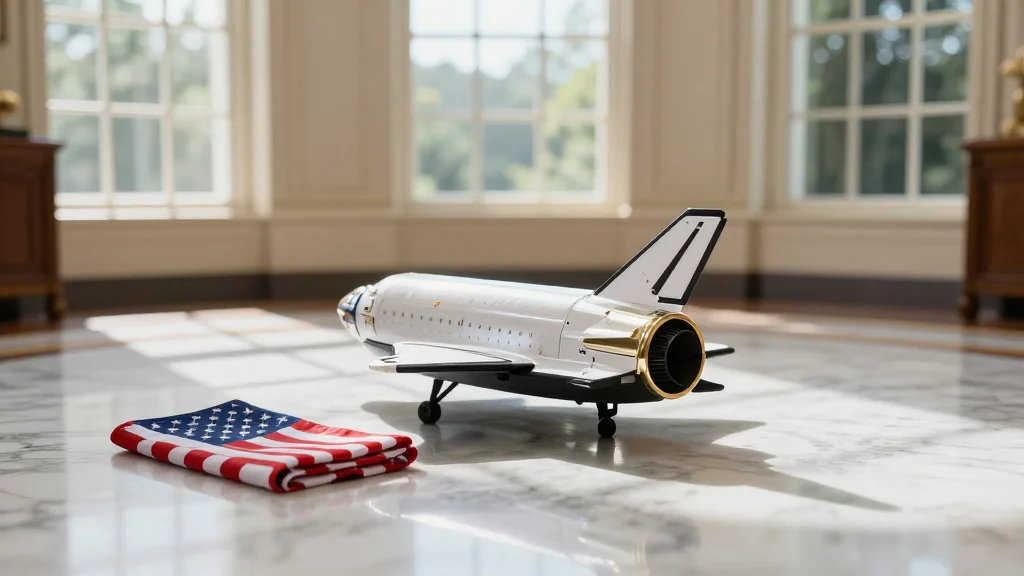
Artemis II Crew Visits the White House
Why It Matters
The high‑profile encounter signals robust political support for NASA’s Artemis program, which could translate into sustained funding and accelerated timelines for lunar exploration. It also reinforces the growing synergy between government agencies and commercial space firms.
Key Takeaways
- •Artemis II crew met President Trump on April 29, 2026.
- •Discussion focused on lunar landing timeline and mission objectives.
- •White House visit signals strong political backing for NASA.
- •Highlights growing partnership between government and commercial space firms.
Pulse Analysis
The Artemis II mission marks a pivotal step in NASA’s Artemis architecture, representing the first crewed flight beyond low‑Earth orbit since the Apollo era. Scheduled for launch later this year, the mission will send four astronauts on a lunar flyby, testing the Orion spacecraft’s life‑support systems, deep‑space navigation, and re‑entry capabilities. Success will validate critical technologies and set the stage for Artemis III, which aims to land the first woman and the next man on the Moon’s south pole by 2028. By achieving these milestones, NASA hopes to re‑establish a sustainable presence on the lunar surface and use it as a springboard for future Mars missions.
President Trump’s decision to host the Artemis II crew in the Oval Office reflects a strategic political move to align the administration with America’s renewed space ambitions. The White House appearance provides a visible endorsement that can influence congressional appropriations, especially as the federal budget faces competing priorities. Moreover, the meeting underscores the administration’s intent to leverage commercial partnerships—SpaceX, Blue Origin, and others—to reduce costs and accelerate development. This public‑private collaboration model, first championed during the Commercial Crew Program, is now central to Artemis, with NASA contracting for lunar landers, habitat modules, and launch services.
Industry observers view the visit as a catalyst for heightened investor confidence in the space sector. A clear signal of governmental support often translates into increased capital flows to satellite constellations, lunar resource extraction ventures, and in‑space manufacturing startups. As the Artemis program progresses, the synergy between policy, technology, and commercial investment is expected to drive a new wave of innovation, positioning the United States as the leader in next‑generation space exploration and economic activity beyond Earth.
Artemis II Crew Visits the White House
Comments
Want to join the conversation?
Loading comments...