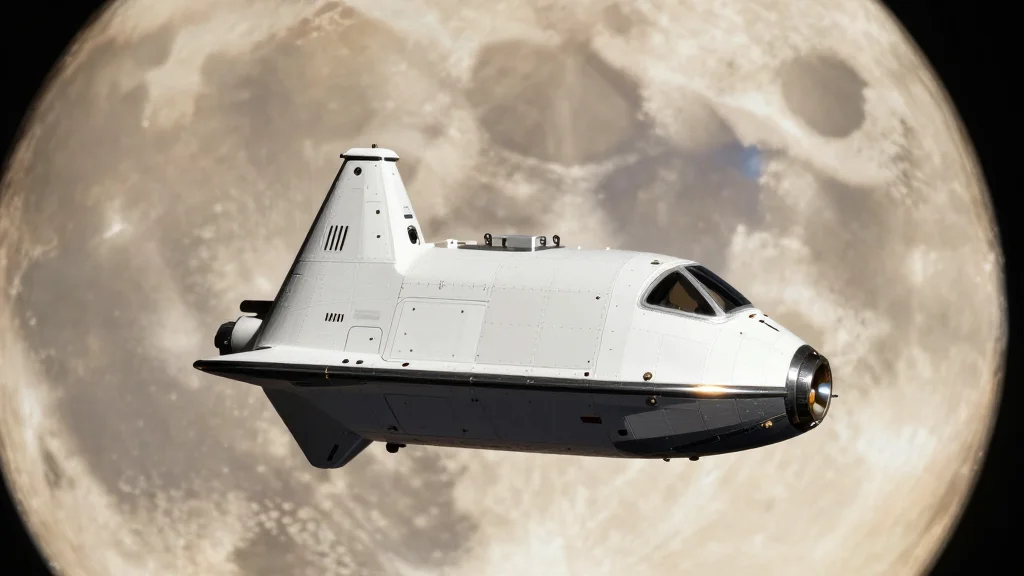
Artemis II Mission Day 7 Recap April 7
Why It Matters
The day’s operations validate deep‑space navigation, crew health protocols, and unique scientific observations that are critical for future Artemis landings and long‑duration lunar missions.
Key Takeaways
- •Orion exited lunar sphere at 41,072 miles, re‑entering Earth's gravity
- •Crew observed six meteoroid impact flashes during lunar eclipse, rare scientific data
- •15‑minute audio link connected Artemis II with ISS Expedition 74 crew
- •First trajectory correction burn changed velocity by 1.6 ft/s, guiding home
- •Splashdown scheduled for April 10 off San Diego, Navy recovery aboard USS John P. Murtha
Pulse Analysis
Artemis II’s Day 7 marked the transition from lunar exploration to Earth‑bound operations. After a flawless lunar flyby that brought the crew within 36,286 miles of the Moon, Orion departed the lunar sphere of influence, allowing Earth’s gravity to dominate once again. A brief 15‑second trajectory‑correction burn nudged the spacecraft by 1.6 feet per second, fine‑tuning its return path. The crew’s debrief with ground scientists highlighted the mission’s operational precision and set the stage for the final phases of the flight, underscoring NASA’s confidence in Orion’s deep‑space capabilities.
The scientific payoff of the mission peaked during a solar eclipse when astronauts captured six bright flashes caused by meteoroids striking the Moon’s near side. Such impact observations, last seen during Apollo, provide direct data on lunar surface hazards that could threaten future habitats and equipment. Simultaneously, a historic audio‑only conversation linked Artemis II with the ISS crew, reinforcing the continuity between low‑Earth‑orbit experience and deep‑space exploration. This collaboration illustrates how knowledge from the ISS underpins the Artemis program’s safety and mission planning.
Looking ahead, the crew will test an orthostatic intolerance garment to mitigate blood‑pressure drops on re‑entry, demonstrate rapid construction of a radiation shelter, and manually pilot Orion to prove redundancy in navigation. These operational drills are essential for upcoming Artemis III lunar landings and longer missions. The splashdown, scheduled for April 10 off San Diego, will be executed by the USS John P. Murtha, providing a data‑rich recovery platform for future crewed missions. Each of these steps not only secures a safe return but also builds the technical foundation for sustained human presence on the Moon.
Artemis II Mission Day 7 Recap April 7
Comments
Want to join the conversation?
Loading comments...