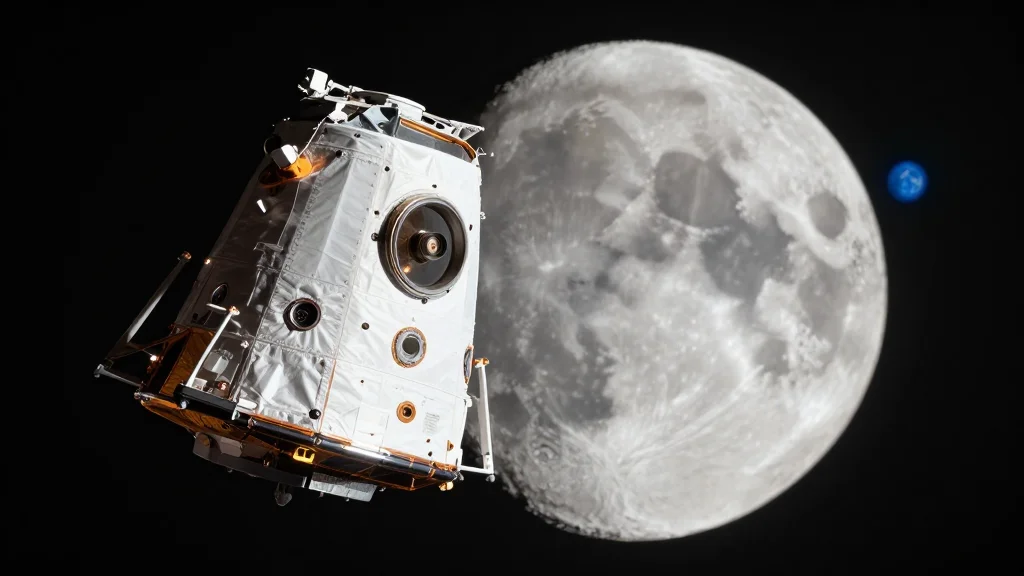
Artemis II Races to Set New Distance Record
Why It Matters
The record‑breaking flight validates critical Orion and navigation technologies, de‑risking NASA’s roadmap for sustainable crewed lunar exploration and strengthening international partnerships.
Key Takeaways
- •Artemis II will exceed Apollo 13 distance by 6,600 km
- •Crew follows free‑return trajectory, no landing fuel needed
- •Mission tests Orion systems for Artemis III lunar docking
- •Includes Canadian astronaut, highlighting international partnership
- •Provides unprecedented far‑side lunar photography for science
Pulse Analysis
The Artemis II mission marks a pivotal moment in NASA’s return to deep‑space operations, echoing the daring of Apollo while leveraging modern engineering. By exceeding the 400,171 km distance set by Apollo 13, the crew demonstrates the reliability of the free‑return trajectory—a gravity‑assist path that minimizes propellant use and provides a safety net for crewed lunar missions. This maneuver, first employed during Apollo 13’s emergency, now serves as a deliberate test bed, confirming that Orion’s life‑support, navigation, and communication suites can endure the rigors of a multi‑day, high‑velocity flight.
Beyond the technical milestone, Artemis II delivers scientific and diplomatic value. The four‑person crew, featuring Canada’s Jeremy Hansen, captured high‑resolution images of the far side’s Orientale Basin, historic Apollo landing sites, and the moon’s southern fringe—areas critical for future resource extraction and habitat placement. These visual datasets enrich lunar geology research and support commercial partners eyeing in‑situ resource utilization. Moreover, the inclusion of an international astronaut underscores the collaborative framework of the Artemis Accords, signaling a broader coalition ready to share the costs and benefits of lunar exploration.
Looking ahead, Artemis II’s success sets the stage for Artemis III, slated to test docking procedures with a lunar lander in Earth orbit, and Artemis IV, which aims to land two astronauts near the south pole by 2028. The mission’s achievements reassure stakeholders—government, industry, and the public—that the United States can sustain a continuous presence on the Moon, fostering a new era of scientific discovery, commercial activity, and geopolitical influence in cislunar space.
Artemis II races to set new distance record
Comments
Want to join the conversation?
Loading comments...