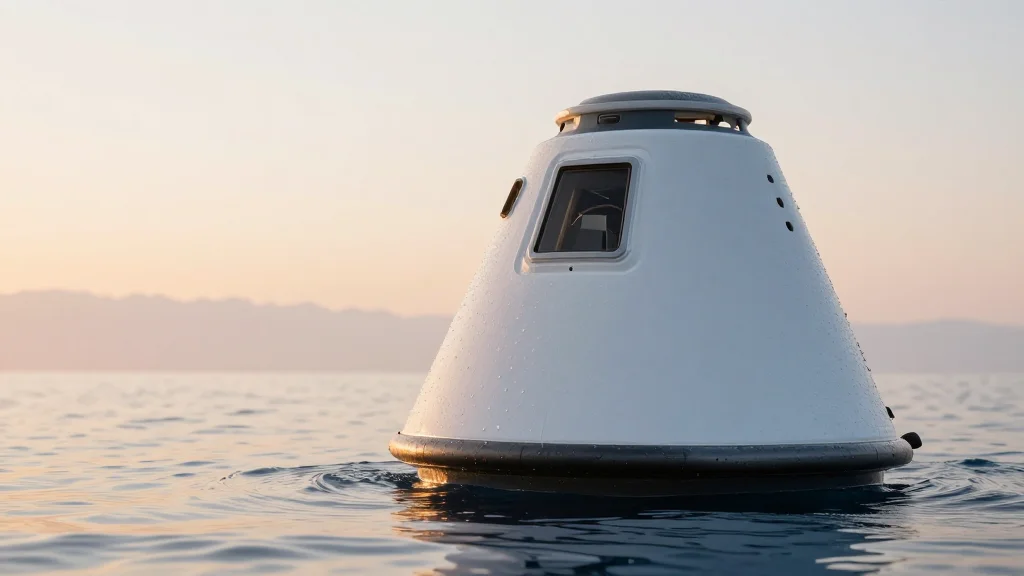
Artemis II Returns Safely, Crew Reflects on Historic Moon Flyby and NASA Plots Next Steps

Companies Mentioned

Why It Matters
Artemis II’s successful splashdown validates the Orion spacecraft and the Space Launch System, two cornerstone technologies for NASA’s deep‑space ambitions. By proving that humans can travel farther than any mission since Apollo and return safely, the flight reduces technical risk for Artemis III’s more complex docking and landing operations. The mission also reignites public interest in lunar exploration, a crucial factor for securing continued congressional funding for the $20 billion moon‑base roadmap. Beyond NASA, the mission’s reliance on commercial partners for future landers signals a shift toward a more collaborative space economy. Successful integration of private‑sector hardware will accelerate the development of a sustainable lunar infrastructure, creating new markets for in‑space services, resource extraction, and tourism, and positioning the United States as the leader of a burgeoning off‑world economy.
Key Takeaways
- •Artemis II splashdown on April 10 at 8:07 p.m. EDT off San Diego; all four crew members medically stable (“four green”).
- •Mission covered 695,081 miles in 10 days, reaching a record 252,760 miles from Earth, surpassing Apollo 13.
- •Commander Reid Wiseman, Pilot Victor Glover, and Mission Specialists Christina Koch and Jeremy Hansen shared personal reflections at a Houston press conference.
- •NASA Administrator Jared Isaacman called Artemis II the opening act for a $20 billion lunar‑base program.
- •Artemis III slated for 2027 with Earth‑orbit docking test; Artemis IV targeted for early 2028 lunar landing.
Pulse Analysis
The Artemis II splashdown is more than a ceremonial end to a ten‑day flight; it is a data point that de‑risky the next phase of NASA’s lunar agenda. Orion’s thermal protection system, communication suite, and re‑entry trajectory performed within expected parameters, delivering a clean bill of health that will likely accelerate the schedule for Artemis III’s docking test. Historically, each successful crewed mission has shaved years off subsequent development timelines, and Artemis II is poised to do the same for the lunar‑base architecture.
However, the mission also surfaces a subtle tension between NASA’s ambitious timeline and the safety concerns raised by the Aerospace Safety Advisory Panel. The panel’s “high‑risk” label for the original Artemis III schedule forced a redesign that pushes the first surface landing to 2028, a delay that could strain political patience. The administration’s $20 billion moon‑base plan hinges on maintaining bipartisan support, which in turn depends on visible progress and cost‑effectiveness. By delivering a flawless splashdown and a compelling human story, the crew has bought NASA goodwill, but the agency must now translate that goodwill into concrete milestones—particularly the successful integration of commercial landers.
Finally, the mission’s public resonance, highlighted by Koch’s Instagram post garnering over 2 million likes, underscores the growing role of social media in shaping space policy. Public enthusiasm can translate into legislative pressure, encouraging Congress to fund the next steps. As commercial actors like SpaceX and Blue Origin prepare to compete for lunar‑lander contracts, the next few years will test whether the public’s fascination can be converted into a sustainable, market‑driven lunar economy.
Artemis II Returns Safely, Crew Reflects on Historic Moon Flyby and NASA Plots Next Steps
Comments
Want to join the conversation?
Loading comments...