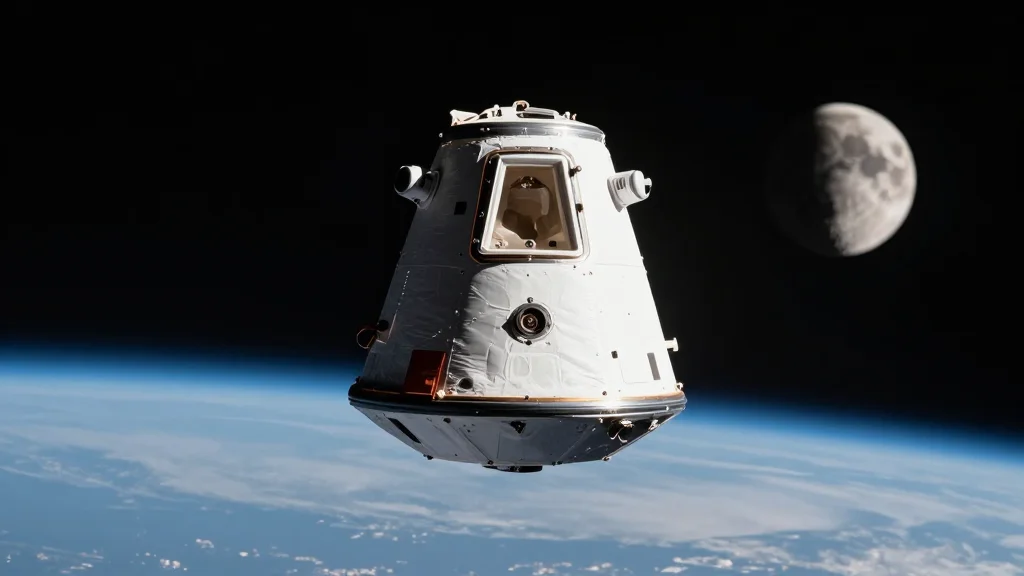
Artemis II Sets New Human Distance Record During Lunar Flyby
Why It Matters
The record validates NASA’s deep‑space capabilities and de‑ridges the technical risk for future crewed lunar missions, accelerating commercial and governmental investment in the emerging lunar economy.
Key Takeaways
- •Artemis II crew reached ~260,000 miles from Earth
- •Surpassed Apollo 13 distance record from 1970
- •First crewed deep‑space flight since Apollo 17
- •Validates Orion spacecraft for future lunar missions
- •Boosts confidence in commercial lunar partnership ecosystem
Pulse Analysis
Artemis II’s lunar flyby represents a watershed moment for human spaceflight, not merely because of the distance achieved but because it proves the integrated performance of the Space Launch System (SLS) and Orion capsule on a deep‑space trajectory. The mission’s apogee of roughly 260,000 miles placed the crew beyond the Moon’s far side, a region never before occupied by humans. By surpassing the Apollo 13 benchmark, NASA demonstrates that modern avionics, autonomous navigation, and life‑support systems can sustain crews far beyond low‑Earth orbit, setting a new operational baseline for future exploration.
The technical achievements of Artemis II extend beyond raw distance. Orion’s heat‑shield endured re‑entry velocities exceeding 11 km/s, while the SLS provided the necessary thrust to break free of Earth’s gravity well on a trans‑lunar injection. Data gathered on radiation exposure, communications latency, and crew health will inform the design of Artemis III and subsequent missions to the lunar surface and beyond. Compared with the 1970s Apollo architecture, today’s system incorporates reusable components, advanced software, and a modular approach that reduces cost per kilogram delivered to deep space.
From a market perspective, the record bolsters confidence among commercial partners such as SpaceX, Blue Origin, and emerging lunar infrastructure firms. Investors see a clearer pathway to monetizing lunar resources, from in‑situ propellant production to habitat construction. Governments worldwide are likely to accelerate their own lunar agendas, spurring competition and collaboration in the nascent lunar economy. Artemis II thus serves as both a technical proof point and a catalyst for the next wave of private‑public ventures aimed at establishing a sustainable human presence on the Moon.
Artemis II Sets New Human Distance Record During Lunar Flyby
Comments
Want to join the conversation?
Loading comments...