Artemis II: Space Weather Forecasting, Monitoring the Sun’s Hazardous Conniptions
Why It Matters
Solar storms can jeopardize communications, navigation and astronaut health, making precise forecasting essential for mission success and future lunar exploration.
Key Takeaways
- •Artemis II leaves Earth's magnetic shield, facing solar storm risk
- •NASA captured Oct 3, 2024 solar flare with SDO
- •Space‑weather forecasting capabilities have been upgraded
- •Crew safety depends on real‑time solar activity monitoring
- •Success influences future lunar and deep‑space missions
Pulse Analysis
Artemis II represents a pivotal step for NASA, venturing farther from Earth than any crewed mission in half a century. By orbiting the Moon and traveling beyond the protective cocoon of the planet’s magnetosphere, the Orion crew will encounter the raw environment of interplanetary space. This exposure brings unprecedented challenges, especially the need to safeguard life support, navigation and communication systems from high‑energy particles emitted by the Sun.
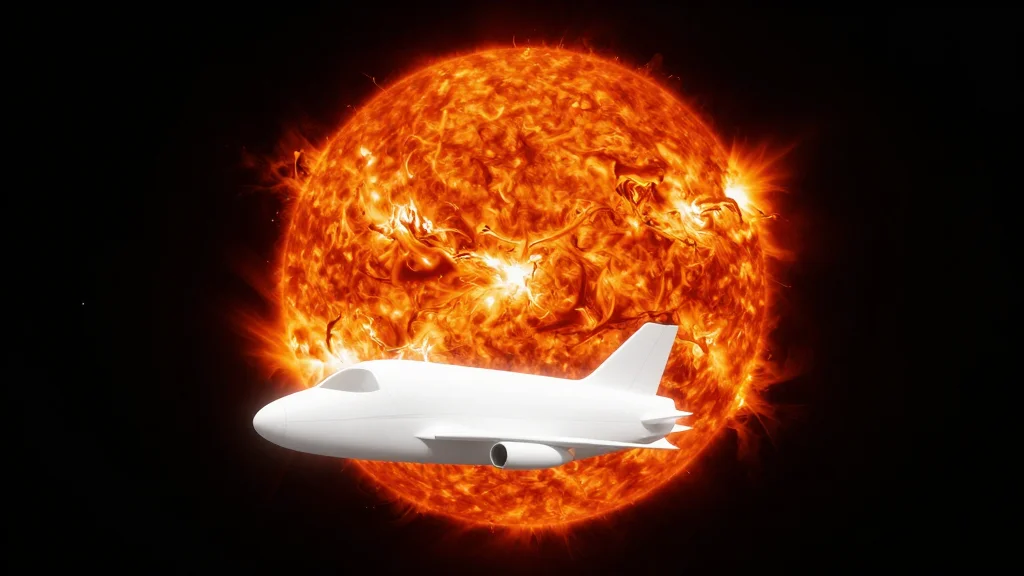
The recent solar flare recorded on October 3, 2024 by the Solar Dynamics Observatory illustrates the volatility of the Sun’s activity. Such eruptions can unleash bursts of X‑ray and ultraviolet radiation, as well as coronal mass ejections that can disrupt spacecraft electronics and increase radiation dose to astronauts. To mitigate these risks, NASA has invested in advanced space‑weather modeling, faster data pipelines, and dedicated forecasting teams that provide real‑time alerts. These improvements aim to give mission controllers the lead time needed to adjust spacecraft orientation, power down vulnerable systems, or alter flight trajectories if necessary.
Beyond Artemis II, the refinement of solar‑weather forecasting has broader commercial and strategic implications. Private operators planning lunar habitats, asteroid mining missions, or Mars transit will rely on the same predictive tools to protect crews and assets. Robust forecasting also supports satellite operators and power‑grid managers on Earth, where geomagnetic storms can cause outages. As NASA demonstrates reliable mitigation strategies, confidence grows across the space industry, paving the way for a sustainable human presence beyond low‑Earth orbit.
Artemis II: Space Weather Forecasting, Monitoring the Sun’s Hazardous Conniptions
Comments
Want to join the conversation?
Loading comments...