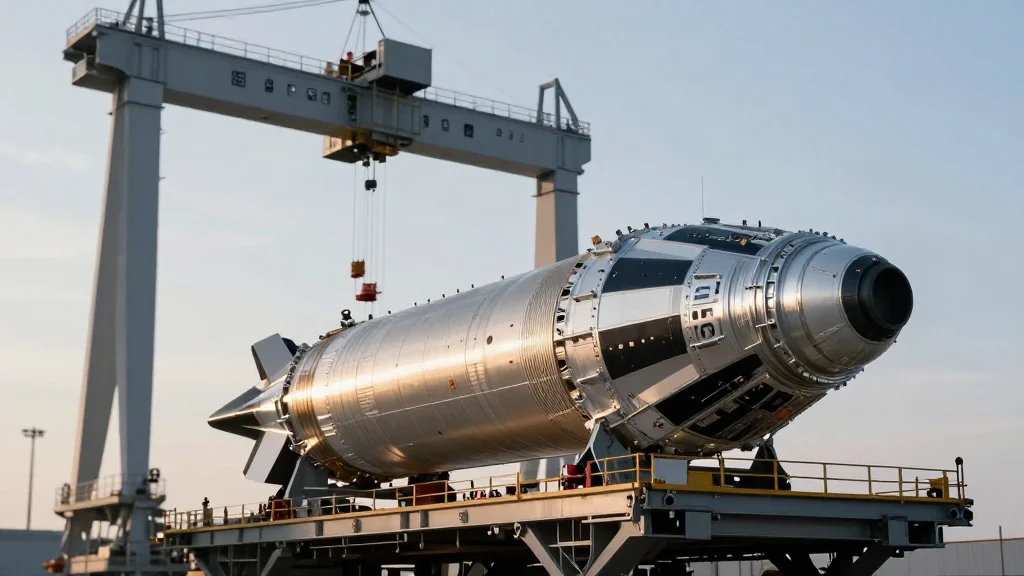
Artemis III Rocket Core and Mobile Launcher Progress Toward 2027 Test Flight
Companies Mentioned

Why It Matters
Standardizing hardware and testing key systems in LEO reduces risk, keeping NASA on track for a 2030 lunar base and preserving its competitive edge in deep‑space exploration.
Key Takeaways
- •SLS core stage rolled to Kennedy for Artemis III assembly
- •Mobile launcher returns to VAB for inspection after Artemis II damage
- •Artemis III becomes LEO test; lunar landing moved to Artemis IV
- •Ignition strategy freezes SLS Block 1 design to cut risks
- •NASA's $6 billion cargo program targets South Pole rovers by 2028
Pulse Analysis
The recent rollout of the 212‑foot Space Launch System core stage marks a critical logistics milestone for NASA’s Artemis III program. Transported on the Pegasus barge from the Michoud Assembly Facility to Kennedy Space Center, the core will soon be mated with four RS‑25 engines and integrated with the Orion crew capsule. Simultaneously, the mobile launcher that propelled Artemis II back to the Vehicle Assembly Building for a four‑mile repositioning is undergoing detailed inspections and repairs, ensuring the structural integrity needed for the next stacking operation. These hardware movements keep the 2027 launch window viable while demonstrating NASA’s ability to manage complex, large‑scale assets across multiple sites.
Artemis III’s shift from a lunar landing to a low‑Earth‑orbit (LEO) test flight reflects a strategic recalibration. By keeping astronauts in LEO, NASA can validate Orion’s docking procedures with commercial lunar landers from SpaceX and Blue Origin, trial new spacesuits, and stress‑test life‑support systems without the added hazards of a Moon descent. This incremental approach provides a safety net, allowing engineers to gather performance data and refine mission‑critical software before committing to the more demanding Artemis IV lunar surface operations slated for 2028. The LEO test also showcases the growing role of commercial partners in deep‑space missions, a trend that could lower costs and accelerate technology maturation.
Underlying these operational changes is NASA’s Ignition strategy, which standardizes the SLS Block 1 configuration to reduce production risk and increase launch cadence. By locking the rocket design, NASA aims to achieve a sustainable flight rate reminiscent of the Apollo era, a prerequisite for the ambitious goal of a permanent Moon base by 2030. The plan is bolstered by a $6 billion cargo initiative that will deliver lunar rovers and infrastructure to the South Pole, positioning the United States to maintain leadership amid rising international competition. This blend of hardware standardization, commercial collaboration, and phased testing underscores NASA’s commitment to a methodical, cost‑effective path to sustained lunar exploration.
Artemis III rocket core and mobile launcher progress toward 2027 test flight
Comments
Want to join the conversation?
Loading comments...