Artificial Intelligence in Manufacturing Rocket Parts
•January 21, 2026
0
Companies Mentioned

Why It Matters
AI‑driven automation cuts costly engineering cycles, boosting competitiveness of European launch systems. Faster, more reliable manufacturing directly supports higher launch cadence and lower mission costs.
Key Takeaways
- •AI predicts shot peen deformation within 2 mm tolerance
- •Machine learning cuts weld analysis time by 95 %
- •Laser‑sensor AI detects fibre‑placement defects in real time
- •ESA’s FLPP accelerates adoption of digital manufacturing
- •MT Aerospace applies AI across shot peening, welding, composites
Pulse Analysis
The European Space Agency’s Future Launchers Preparatory Programme (FLPP) is positioning artificial intelligence as a cornerstone of next‑generation aerospace manufacturing. By funding collaborative projects with firms like MT Aerospace, ESA is creating a testbed for AI‑enhanced processes that can be scaled across the industry. This strategic push reflects a broader shift toward digital twins, predictive analytics, and autonomous quality control, all aimed at reducing development risk for future launch vehicles.
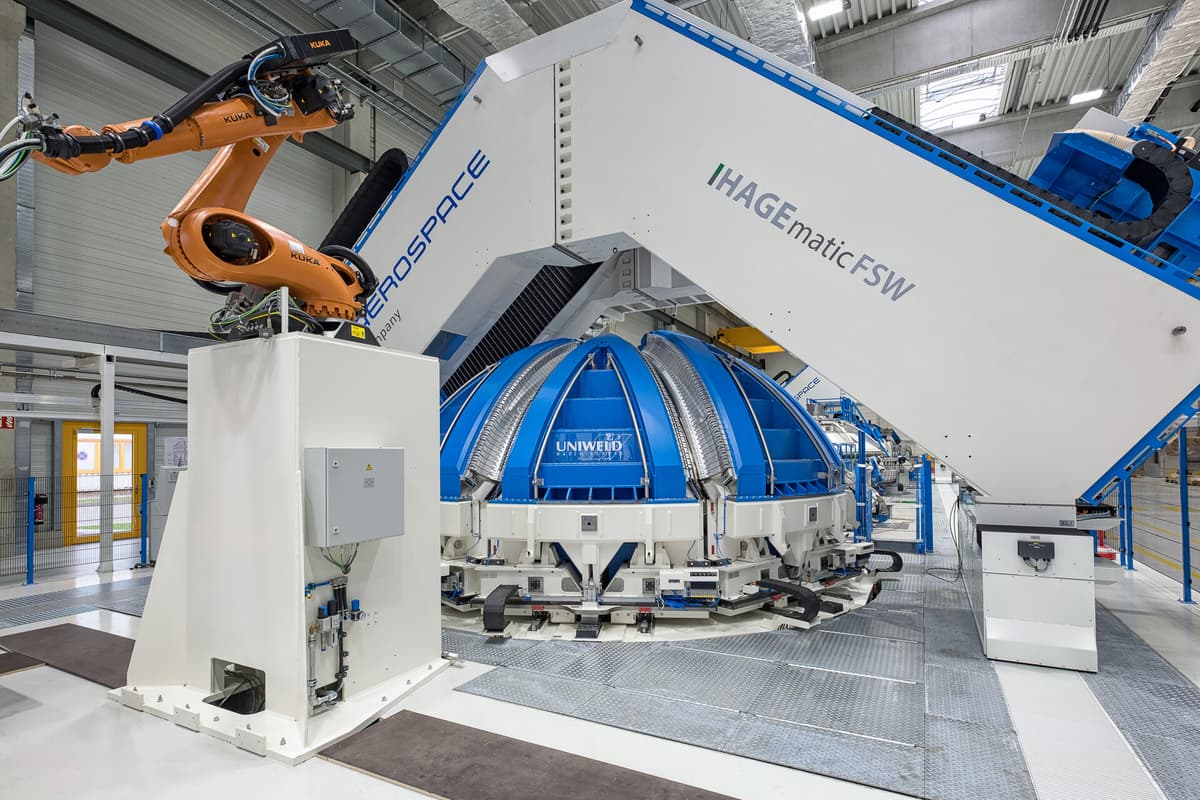
In practical terms, AI is reshaping three critical production steps. Machine‑learning algorithms now forecast how metal will deform during shot‑peen forming, delivering shapes within a two‑millimetre tolerance without iterative trial‑and‑error. Friction‑stir welding benefits from real‑time telemetry—force, temperature, and vibration data feed models that auto‑tune parameters, slashing post‑process inspection time by 95 %. Meanwhile, laser‑sensor systems equipped with defect‑classification models monitor carbon‑fibre lay‑up on the fly, catching anomalies before they halt the line. These gains translate into shorter lead times and higher part reliability.
The ripple effects extend beyond individual components. Faster, data‑driven manufacturing lowers overall vehicle cost, enabling more frequent launches and fostering a competitive European launch market. As AI models mature, they will inform design optimization, allowing engineers to explore novel geometries that were previously infeasible due to manufacturing constraints. Ultimately, the convergence of AI, advanced materials, and ESA’s forward‑looking programmes promises to accelerate the commercialization of space while maintaining the rigorous safety standards demanded by the sector.
Artificial intelligence in manufacturing rocket parts
0
Comments
Want to join the conversation?
Loading comments...