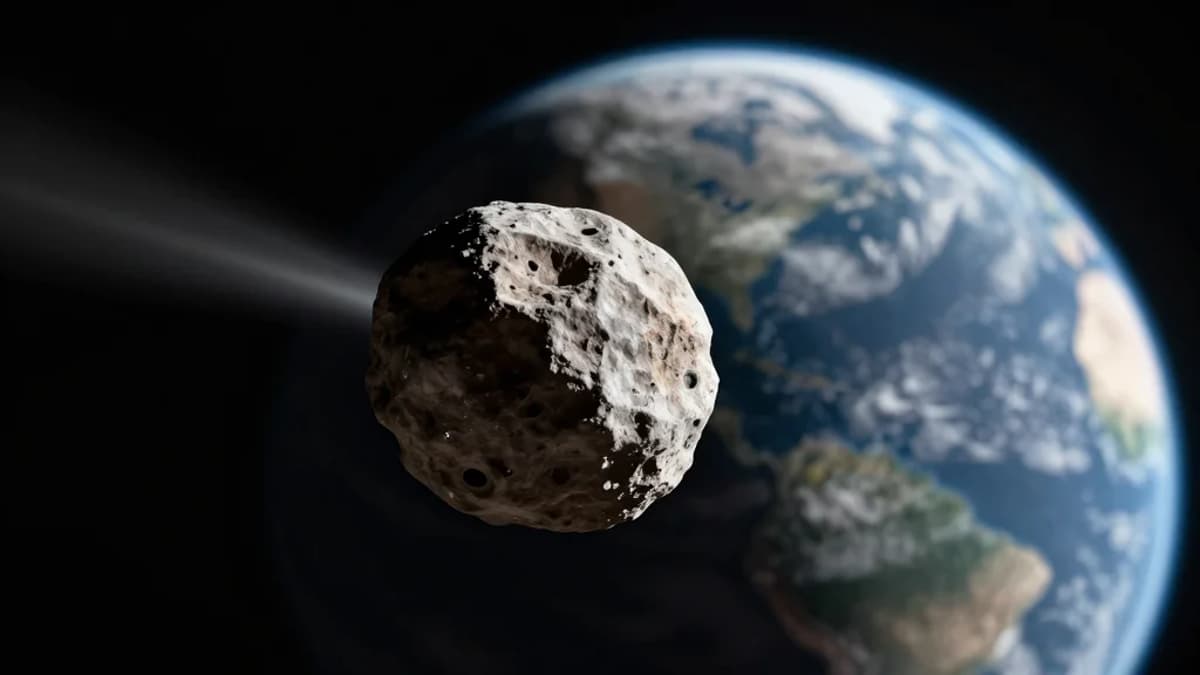
As Rubin's Survey Gets Underway, Simulations Suggest It Could Find About Six Lunar-Origin Asteroids per Year
•February 2, 2026
0
Why It Matters
Identifying lunar‑origin asteroids improves our understanding of Moon‑Earth impact exchange and refines planetary‑defense risk assessments, while offering a novel window into lunar surface processes.
Key Takeaways
- •Model predicts ~500,000 lunar‑origin asteroids >5 m
- •LOAs represent less than 1 % of similar‑size NEAs
- •Rubin LSST expected to discover about six LOAs annually
- •LOAs approach Earth slower, often from sunward directions
- •Spectroscopy required to confirm lunar origin, dynamics insufficient
Pulse Analysis
The Moon’s surface is constantly reshaped by impacts, and a fraction of that debris can achieve escape velocity, entering near‑Earth space as lunar‑origin asteroids (LOAs). By integrating crater‑size distributions—especially the outsized contribution of recent large impacts like Giordano Bruno—with Yarkovsky‑driven orbital evolution, researchers have quantified a hidden population of roughly half a million meter‑scale fragments. These objects, though numerically significant, remain a tiny slice of the broader NEA cohort, making them challenging to isolate without targeted search strategies.
Enter the Vera C. Rubin Observatory’s Legacy Survey of Space and Time, a game‑changer for small‑body discovery. Simulations that factor in realistic detection limits, trailing losses, and follow‑up windows suggest the LSST will flag about six LOAs per year, enough to transition from anecdotal cases to statistical analysis. However, the survey’s ground‑based nature creates a blind spot for sunward‑approaching objects—precisely the geometry favored by many LOAs—raising both observational and planetary‑defense concerns. Prioritizing candidates based on slower encounter velocities and approach vectors can mitigate these gaps and streamline spectroscopic follow‑up.
A forthcoming natural experiment could validate these models: asteroid 2024 YR4 carries a 4.3 % chance of striking the Moon in 2032, potentially ejecting fresh meter‑scale debris. Detecting and characterizing any resulting LOAs with LSST would provide a real‑time benchmark for ejecta‑production rates and orbital evolution predictions. Beyond risk assessment, such findings would deepen our grasp of lunar impact physics, inform future sample‑return missions, and refine the census of near‑Earth objects that share a common, lunar heritage.
As Rubin's survey gets underway, simulations suggest it could find about six lunar-origin asteroids per year
0
Comments
Want to join the conversation?
Loading comments...