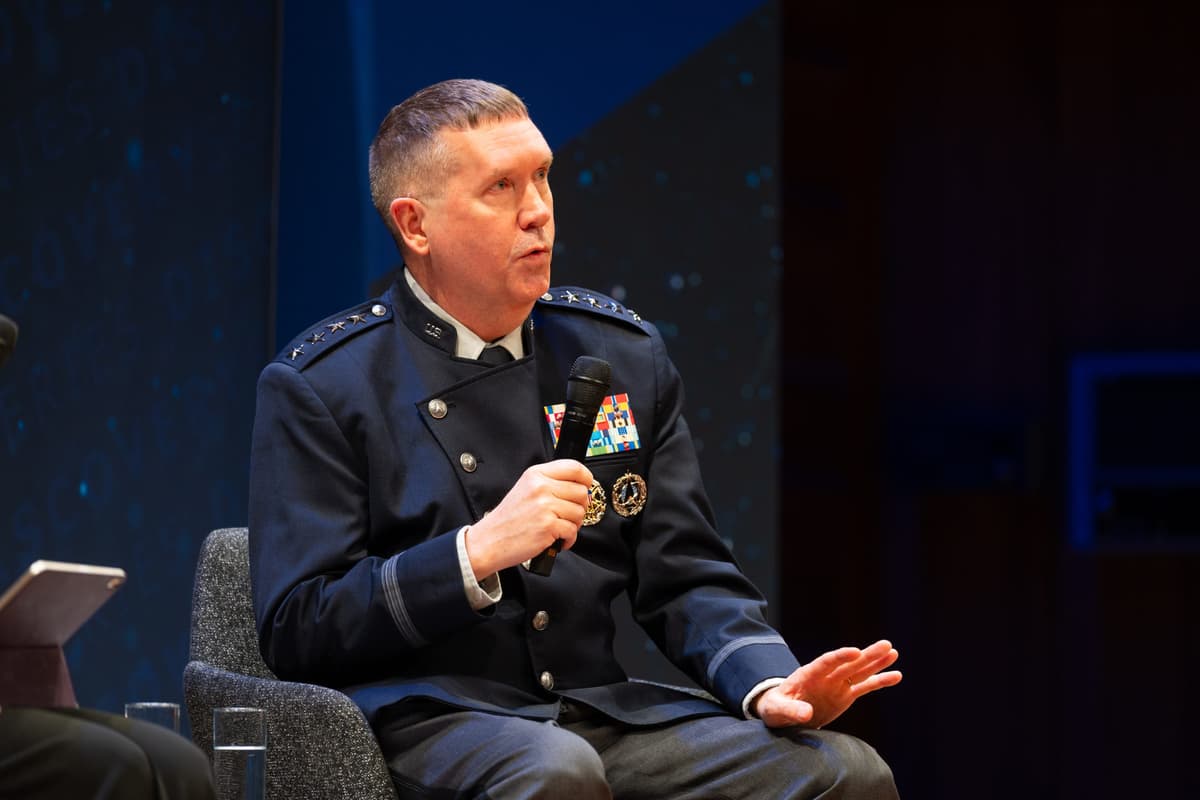
As Satellites Become Targets, Space Force Plans for Growth and a Broader Role
•January 22, 2026
0
Why It Matters
The expansion signals a fundamental shift toward integrated space warfare, reshaping defense budgeting and joint‑force planning. It creates new market opportunities for aerospace firms and alters global strategic balances.
Key Takeaways
- •Space Force may double to ~20,000 personnel by 2030
- •Shift from satellite support to active warfighting partner
- •Objective Force study shaping 15‑year force design
- •Emphasis on cislunar operations and space superiority
- •Dynamic satellite maneuvers prioritized over refueling
Pulse Analysis
The Pentagon’s re‑classification of space from a supportive utility to a contested warfighting domain is reshaping force structure across the services. General Shawn Bratton’s projection that the Space Force could double its manpower to roughly 20,000 within a decade reflects mounting pressure from the Army, Navy and Air Force to deliver capabilities that were previously outsourced. As adversaries field anti‑satellite weapons and sophisticated space‑based ISR, the United States is compelled to embed space expertise directly into combat planning, accelerating procurement cycles and expanding the service’s budgetary footprint.
To translate this strategic shift into a concrete force model, the service has launched the Objective Force study, a 15‑year horizon assessment that bypasses traditional program‑by‑program budgeting. The study, led by the Space Warfighting Analysis Center, evaluates required capabilities—such as resilient navigation, hardened communications, and rapid‑reconstitution of satellite constellations—rather than counting satellites. A notable outcome is the growing emphasis on the cislunar region, where lunar‑orbit assets could augment missile‑warning sensors and expand domain awareness. This forward‑looking posture positions the Space Force as a joint‑force enabler for both terrestrial and deep‑space operations.
Operational concepts are also evolving. ‘Dynamic space operations’ propose agile, maneuverable satellites that can alter orbits or missions in response to threats, contrasting with the legacy model of static, long‑life platforms. While in‑orbit refueling promises cost savings, senior leaders remain skeptical about its tactical value, citing unproven war‑game advantages and added vulnerability. The debate underscores a broader industry trend toward modular, software‑defined payloads and rapid launch cycles. For defense contractors and commercial launch providers, these priorities signal new procurement opportunities focused on on‑orbit servicing, autonomous navigation, and resilient space architecture.
As satellites become targets, Space Force plans for growth and a broader role
0
Comments
Want to join the conversation?
Loading comments...