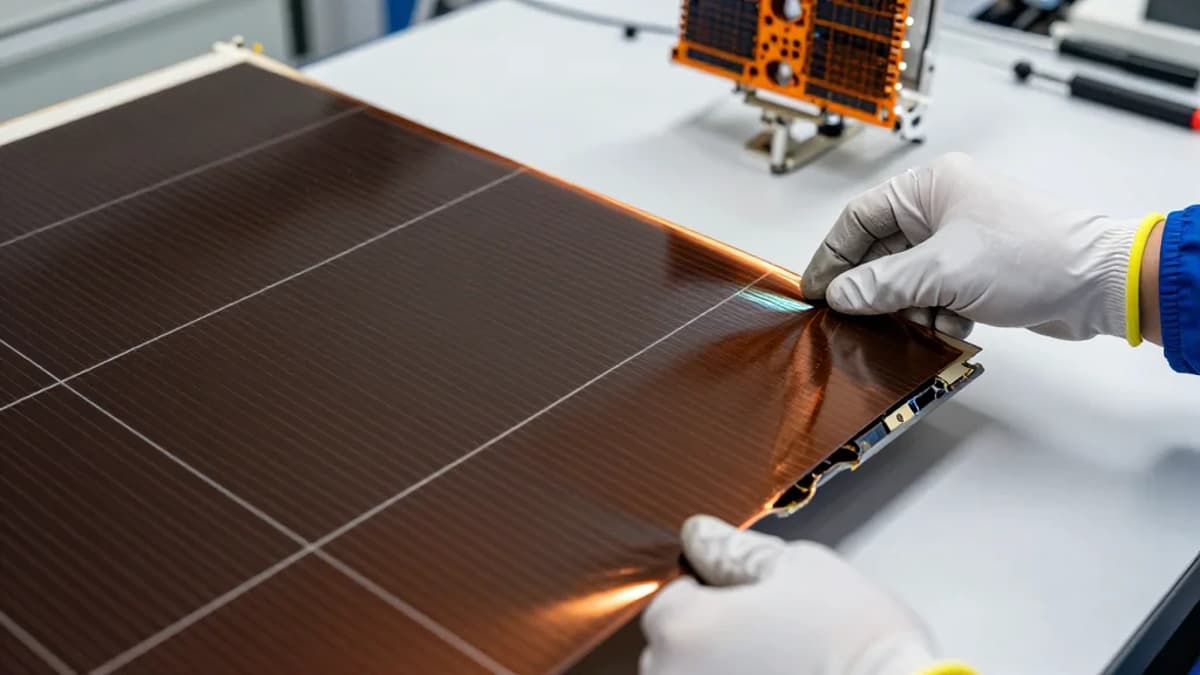
Ascent Solar’s PV Blankets to Power NOVI AI Pathfinder Spacecraft
•February 25, 2026
0
Why It Matters
High‑power, low‑mass solar arrays make affordable AI‑driven satellites viable, cutting launch costs and accelerating edge‑compute constellations.
Key Takeaways
- •Ascent's CIGS blankets power NOVI's N-1 ATLAS
- •150 W output matches larger spacecraft power levels
- •Flexible panels reduce mass and stowed volume
- •Domestic manufacturing enables rapid delivery and lower cost
- •Durable CIGS reduces debris risk for satellite operators
Pulse Analysis
CIGS thin‑film photovoltaics have emerged as a disruptive alternative to traditional silicon panels, offering superior flexibility, lower weight, and higher specific power. By depositing copper indium gallium diselenide on a pliable substrate, manufacturers like Ascent Solar can produce roll‑up solar blankets that conform to irregular spacecraft surfaces. This technology not only trims the mass budget but also frees valuable volume, a critical advantage for small‑sat platforms where every cubic centimeter counts. The domestic production line in Colorado further shortens lead times, allowing satellite developers to iterate faster and keep costs under control.
For NOVI Space, the integration of Ascent’s blankets into the N‑1 ATLAS spacecraft underpins the GENIE edge‑compute platform’s promise of near‑real‑time geospatial intelligence. Generating 150 watts from a toaster‑sized bus, the satellite can power hyperspectral sensors and on‑board AI processors without resorting to bulky, expensive solar arrays. This power envelope enables continuous data capture and processing, delivering low‑latency Earth observation products to users ranging from disaster‑response agencies to commercial analytics firms. The partnership illustrates how flexible PV solutions can unlock new mission profiles that were previously constrained by power‑mass trade‑offs.
The broader implication for the space industry is a shift toward more sustainable, cost‑effective satellite constellations. Lightweight, durable CIGS panels reduce launch mass, directly lowering fuel expenses and expanding payload capacity for rideshare missions. Their inherent resilience to the harsh space environment also mitigates the risk of debris generation, aligning with emerging orbital‑debris mitigation standards. As domestic manufacturing scales, the supply chain becomes less vulnerable to geopolitical disruptions, positioning U.S. firms to capture a growing share of the burgeoning AI‑satellite market.
Ascent Solar’s PV blankets to power NOVI AI Pathfinder spacecraft
0
Comments
Want to join the conversation?
Loading comments...