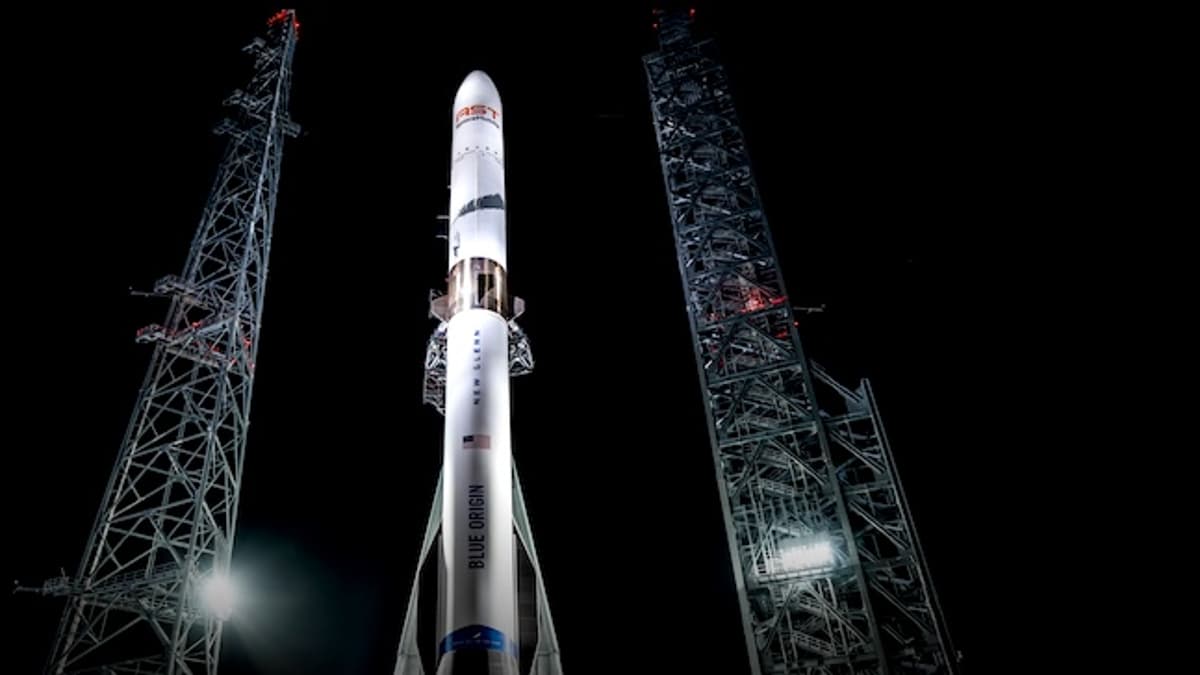
AST SpaceMobile Blue Origin Bet Hits Turbulence
Companies Mentioned

Why It Matters
The setback threatens AST’s ability to meet its 2026 constellation target and could delay the launch of its first global mobile broadband service, reshaping competitive dynamics in the satellite‑as‑a‑service market.
Key Takeaways
- •New Glenn explosion halts AST's primary launch pathway
- •AST aims for 45 satellites by 2026, now at risk
- •SpaceX Falcon 9 slated for upcoming BlueBird launches
- •Rebuilding New Glenn launch pad could take over a year
- •Service rollout may slip to 2028 due to delays
Pulse Analysis
AST SpaceMobile is building a constellation of “BlueBird” satellites that act as airborne cellular towers, promising direct-to‑device connectivity without ground infrastructure. The company’s Block 2 satellites are unusually large, featuring 2,400 square‑foot phased‑array antennas that require a payload fairing at least seven metres in diameter. Blue Origin’s New Glenn was the only launch vehicle in the current market capable of housing multiple BlueBirds in a single flight, offering a cost‑effective cadence of one to two launches per month. This partnership was central to AST’s plan to field roughly 45 birds by the close of 2026.
The May 28 test failure of New Glenn triggered an immediate halt to the vehicle’s flight program while the FAA and NASA conduct a thorough investigation. For AST, the loss of its primary launch slot means the scheduled launch of BlueBird 7 was already missed, and the next three satellites—BlueBird 8, 9 and 10—must now be re‑manifested on SpaceX’s Falcon 9. The disruption jeopardizes the company’s projected launch cadence, pushes revenue generation further into the future, and could force a revision of its 2026 constellation deadline.
Facing a potentially year‑long rebuild of New Glenn’s launch pad, AST has accelerated its reliance on Falcon 9, which can only carry one or two BlueBirds per ride due to size constraints, raising per‑satellite launch costs. Analysts now estimate the company’s commercial service rollout may slip to 2028, eroding its first‑mover advantage in the emerging satellite‑mobile market. The incident also underscores the broader risk of concentrating on a single heavy‑lift provider, prompting other satellite operators to diversify launch contracts and investors to scrutinize launch‑provider concentration risk.
AST SpaceMobile Blue Origin bet hits turbulence
Comments
Want to join the conversation?
Loading comments...