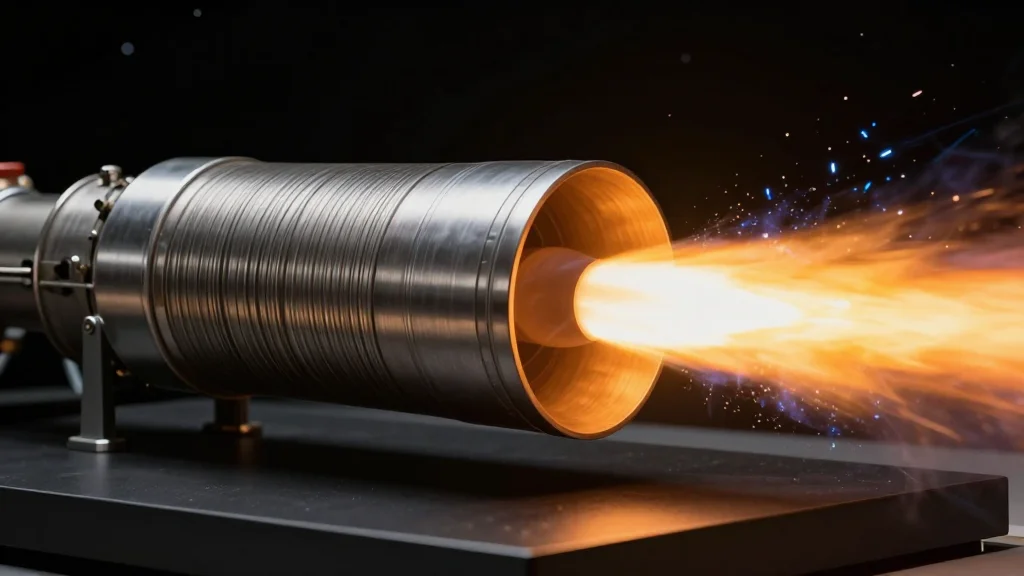
Astrobotic Fires 4,000‑lb RDRE Prototype, Marking First Hot‑fire of Rotating Detonation Engine

Companies Mentioned
Why It Matters
The RDRE’s successful hot‑fire validates a propulsion concept that could dramatically improve the mass‑efficiency of lunar and deep‑space missions. By delivering comparable thrust with a smaller, lighter engine, rotating detonation could lower launch costs and enable larger payloads for NASA’s Artemis program and commercial lunar initiatives. Moreover, the technology’s compactness makes it attractive for in‑space transfer vehicles, potentially accelerating the development of a cislunar transportation network. Beyond Astrobotic, the test signals to the broader SpaceTech ecosystem that private firms can achieve milestones traditionally reserved for large government programs. If RDREs become flight‑qualified, they could spur a new class of small, high‑performance rockets, intensifying competition among propulsion startups and prompting legacy manufacturers to revisit detonation‑based designs.
Key Takeaways
- •Astrobotic hot‑fired its RDRE prototype, producing >4,000 lb thrust in a 300‑second burn.
- •Eight hot‑fire tests yielded 470 seconds of total runtime with no engine damage.
- •The test was funded by two NASA SBIR awards and a Space Act Agreement.
- •RDRE technology promises higher specific impulse and a more compact engine than traditional rockets.
- •Astrobotic aims to integrate the engine into its upcoming lunar south‑pole lander, targeting a flight‑qualified version by early 2027.
Pulse Analysis
Astrobotic’s RDRE hot‑fire is more than a technical footnote; it represents a potential inflection point in propulsion economics. Traditional chemical rockets have plateaued in specific impulse improvements, forcing designers to accept heavier fuel loads for longer missions. Rotating detonation, by harnessing controlled shockwaves, can theoretically achieve 10‑15% higher efficiency while shrinking engine volume. If Astrobotic can translate bench‑scale performance into a flight‑ready system, the cost per kilogram to the Moon could drop enough to make commercial payloads viable without heavy subsidies.
Historically, propulsion breakthroughs have been driven by large aerospace firms—think F-1, RS‑25, or the SpaceX Merlin. Astrobotic’s achievement underscores a shift toward agile, SBIR‑backed startups that can iterate rapidly and leverage NASA’s test facilities. The concurrent progress by Venus Aerospace and NASA’s own RDRE program suggests a converging ecosystem where multiple players are de‑risking the same technology. This competitive pressure could accelerate certification timelines, but it also raises the bar for reliability; any failure in a crewed context would quickly erode confidence.
Looking ahead, the key question is scalability. The current 4,000‑lb thrust level is suitable for lunar landers, but deep‑space missions to Mars will demand higher thrust and longer burn durations. Astrobotic’s roadmap to a flight‑qualified engine by 2027 will need to address thermal loading, detonation stability, and integration with existing spacecraft architectures. If those hurdles are cleared, the RDRE could become a cornerstone of the emerging cislunar economy, enabling reusable landers, rapid orbital transfers, and perhaps even propulsive landing on Mars.
Astrobotic fires 4,000‑lb RDRE prototype, marking first hot‑fire of rotating detonation engine
Comments
Want to join the conversation?
Loading comments...