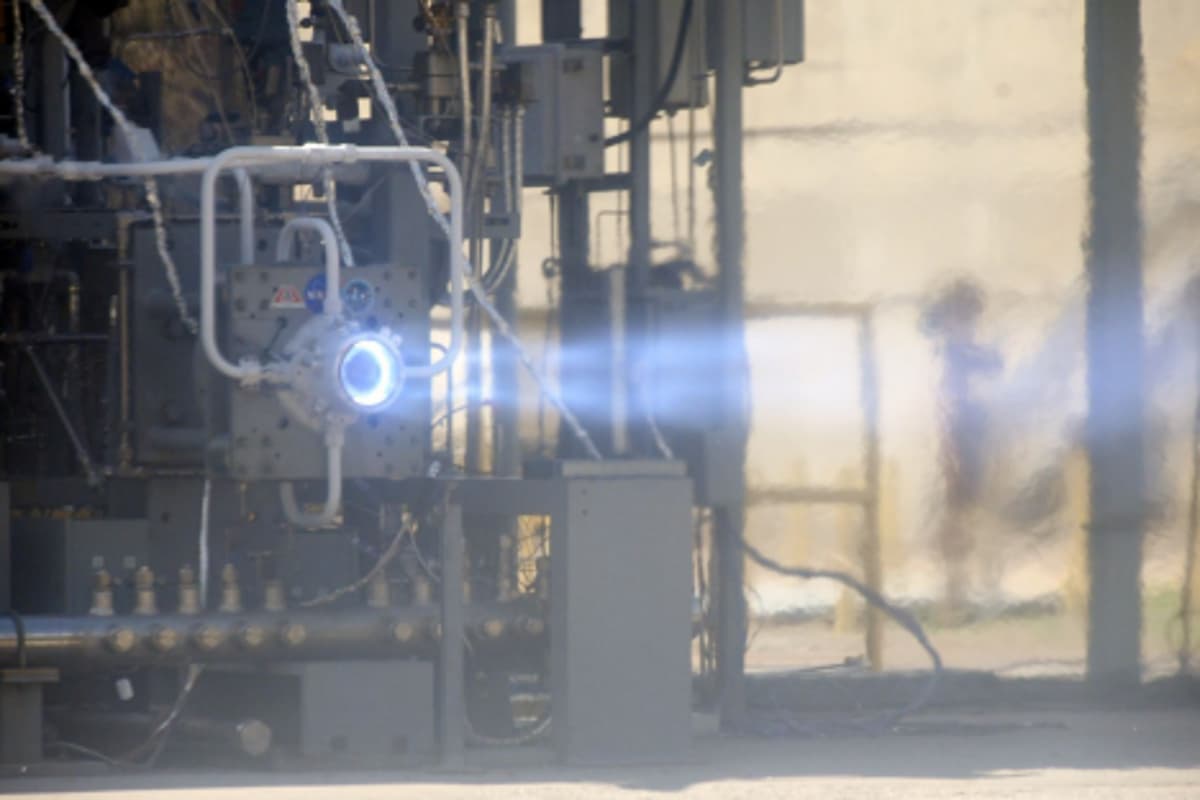
Astrobotic Hotfires Engine That Could Power Moon Missions
Why It Matters
A more efficient, compact propulsion system could reduce the cost of delivering payloads to the Moon, accelerating NASA’s commercial lunar payload services (CLPS) program and strengthening Astrobotic’s competitive position in the emerging cislunar market.
Key Takeaways
- •Astrobotic achieved a 300‑second continuous hot‑fire on its Chakram RDRE.
- •Rotating detonation engine promises up to 15% higher efficiency and smaller size.
- •Test cost stayed under $1.5 million, showing low‑budget development.
- •RDRE could boost payload capacity for NASA’s CLPS lunar missions.
- •Future plans include integrating RDRE into Griffin lander and reusable rockets.
Pulse Analysis
The lunar logistics landscape is evolving rapidly as NASA leans on commercial partners to sustain a permanent presence beyond Earth orbit. Astrobotic’s recent hot‑fire milestone arrives at a time when the Commercial Lunar Payload Services (CLPS) contracts demand more cost‑effective delivery mechanisms. By demonstrating a five‑minute continuous burn, the company showcases a propulsion technology that could shave both mass and expense from future missions, directly addressing the budget constraints that have historically limited lunar cargo volumes.
Rotating detonation rocket engines differ fundamentally from conventional combustion chambers. Instead of a steady burn, supersonic detonation waves travel around a ring‑shaped chamber, producing higher thermodynamic efficiency. Astrobotic claims up to a 15% boost in specific impulse, translating into either larger payloads or smaller launch vehicles. The test’s modest $1.5 million price tag underscores the potential for rapid, low‑cost iteration, a stark contrast to the multi‑hundred‑million budgets typical of traditional engine development programs.
If Astrobotic successfully qualifies the RDRE for flight, the ripple effects could reshape the cislunar market. Higher efficiency engines enable more frequent, affordable trips to the Moon, encouraging a broader ecosystem of scientific, commercial, and in‑situ resource utilization ventures. Integrating the engine into the Griffin lander and upcoming reusable rockets positions Astrobotic to offer end‑to‑end services—from launch to surface operations—potentially capturing a larger share of the emerging lunar economy. Competitors will likely accelerate their own advanced propulsion projects, spurring innovation across the sector.
Astrobotic Hotfires Engine That Could Power Moon Missions
Comments
Want to join the conversation?
Loading comments...