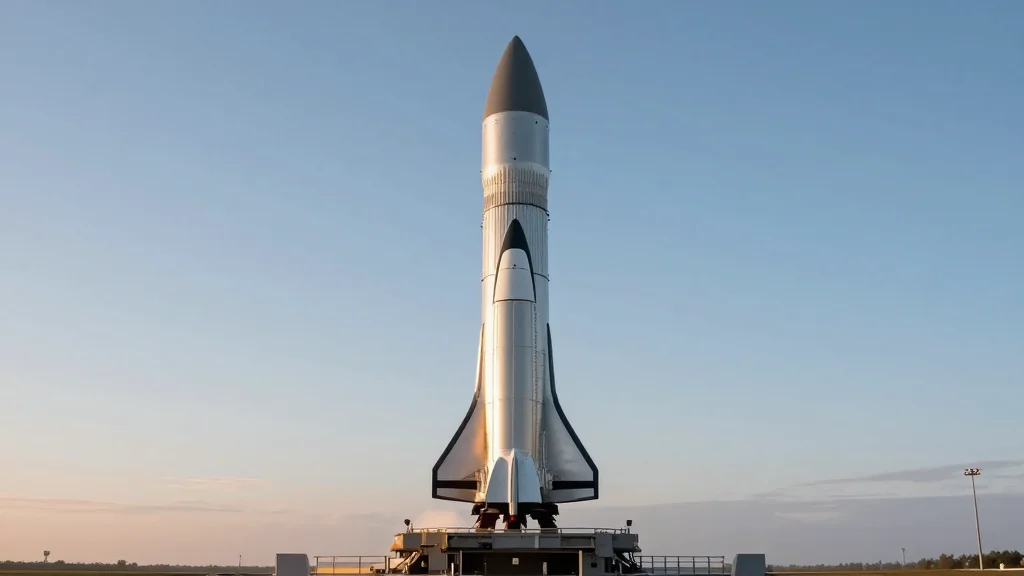
Astron Secures $73.5 Million Series A to Build China’s First Reusable Rocket

Companies Mentioned
Why It Matters
Astron’s capital raise marks a watershed moment for China’s nascent private launch industry, which has historically been dominated by state‑owned entities. By securing sizable venture backing, the company demonstrates that investors see a viable commercial market for reusable launch services within China’s rapidly expanding satellite ecosystem. If Astron meets its 2027 flight target, it could force traditional launch providers to accelerate their own reusability programs, driving down launch costs across the region. The funding also signals a broader shift in China’s policy environment, where regulators are gradually opening pathways for private firms to operate launch vehicles. Successful commercialization of Astron’s technology would provide a template for other startups, potentially spurring a wave of innovation that mirrors the early 2000s U.S. commercial space boom.
Key Takeaways
- •Astron raised 500 million yuan ($73.5 million) in a Series A round, total funding now 1 billion yuan ($147 million).
- •Series A was co‑led by Gaorong Capital and Kunlun Capital, with participation from Zijin Mining, GL Ventures and Cornerstone Capital.
- •The AS‑1 reusable carrier rocket features a stainless‑steel body, LOX‑methane engines and a chop‑stick‑style recovery system.
- •Astron plans to build three rockets in 2026 and achieve a maiden orbital flight in the first half of 2027.
- •A new assembly base in Hunan province is slated for delivery in Q3 2026, targeting eight rockets per year once fully operational.
Pulse Analysis
Astron’s financing round underscores a maturation of China’s private launch ecosystem that has lagged behind the United States and Europe. The involvement of heavyweight venture firms such as Gaorong and Kunlun suggests that capital markets now view reusable launch technology as a defensible commercial proposition, not merely a government‑driven research effort. This shift is likely to catalyze further fundraising cycles, as entrepreneurs seek to replicate Astron’s stainless‑steel, methane‑based architecture, which promises lower material costs and higher thermal resilience.
From a competitive standpoint, Astron’s chop‑stick recovery method differentiates it from rivals that favor propulsive landing or parachute‑based retrieval. If the system proves reliable, it could reduce turnaround time between flights, a key metric for satellite constellation operators that demand weekly or even daily launch cadence. However, the company faces steep technical hurdles: scaling stainless‑steel manufacturing, mastering methane combustion stability, and achieving precise catch‑arm deployment in the harsh launch environment. Failure to meet its 2027 timeline could erode investor confidence and allow state‑backed programs to re‑assert dominance.
Looking forward, the broader market will watch Astron’s upcoming ground‑verification tests as a bellwether for private‑sector reusability in China. Successful demonstration could trigger a cascade of contracts from domestic telecom and remote‑sensing firms, while also attracting international customers seeking cost‑effective access to the Chinese launch corridor. Conversely, any setbacks may reinforce the perception that China’s commercial space sector remains dependent on state resources, slowing the diversification of launch services in the region.
Astron Secures $73.5 Million Series A to Build China’s First Reusable Rocket
Comments
Want to join the conversation?
Loading comments...