Astronomers Discover a Bright Supernova Using Gravitational Lensing for the First Time
•January 6, 2026
0
Why It Matters
The magnified, multiply imaged supernova offers a precise, independent method to measure the Hubble Constant and map dark‑matter distribution, helping resolve the current cosmological tension. It proves the observational approach that next‑generation surveys will use to expand the sample of distant lensed transients.
Key Takeaways
- •First spatially resolved lensed supernova discovered.
- •Magnification factor ~50 enabled ground‑based detection.
- •Provides independent Hubble constant measurement via time delays.
- •Confirms General Relativity in extreme lensing scenario.
- •Sets precedent for Rubin LSST to find many lensed supernovae.
Pulse Analysis
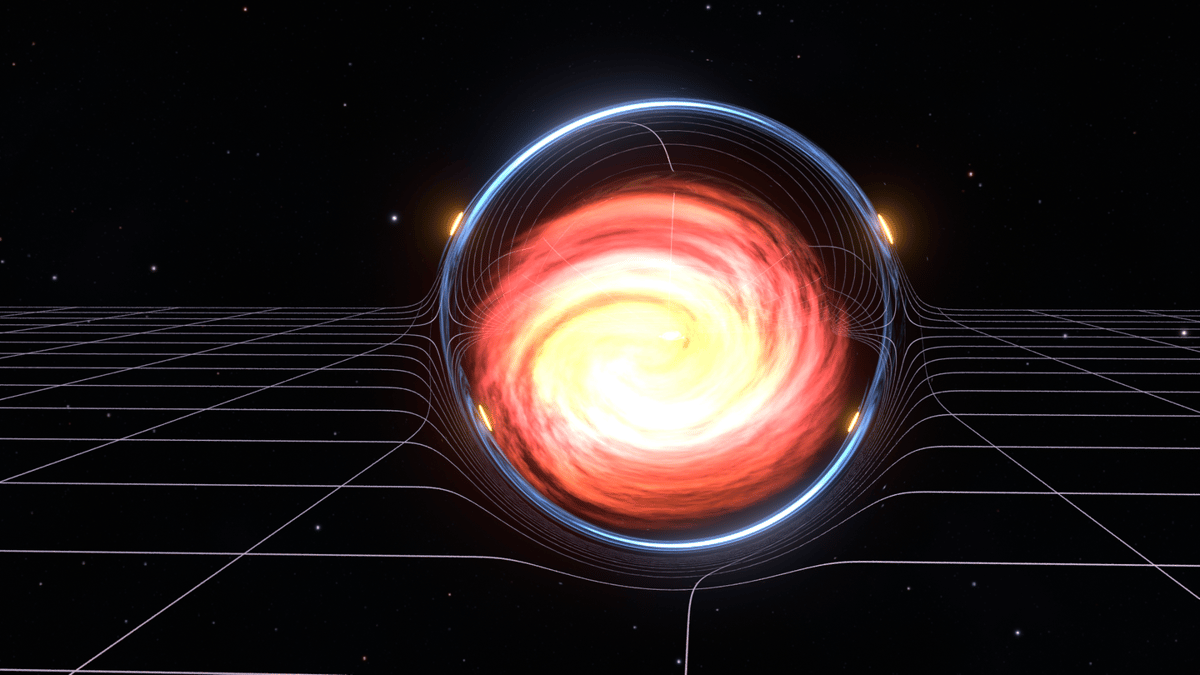
Gravitational lensing has moved from a theoretical curiosity to a practical telescope, allowing astronomers to peer deeper into the cosmos than ever before. By exploiting the curvature of spacetime around massive foreground galaxies, the SN 2025wny event became bright enough for terrestrial observatories to capture detailed spectra and imaging. This breakthrough underscores how coordinated networks of facilities—such as ZTF, NOT, LT, and Keck—can synergize to turn faint, high‑redshift explosions into data‑rich laboratories for astrophysics.
Beyond the novelty of a lensed supernova, the discovery carries weighty cosmological implications. The multiple images arrive at Earth at slightly different times, creating natural time‑delay experiments that directly inform the Hubble Constant, a parameter currently beset by conflicting measurements. Simultaneously, the lensing geometry maps the mass distribution of the intervening galaxies, offering a rare glimpse of dark‑matter clumps on kiloparsec scales. These dual diagnostics provide an independent cross‑check on both cosmic expansion and the invisible scaffolding that shapes galaxy formation, reinforcing the robustness of the standard model while highlighting where it may need refinement.
Looking ahead, SN 2025wny serves as a proof‑of‑concept for the Vera C. Rubin Observatory’s Legacy Survey of Space and Time, which is expected to uncover hundreds of similar events. Follow‑up observations with space‑based platforms like Hubble and JWST will sharpen time‑delay measurements and refine lens models, turning each lensed supernova into a precision cosmology tool. As the sample grows, the community anticipates tighter constraints on the Hubble tension, improved dark‑matter maps, and new tests of General Relativity under extreme conditions, cementing lensed transients as a cornerstone of 21st‑century astrophysics.
Astronomers Discover a Bright Supernova Using Gravitational Lensing for the First Time
0
Comments
Want to join the conversation?
Loading comments...