Astronomers Explore the Surface Composition of a Nearby Super-Earth
Why It Matters
The finding demonstrates JWST’s ability to probe exoplanet surfaces, opening a new frontier beyond atmospheric studies. Understanding surface composition informs models of planetary formation, tectonics, and habitability for rocky worlds.
Key Takeaways
- •JWST MIRI detected infrared spectrum of LHS 3844 b’s dayside.
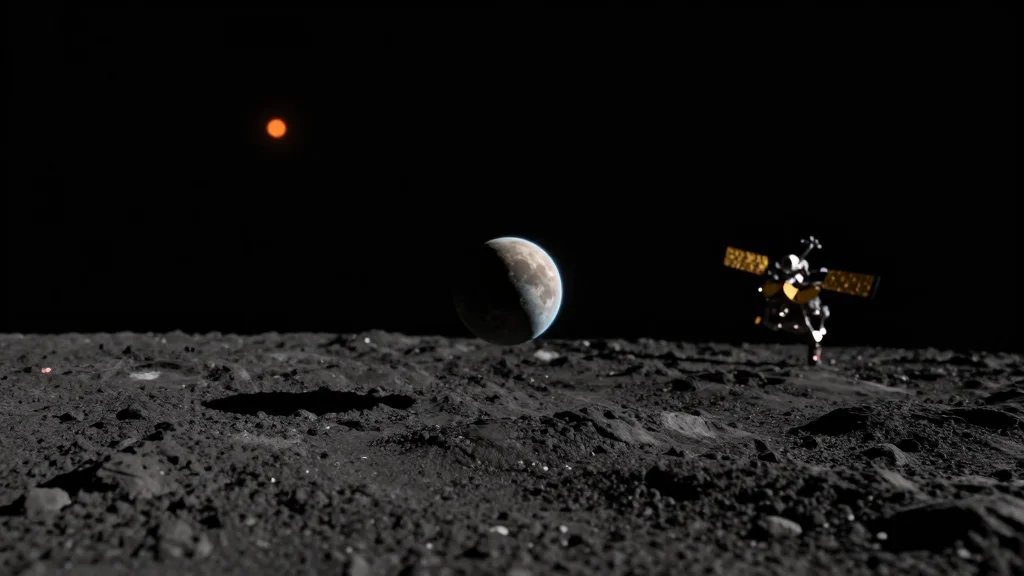
- •Planet shows dark, airless surface resembling Moon or Mercury.
- •Earth‑like silicate crust ruled out; basaltic or regolith likely.
- •Lack of SO₂ suggests no recent volcanic activity.
- •Future JWST observations aim to distinguish solid rock vs. weathered regolith.
Pulse Analysis
Since the launch of the James Webb Space Telescope, astronomers have focused primarily on characterizing exoplanet atmospheres, using transit spectroscopy to detect gases that could hint at habitability. The recent study of LHS 3844 b marks a pivotal shift toward direct surface investigation, leveraging JWST’s Mid‑Infrared Instrument (MIRI) to capture the planet’s thermal emission between 5 and 12 µm. 5 light‑years from Earth, a capability previously reserved for Solar System bodies. The spectrum of LHS 3844 b shows a featureless, low‑albedo signature consistent with basaltic rock or a mature regolith, effectively ruling out an Earth‑like silicate crust that requires prolonged plate tectonics and surface water.
The planet’s permanent dayside, heated to roughly 1000 K, lacks any detectable sulfur‑dioxide emission, suggesting that recent volcanism is absent. These characteristics align the exoplanet with Mercury and the Moon, where space‑weathering darkens the surface through iron‑rich nanophase particles. Consequently, the planet likely represents a barren, airless world that has experienced little geological renewal since its formation.
Future JWST campaigns will target the same wavelength range with higher signal‑to‑noise, enabling researchers to exploit subtle angular emission differences that distinguish solid slabs from powdered regolith. Success in this approach will provide a template for assessing surface conditions on the growing catalog of rocky exoplanets discovered by missions such as TESS and PLATO. By linking surface mineralogy to formation histories, the astronomical community can refine models of planet evolution and better evaluate which worlds might retain volatile reservoirs essential for life. The commercial and scientific investment in next‑generation space telescopes therefore gains a clear pathway toward comprehensive planetary characterization.
Astronomers explore the surface composition of a nearby super-Earth
Comments
Want to join the conversation?
Loading comments...