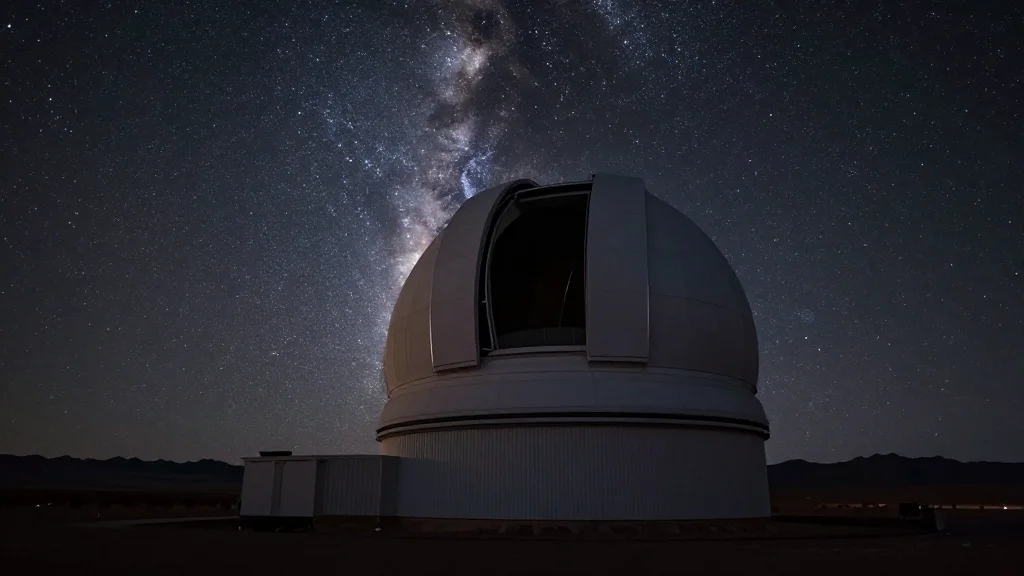
Astronomers Push Back After Energy Project Threatens Atacama’s Dark Skies

Companies Mentioned
Why It Matters
Preserving the Atacama’s darkness is critical not only for the ELT but for the entire global astronomy ecosystem. The desert’s unique atmospheric stability and minimal light pollution enable observations that cannot be replicated elsewhere, making it a strategic asset for space science, exoplanet discovery, and fundamental physics. A failure to safeguard these conditions would diminish the scientific return on the $1.5 billion ELT investment and could set a dangerous precedent for other heritage sites facing industrial pressure. Beyond pure research, the Atacama’s dark skies support a growing space‑technology industry, including satellite tracking, high‑altitude testing, and the Vera C. Rubin Observatory’s survey operations. Strengthened regulations will help maintain Chile’s leadership in space infrastructure, attract further international collaborations, and ensure that renewable‑energy development proceeds without compromising scientific value.
Key Takeaways
- •Astronomers halted a green‑power complex near Paranal after a massive appeal, protecting the Atacama’s dark skies.
- •Chile’s science ministry is revising sky‑preservation laws to tighten criteria for light and radio pollution.
- •The ELT, a $1.5 billion ESO project, will feature 798 mirrors and aim to detect Earth‑like exoplanets by 2030.
- •Chiara Mazzucchelli highlighted >300 clear nights per year, a key factor for world‑class astronomy.
- •Regulatory changes are expected by end‑2026, with monitoring to begin in 2027.
Pulse Analysis
The Atacama showdown illustrates a broader tension between the rapid rollout of renewable‑energy infrastructure and the protection of high‑value scientific assets. While green power is essential for climate goals, the case shows that not all sites are equal; the opportunity cost of compromising a world‑class observatory can outweigh short‑term energy gains. ESO’s ELT represents a multi‑decade, multinational commitment, and any disruption would reverberate through funding agencies across Europe, potentially jeopardizing future large‑scale space‑tech projects.
Historically, the Atacama has been a magnet for both scientific and commercial interests—from mining to satellite launches. The recent regulatory push signals a shift toward a more integrated governance model that balances economic development with scientific stewardship. If Chile can codify clear, enforceable sky‑preservation standards, it will set a benchmark for other nations hosting critical space‑tech facilities, such as the upcoming Lunar Gateway or high‑altitude drone testing sites.
Looking forward, the ELT’s success will depend on sustained political will and community engagement. The telescope’s ability to image exoplanet atmospheres could catalyze a new wave of commercial space ventures, from private exoplanet tourism concepts to advanced spectroscopy services. Protecting the Atacama’s darkness is therefore not just a scientific imperative but a strategic economic one, ensuring that the region remains a launchpad for the next generation of space technology.
Astronomers Push Back After Energy Project Threatens Atacama’s Dark Skies
Comments
Want to join the conversation?
Loading comments...