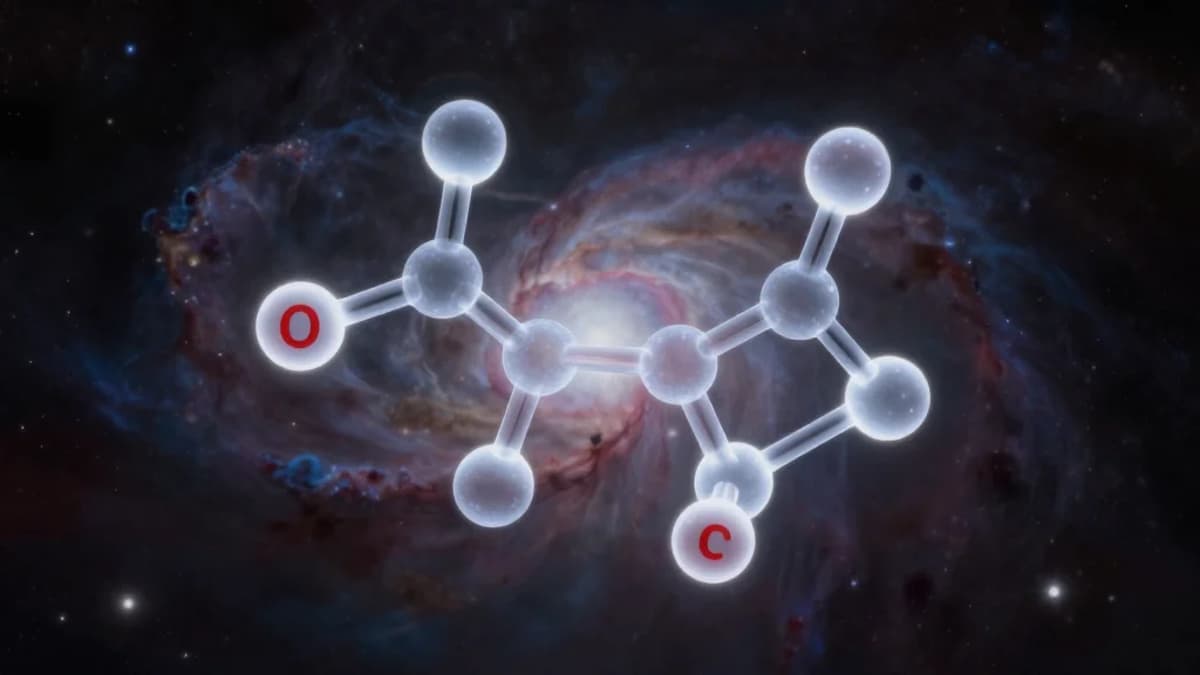
Astrophysicists Discover Largest Sulfur-Containing Molecular Compound in Space
•January 23, 2026
0
Why It Matters
The detection proves that sophisticated sulfur chemistry exists in starless clouds, reshaping models of how life's molecular precursors form and are delivered to emerging planetary systems.
Key Takeaways
- •Largest sulfur molecule detected in interstellar space
- •C6H6S found in cloud G+0.693–0.027
- •Lab synthesis enabled precise radio fingerprint identification
- •Discovery links interstellar chemistry to cometary organics
- •Suggests pre‑stellar formation of life's building blocks
Pulse Analysis
The detection of 2,5‑cyclohexadiene‑1‑thione (C₆H₆S) marks a watershed moment for astrochemistry, expanding the known inventory of sulfur‑bearing species beyond the six‑atom limit that has dominated previous surveys. Located in the massive molecular cloud G+0.693–0.027 near the Galactic Center, this thirteen‑atom cyclic compound demonstrates that complex organosulfur chemistry can thrive in cold, starless environments. By confirming a stable, ring‑shaped sulfur molecule in the interstellar medium, researchers have provided the first concrete evidence of a chemical bridge between space and the organic material later found in comets and meteorites.
The breakthrough relied on a two‑step approach that combined laboratory synthesis with high‑resolution radio astronomy. At the Max Planck Institute, scientists generated C₆H₆S by subjecting thiophenol to a 1,000‑volt electrical discharge, then recorded its emission spectrum with a custom‑built spectrometer capable of seven‑digit frequency precision. Those laboratory fingerprints were cross‑matched against data from the IRAM 30 m and Yebes 40‑meter telescopes, part of a large survey conducted by the Centro de Astrobiología. This synergy between controlled experiments and deep‑sky observations eliminated ambiguity and set a new standard for identifying complex interstellar molecules.
Beyond its immediate chemical relevance, the finding reshapes theories about the timing of prebiotic synthesis. If a sophisticated sulfur ring can assemble before star formation, then the raw material for enzymes and cofactors may be inherited by nascent planetary systems rather than produced locally. This perspective aligns with recent detections of amino‑acid precursors in cometary samples, suggesting a continuous chemical lineage from molecular clouds to solar system bodies. Future surveys targeting larger organosulfur species could reveal an even richer inventory, accelerating the search for universal pathways to life's essential chemistry.
Astrophysicists discover largest sulfur-containing molecular compound in space
0
Comments
Want to join the conversation?
Loading comments...