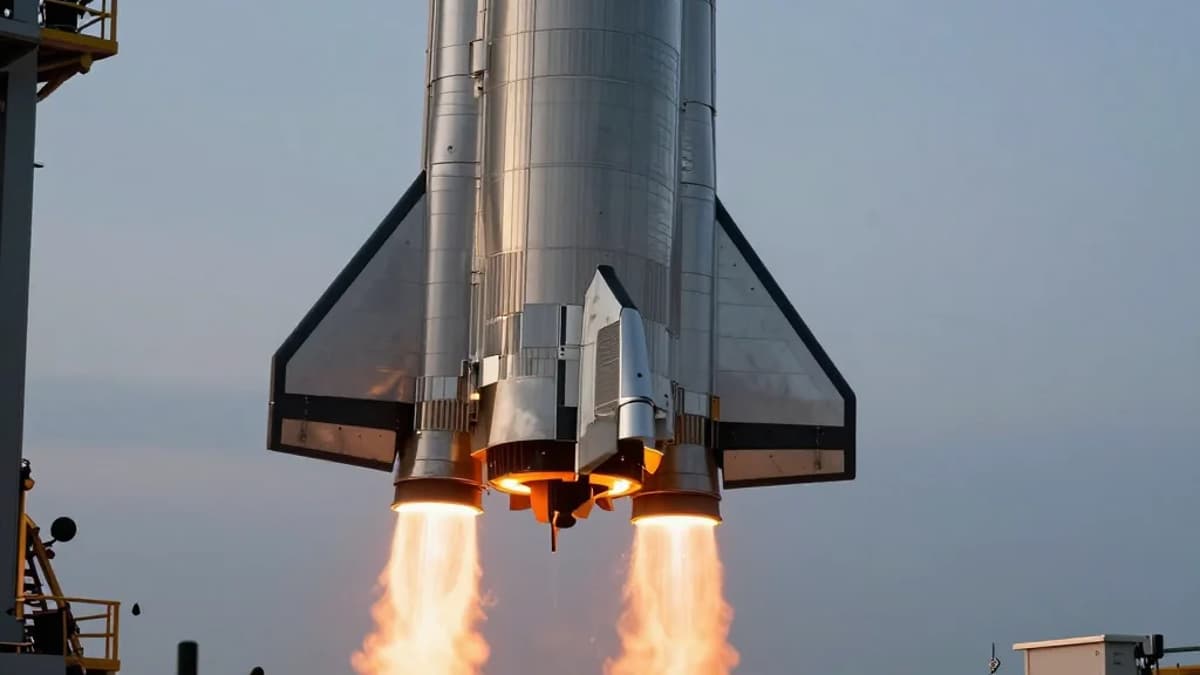
Autophage Rocket Concept Wins EU Prize for Debris Free Launch Technology
•January 29, 2026
0
Companies Mentioned


Why It Matters
By delivering debris‑free, lower‑cost launch capability, the technology strengthens European strategic autonomy and addresses mounting orbital‑congestion concerns.
Key Takeaways
- •EU awards €950k for autophage propulsion innovation.
- •Autophage design cuts liftoff mass by 40%.
- •Eliminates orbital debris by consuming rocket structure.
- •Uses green, non‑toxic propellants for cleaner launches.
- •Targets €5.9bn satellite mobility market by 2028.
Pulse Analysis
The autophage propulsion system flips conventional launch architecture on its head: the vehicle’s fuselage becomes fuel, burning away like a candle and leaving no residual hardware in orbit. This radical mass‑saving approach not only slashes launch expenses by an estimated 40%, but also aligns with tightening environmental regulations by employing non‑toxic, non‑explosive propellants. For operators, the result is a more responsive launch profile, with precise ignition and shutdown capabilities that can adapt to diverse mission demands, from low‑Earth‑orbit insertions to deep‑space probes.
Beyond the engineering breakthrough, the autophage concept arrives at a pivotal moment for the European space sector. With the satellite mobility market projected at €5.9 billion, players such as Thales Alenia Space and Airbus are seeking cost‑effective, sustainable launch solutions to stay competitive against emerging US and Asian providers. Alpha Impulsion’s EU backing signals confidence in home‑grown innovation, bolstering Europe’s strategic autonomy and reducing reliance on foreign launch services. The technology also dovetails with the continent’s broader agenda to mitigate space debris, a growing regulatory and commercial priority.
Commercialization, however, will hinge on navigating certification pathways and scaling production across the 48‑country patent portfolio. Alpha Impulsion aims to field propulsion units for satellites and next‑generation launchers by 2028, targeting operators focused on in‑orbit servicing, debris removal, and constellation expansion. If successful, the autophage model could set a new industry standard for zero‑waste launches, catalyzing a shift toward greener, more affordable access to space and reshaping the economics of orbital logistics.
Autophage rocket concept wins EU prize for debris free launch technology
0
Comments
Want to join the conversation?
Loading comments...