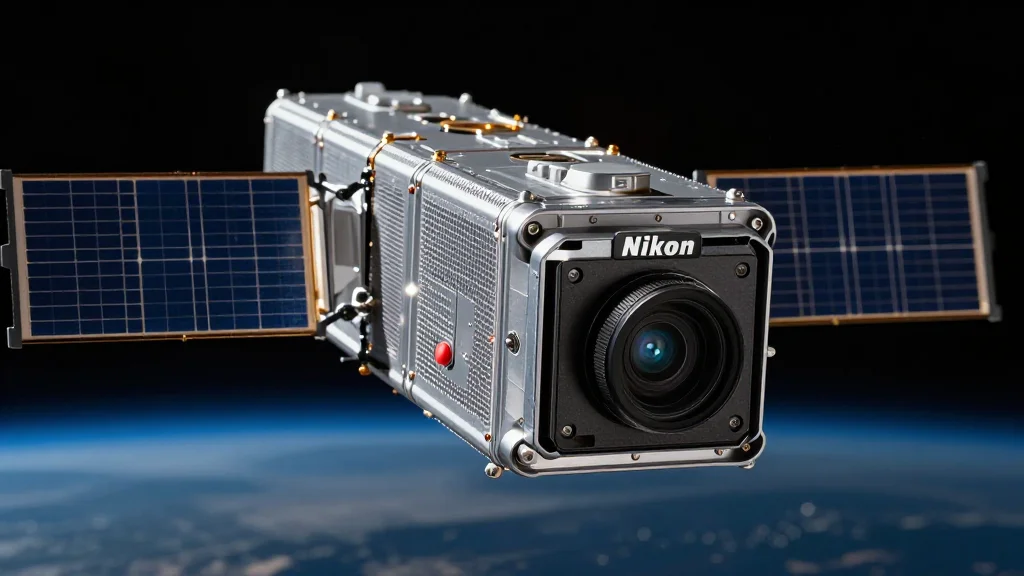
Axelspace to Launch Seven Nikon‑Equipped Earth‑Observation Satellites on SpaceX Falcon 9

Why It Matters
Axelspace’s deployment of seven Nikon‑built satellites expands Japan’s autonomous Earth‑observation capacity, reducing reliance on foreign imagery providers and strengthening national security intelligence. The daily‑imaging capability will enhance applications ranging from agriculture and disaster response to environmental monitoring, aligning with global sustainability goals. The partnership also signals a maturing Japanese SpaceTech ecosystem where domestic optics, satellite manufacturers, and international launch services converge. Success could spur further investment in small‑sat constellations, encourage other Japanese firms to pursue similar collaborations, and reinforce the strategic importance of medium‑resolution data in a market increasingly dominated by high‑resolution, high‑cost systems.
Key Takeaways
- •Axelspace will launch seven GRUS‑3 satellites on a SpaceX Falcon 9 after July from Vandenberg
- •Satellites carry Nikon‑made telescopes, improving resolution to 2.2 m
- •Daily coverage will reach 2.3 million km², enabling near‑daily imaging of Japan
- •Company holds LOIs with >25 commercial customers and a defence ministry contract
- •Launch creates Japan’s first domestically sourced daily‑imaging EO constellation
Pulse Analysis
Axelspace’s move reflects a broader shift toward regional EO constellations that prioritize revisit rate and data sovereignty over ultra‑high resolution. By targeting a 2.2‑metre resolution, the firm accepts a modest trade‑off in detail to achieve daily global coverage—a model that resonates with sectors like precision agriculture, flood monitoring, and logistics, where timeliness often outweighs pixel count.
Historically, Japan has relied on foreign providers for high‑frequency imagery, but the loss of Daichi‑3 highlighted vulnerabilities in the nation’s space‑based intelligence chain. Axelspace’s defence contract illustrates how government demand can catalyze commercial innovation, creating a feedback loop that accelerates technology adoption. The involvement of Nikon, a legacy optics brand, adds credibility and may lower procurement barriers for agencies accustomed to traditional imaging hardware.
Looking ahead, the success of the GRUS‑3 constellation could trigger a cascade of follow‑on investments, both from Japanese venture capital and from foreign partners seeking to tap Japan’s precision optics expertise. If the satellites meet performance targets, Axelspace may expand the constellation, potentially integrating hyperspectral or SAR payloads to diversify its data portfolio. The partnership also reinforces SpaceX’s dominance as a launch provider for non‑U.S. customers, suggesting that future Japanese satellite programs will continue to piggyback on Falcon 9’s reliability and cost efficiency.
Axelspace to Launch Seven Nikon‑Equipped Earth‑Observation Satellites on SpaceX Falcon 9
Comments
Want to join the conversation?
Loading comments...