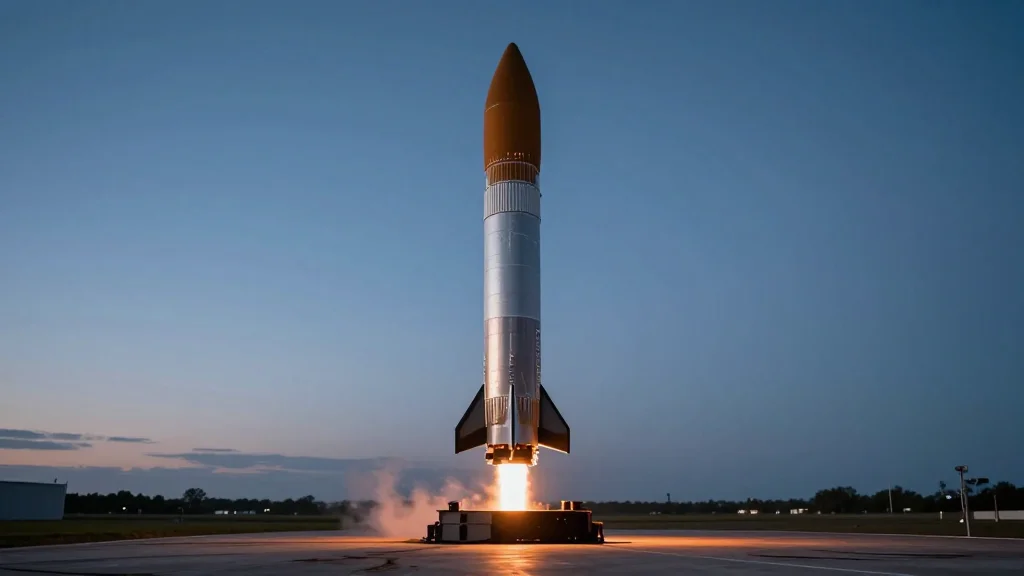
Beyond the Fireball: My Reflections on the New Glenn Explosion
Companies Mentioned

Why It Matters
The incident threatens the timeline for Artemis lunar logistics and underscores the high‑risk nature of developing reusable heavy‑lift rockets, affecting both government and commercial space markets.
Key Takeaways
- •New Glenn exploded in hot‑fire test at SLC‑36; no injuries
- •Launch mount and pad damaged; repairs may take months
- •Investigation will probe engines, propellant, avionics, and ground equipment
- •Potential Artemis schedule delays hinge on New Glenn’s return timeline
- •Blue Origin must rebuild vehicle and re‑qualify launch complex
Pulse Analysis
Hot‑fire tests are the most demanding rehearsals a launch system can undergo, replicating near‑launch conditions while the vehicle remains restrained. Blue Origin’s decision to conduct such a test on New Glenn was meant to validate propellant loading, valve sequencing, structural loads and ground‑support interfaces in a single, high‑stress event. When a localized fault ignited a fire, the resulting explosion not only destroyed the rocket but also inflicted severe damage on the launch mount, flame trench and surrounding infrastructure at SLC‑36. The absence of injuries highlights the effectiveness of safety protocols, yet the physical loss underscores how costly and time‑consuming recovery can be.
Repairing SLC‑36 will be a multi‑phase effort involving site clearance, structural inspections, component replacement and a full re‑qualification campaign. Historical precedents—such as the Atlas‑Centaur failures of the 1960s and recent Starship pad explosions—show that rebuilding can span months to over a year, depending on damage severity and supply‑chain constraints. Blue Origin now faces the dual challenge of reconstructing the launch complex while simultaneously manufacturing a replacement New Glenn booster, a process that will test the company’s production resilience and financial bandwidth.
For NASA’s Artemis program, New Glenn is a cornerstone of the heavy‑lift architecture that will ferry lunar cargo and crew landers. Any delay in returning the vehicle to flight could push back payload delivery windows, forcing NASA to re‑evaluate launch manifest flexibility and potentially lean more heavily on alternative providers like SpaceX. Beyond Artemis, the incident sends a cautionary signal to the broader commercial launch sector: rigorous testing remains essential, but the financial and schedule risks of high‑energy anomalies are significant. Stakeholders will watch closely as Blue Origin navigates the investigation, repairs, and eventual re‑flight, a process that will shape confidence in reusable heavy‑lift systems for years to come.
Beyond the Fireball: My Reflections on the New Glenn Explosion
Comments
Want to join the conversation?
Loading comments...