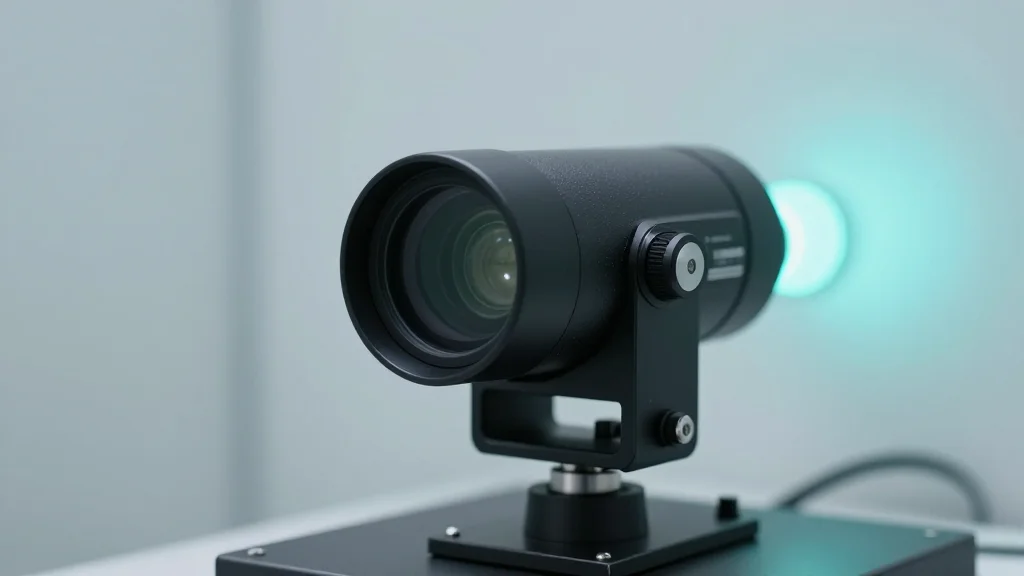
BitFlow Frame Grabber Selected by NASA for Space Radiation Testing of InGaAs Infrared Camera
Companies Mentioned

NASA
SpaceX
Why It Matters
By proving that commercial‑off‑the‑shelf imaging hardware can survive extreme radiation, the test de‑riskes future NASA missions and elevates BitFlow’s standing in the high‑reliability aerospace market.
Key Takeaways
- •BitFlow Axion‑CL selected for NASA’s NSRL radiation test.
- •Frame grabber maintained real‑time data over 100‑foot Ethernet in ion beam.
- •Test revealed SEFIs at lowest LET, guiding ARGOS component screening.
- •Validation boosts BitFlow’s credibility in aerospace and high‑reliability markets.
Pulse Analysis
Space‑based instruments must endure harsh radiation environments that can corrupt sensor data and cripple missions. NASA’s NEPP program leverages ground‑based facilities like the Brookhaven NSRL to simulate these conditions, exposing components to heavy‑ion beams that mimic cosmic rays. In this context, BitFlow’s Axion‑CL frame grabber served as the critical bridge between the PIRT 1280MVCam and the control computer, ensuring uninterrupted image capture and command exchange despite ion flux and extended Ethernet runs. The ability to preserve data integrity under such stress is a benchmark for any imaging system destined for orbit.
The test campaign pushed the InGaAs camera through seven irradiation runs, using iron, silver and terbium ions at energies up to 575 MeV per nucleon. Real‑time monitoring captured Single Event Functional Interrupts (SEFIs) as soon as the lowest linear energy transfer threshold was reached, providing NASA engineers with actionable failure signatures. BitFlow’s Camera Link interface simultaneously carried high‑volume pixel frames and serial commands, allowing immediate diagnostics and post‑run analysis without halting the beam. This dual‑path capability proved essential for building a comprehensive radiation‑hardness profile of the camera, directly influencing the component‑screening criteria for the ARGOS aerosol radiometer.
Beyond the technical win, the successful integration underscores BitFlow’s strategic positioning within the aerospace supply chain. Validation by a premier agency like NASA signals to satellite manufacturers and defense contractors that BitFlow’s commercial‑off‑the‑shelf solutions meet stringent reliability standards, potentially opening doors to new contracts and expanding market share. Backed by Advantech’s global IoT and edge‑computing portfolio, BitFlow can now leverage this credibility to accelerate adoption of its high‑performance frame grabbers in next‑generation space and high‑risk imaging applications.
BitFlow Frame Grabber Selected by NASA for Space Radiation Testing of InGaAs Infrared Camera
Comments
Want to join the conversation?
Loading comments...