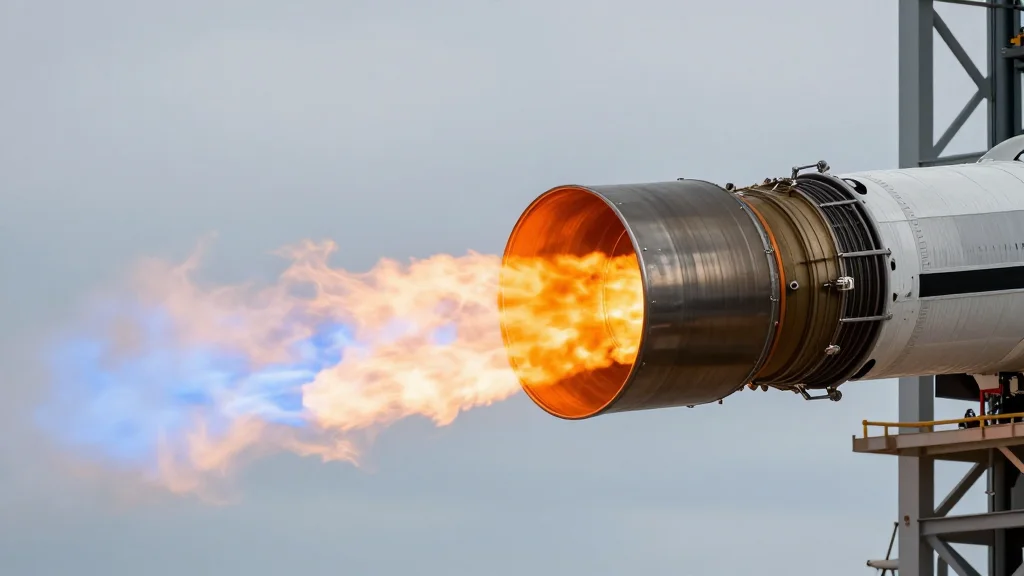
Blue Origin Hot Fires Its First Previously Flown Booster, Prepares for Weekend Launch
Companies Mentioned

Why It Matters
Demonstrating engine replacement and booster reuse brings Blue Origin closer to competitive heavy‑lift launch cadence and validates its strategy to match SpaceX’s high‑reusability economics, influencing satellite operators and NASA lunar‑lander plans.
Key Takeaways
- •New Glenn’s NG-3 booster performed a 20‑second static fire.
- •All seven BE‑4 engines were replaced and upgraded for the test.
- •Booster “Never Tell Me the Odds” is partially reused from NG‑2 mission.
- •Blue Origin targets a launch of AST SpaceMobile’s BlueBird‑7 by April 19.
- •Company aims for up to 25 flights per booster, mirroring SpaceX reuse.
Pulse Analysis
The static‑fire of New Glenn’s NG‑3 booster is a pivotal step in Blue Origin’s heavy‑lift roadmap. By firing seven BE‑4 engines—each delivering roughly 640,000 lbf of thrust—for 20 seconds, the company gathered critical performance data while showcasing a refurbished booster that combines new hardware with proven structures. The test also highlighted a thermal protection upgrade on one nozzle, signaling an iterative design approach aimed at extending engine life and reducing turnaround time.
From a market perspective, the successful hot‑fire positions Blue Origin to compete directly with SpaceX’s Falcon Heavy and upcoming Starship for commercial satellite launches. The imminent launch of AST SpaceMobile’s BlueBird‑7, if cleared, would demonstrate the company’s ability to deliver payloads on a rapid schedule, a key factor for satellite operators seeking flexible access to orbit. Moreover, the reuse strategy—targeting up to 25 flights per booster—mirrors SpaceX’s economics, potentially lowering launch costs and attracting a broader customer base.
Beyond Earth orbit, the NG‑3 test dovetails with Blue Origin’s lunar ambitions. The same launch infrastructure will soon support the Blue Moon Mk. 1 lander, which recently completed thermal‑vacuum testing and is en route to Florida for final integration. Success in this arena could secure Blue Origin’s role in NASA’s Artemis program, where lunar landers must reliably ferry cargo and eventually crew to the Moon’s surface. In sum, the static fire not only validates hardware but also reinforces Blue Origin’s strategic push toward a reusable, cost‑effective launch ecosystem that serves both commercial and deep‑space missions.
Blue Origin hot fires its first previously flown booster, prepares for weekend launch
Comments
Want to join the conversation?
Loading comments...