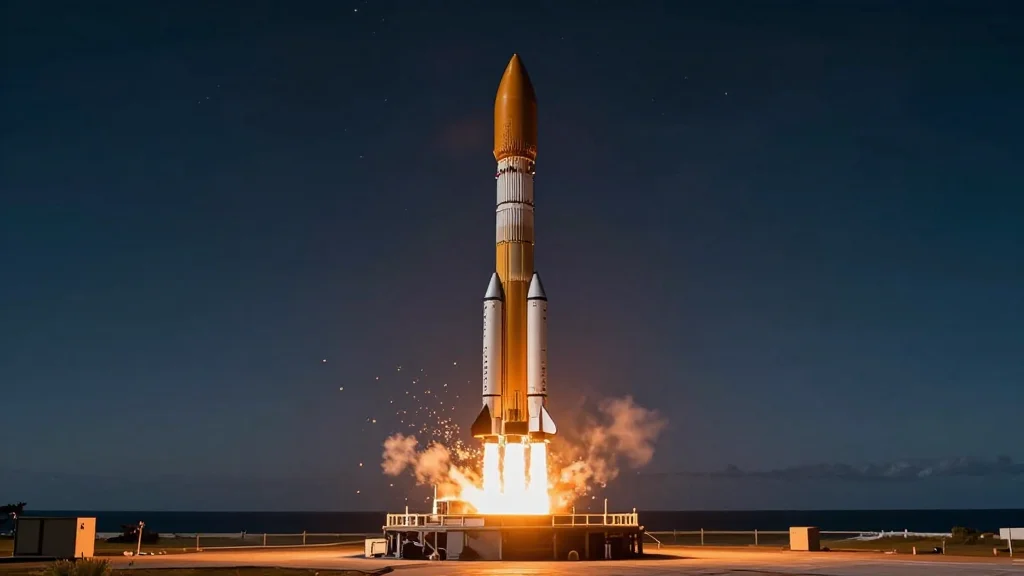
Blue Origin’s New Glenn Rocket Explodes in Florida Static‑Fire Test, Raising Industry Concerns

Companies Mentioned

Why It Matters
The New Glenn explosion strikes at the heart of the United States’ ambition to regain launch leadership and sustain a diversified launch market. NASA’s Artemis program relies on multiple providers to mitigate risk; a delayed or grounded New Glenn could force the agency to consolidate launches with SpaceX, reducing competition and potentially inflating costs. Moreover, the incident highlights the technical challenges of scaling reusable heavy‑lift rockets, a capability that underpins future lunar habitats and deep‑space missions. The involvement of the US Space Force underscores the national security dimension of launch reliability, as any degradation of launch‑pad infrastructure could affect classified payloads and defense readiness. For investors and policymakers, the failure serves as a reminder that even well‑funded ventures face steep engineering hurdles. The outcome of the investigation will shape regulatory standards, influence future funding allocations, and determine whether Blue Origin can remain a viable contender in the next generation of space exploration.
Key Takeaways
- •New Glenn detonated during a static‑fire test in Florida, scattering debris into the ocean and coastal scrubland.
- •NASA, the US Space Force and Blue Origin teams began damage assessment within hours of the explosion.
- •Elon Musk commented on launch‑pad damage risk, reflecting broader industry concerns about pad resilience.
- •The failure jeopardizes Blue Origin’s role in NASA’s Artemis lunar program and may shift contracts toward SpaceX.
- •Regulatory scrutiny of launch‑pad safety and heavy‑lift vehicle certification is expected to intensify.
Pulse Analysis
Blue Origin’s New Glenn was marketed as the United States’ answer to SpaceX’s heavy‑lift capabilities, promising a reusable system that could lift over 45 metric tons to low Earth orbit. The static‑fire explosion not only stalls that narrative but also reopens the debate over whether the U.S. can sustain multiple independent heavy‑lift providers. Historically, the launch market has consolidated around a few players; a failure of this scale could accelerate that trend unless Blue Origin can demonstrate a rapid and transparent recovery.
From a competitive standpoint, SpaceX’s dominance is reinforced each time a rival stumbles. Elon Musk’s off‑hand remark, while not a direct comment on Blue Origin, signals that the industry watches each other's setbacks closely. If NASA reallocates Artemis payloads to Falcon Heavy or Starship, the financial and reputational gap between the two companies widens, potentially influencing future government procurement decisions. Conversely, a thorough investigation that leads to design improvements could restore confidence and even set new safety benchmarks that benefit the entire sector.
Looking ahead, the next 12 months will be critical. Blue Origin must deliver a credible remediation plan, secure NASA’s trust, and reassure investors that the $10 billion personal stake from Jeff Bezos remains protected. The US Space Force’s assessment will also determine whether additional funding or policy adjustments are required to safeguard launch‑pad infrastructure. In sum, the New Glenn explosion is a pivotal moment that could reshape the competitive dynamics of U.S. space launch services and influence the trajectory of lunar exploration initiatives.
Blue Origin’s New Glenn Rocket Explodes in Florida Static‑Fire Test, Raising Industry Concerns
Comments
Want to join the conversation?
Loading comments...