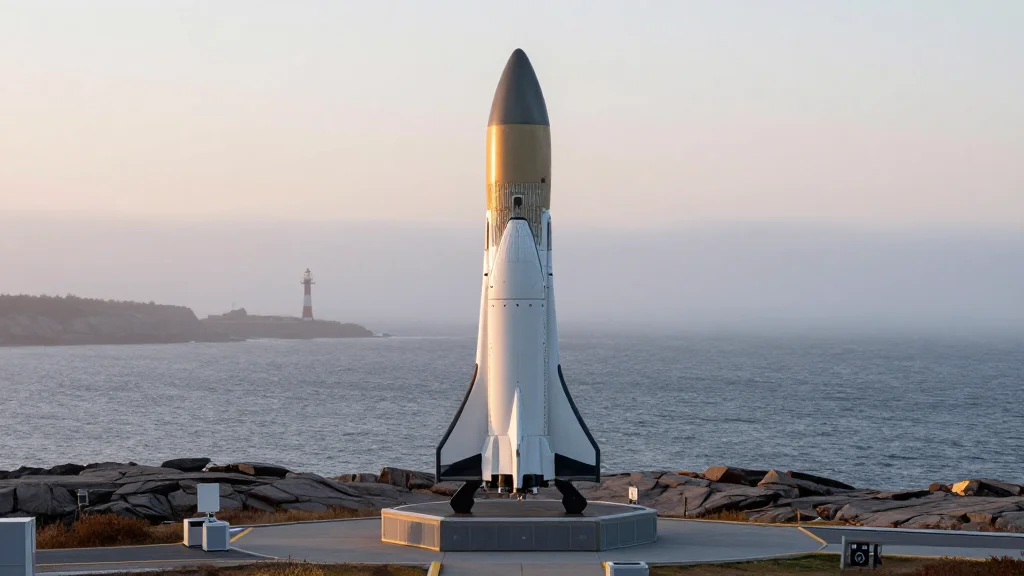
Canada Opens Nova Scotia Spaceport After $200M Federal Lease

Companies Mentioned
Why It Matters
Canada’s entry into the commercial launch market could diversify global launch capacity and reduce dependence on U.S. and European providers. If MLS can achieve regular, reliable launches, the country may attract satellite operators seeking lower‑cost, high‑latitude launch options. Moreover, the Canadian Space Launch Act establishes a regulatory framework that could spur private investment in launch vehicle development, propulsion research, and downstream services, potentially creating a new industrial cluster in Atlantic Canada. Conversely, the project highlights the challenges of building a launch ecosystem from scratch. The modest scale of the Nova Scotia pad, safety concerns for nearby residents, and questions about governance underscore the risk of public funds being allocated to facilities that may struggle to achieve orbital capability. The outcome will inform how other mid‑size nations approach sovereign launch ambitions and the role of government subsidies in nurturing nascent space industries.
Key Takeaways
- •Federal government signed a $200 million, ten‑year lease with Maritime Launch Services for Nova Scotia spaceport.
- •MLS receives $20 million per year for ten years to develop the launch facility.
- •Canadian Space Launch Act aims to create a $40 billion domestic launch industry.
- •MLS claims the site can support 150+ launch days per year, though critics doubt orbital capability.
- •First test flight is targeted for late 2026, pending regulatory approvals.
Pulse Analysis
The Nova Scotia spaceport represents a classic case of government‑seeded market creation. By committing $200 million upfront, Canada is betting that early‑stage subsidies will catalyze private sector growth, a model that has worked in the U.S. with the Commercial Space Launch Amendments Act but is less proven in a market dominated by a few large players. The $20 million annual funding is modest by global standards, yet it may be sufficient for a niche small‑sat launch service if MLS can secure repeat customers.
However, the project's credibility is hampered by governance concerns surrounding Sasha Jacob and the modest physical footprint of the launch pad. In the competitive launch market, reliability and performance trump national pride. MLS must demonstrate that its rockets can reach orbit reliably and safely, especially given the proximity of over a thousand residents. Failure to do so could erode public support and jeopardize future funding.
Strategically, Canada’s move could be more about geopolitical positioning than immediate commercial returns. A sovereign launch capability provides the government with an independent means to deploy small satellites for defense, communications, and scientific missions, reducing reliance on foreign launch services. If the spaceport can evolve into a hub for sub‑orbital research and high‑latitude launches, it may carve out a sustainable niche. The next 12‑18 months will be decisive: successful test flights and clear regulatory pathways could validate the $200 million gamble, while delays or safety incidents could turn the venture into a cautionary tale for other nations aspiring to join the launch club.
Canada opens Nova Scotia spaceport after $200M federal lease
Comments
Want to join the conversation?
Loading comments...