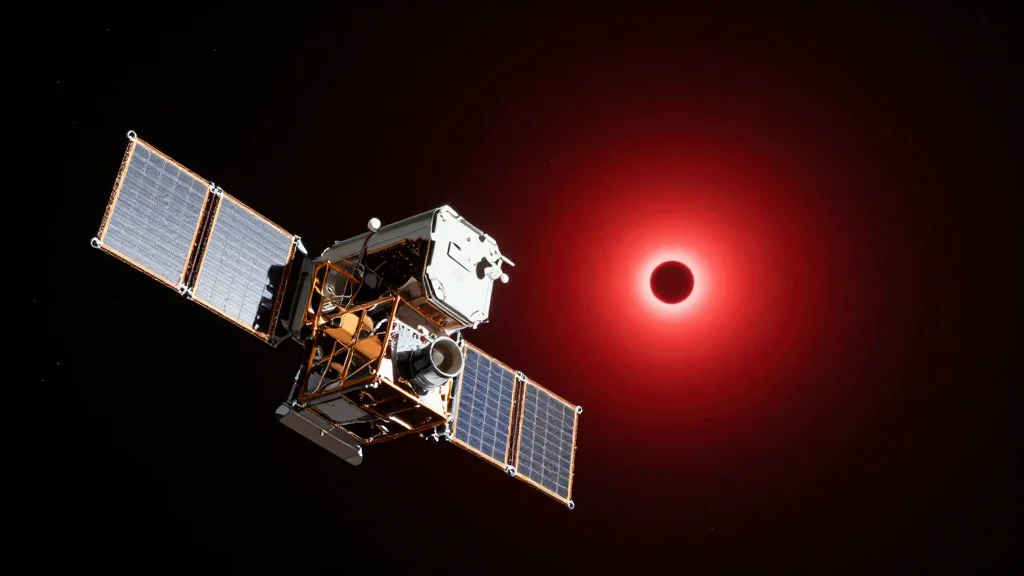
Canada Proposes POET Mission to Hunt Earth-Sized Planets
Why It Matters
Detecting Earth‑sized planets around ultracool dwarfs offers larger transit signals, accelerating the search for habitable worlds and providing immediate targets for next‑generation telescopes.
Key Takeaways
- •POET is a 20‑cm micro‑satellite targeting ultracool dwarfs.
- •Mission aims to detect 100–300 Earth‑sized exoplanets by 2030.
- •Catalog narrowed to ~3,000 dwarfs within 100 pc for observation.
- •Larger transit depth improves detection around 10% Sun‑size stars.
- •Findings will feed JWST and future Habitable World Observatory studies.
Pulse Analysis
The hunt for planets beyond our solar system has entered a new phase as the catalog of confirmed exoplanets nears 6,300, yet fewer than 250 are classified as rocky. Most of these worlds orbit Sun‑like stars, where the transit signal of an Earth‑sized planet is minuscule. Ultracool dwarfs—tiny, cool K‑, M‑type and brown‑dwarf stars—present a compelling alternative because their small radii amplify the dip in brightness when a planet passes in front. POET leverages this geometric advantage to dramatically increase the odds of spotting true Earth analogues.
POET is a 20‑centimeter micro‑satellite, a step up from Canada’s earlier 15‑centimeter MOST and NEOSSat platforms. Its multi‑band detector spans near‑ultraviolet, visible, near‑infrared and short‑wave infrared, enabling precise photometry across a broader spectrum. Researchers distilled an initial list of 7,200 ultracool dwarfs down to roughly 3,000 within 100 parsecs, then prioritized 100–300 targets for a one‑year observing campaign beginning after a 2029 launch. Simulations predict the spacecraft can uncover planets 1–2.5 × Earth’s radius with orbital periods of 7–50 days.
The scientific payoff extends far beyond discovery. Planets identified by POET will be situated close enough for detailed atmospheric studies using the James Webb Space Telescope and the planned Habitable World Observatory, accelerating the search for biosignature gases. By delivering a pipeline of vetted, nearby Earth‑size worlds, POET positions Canada as a key contributor to the next wave of exoplanet science. The mission also demonstrates how modest, cost‑effective microsatellites can complement flagship observatories, reshaping the economics of space‑based planet hunting.
Canada proposes POET mission to hunt Earth-sized planets
Comments
Want to join the conversation?
Loading comments...