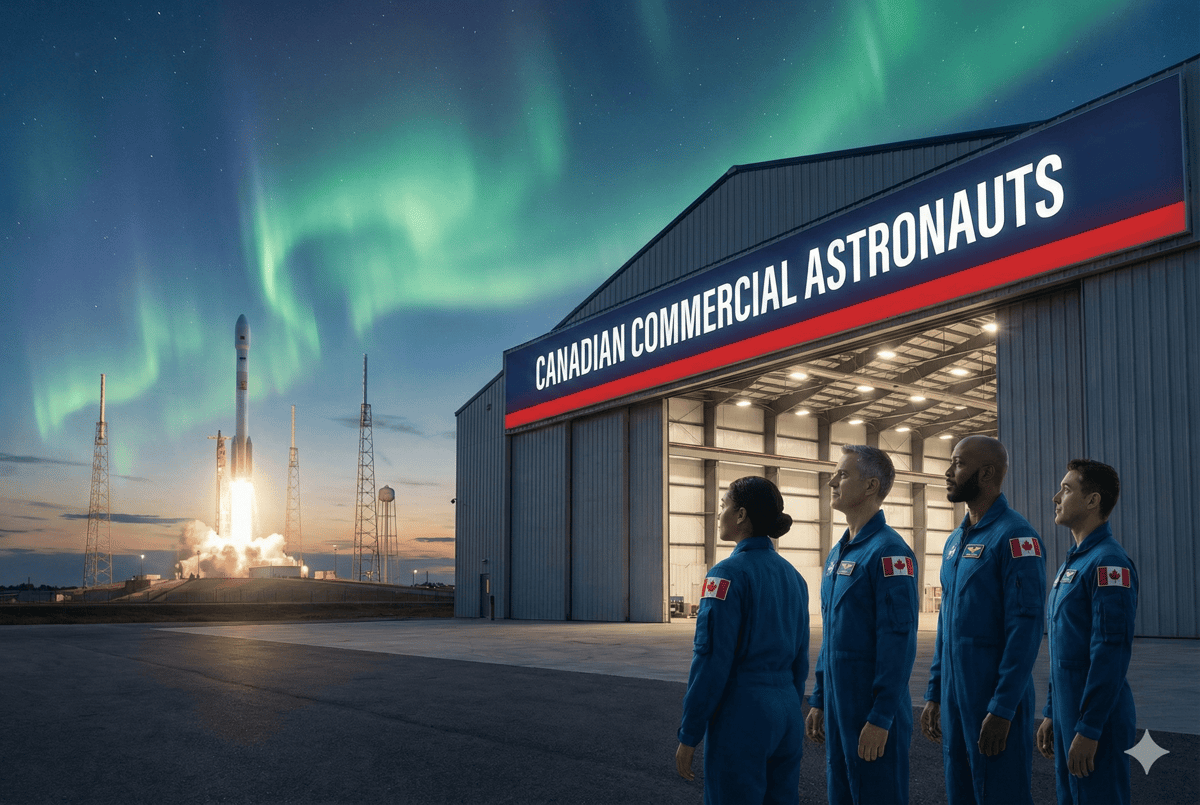
Canadian Commercial Astronauts: The Evolution of Private Spaceflight
•January 8, 2026
0
Companies Mentioned


Why It Matters
The shift to research‑centric private flights accelerates Canadian scientific output and creates new commercial opportunities in the global space economy.
Key Takeaways
- •Laliberté’s 2009 flight proved Canadian private space access.
- •Pathy’s Ax‑1 mission prioritized scientific experiments on ISS.
- •Williams demonstrated affordable suborbital tourism with New Shepard.
- •Pandya will lead Canada’s first professional bio‑astronautics flight.
Pulse Analysis
The past two decades have seen a fundamental re‑orientation of space access, moving from nation‑state programs to a vibrant commercial sector. Canada entered this arena early, with Guy Laliberté’s 2009 Soyuz trip marking the first private Canadian presence in orbit. That milestone demonstrated that high‑net‑worth individuals could meet the rigorous training and safety standards traditionally reserved for government astronauts, opening a pathway for future private missions.
Subsequent flights illustrate the sector’s maturation. Mark Pathy’s 2022 Axiom Mission 1 leveraged SpaceX’s reusable Crew Dragon to conduct multi‑day research on pain perception, Earth observation, and holographic communication, shifting the narrative from sightseeing to citizen‑science. Meanwhile, Jesse Williams’ 2025 New Shepard suborbital hop offered a brief but impactful overview effect, showcasing how lower‑cost, short‑duration flights can democratize space experiences. Training regimes have also evolved, with orbital missions requiring months of specialized preparation and suborbital flights condensing instruction into days, reflecting the differing operational complexities.
Looking ahead, Dr. Shawna Pandya’s planned 2026 bio‑astronautics mission with Virgin Galactic’s Delta Class epitomizes the next frontier: professional, research‑driven commercial flights. As launch costs continue to fall and vehicle reliability improves, Canada’s private astronauts will become regular contributors to scientific discovery and commercial supply chains. This growth stimulates a broader NewSpace economy, generating demand for Canadian aerospace suppliers, insurance, and regulatory expertise, and positioning Canada as a key player in the global space marketplace.
Canadian Commercial Astronauts: The Evolution of Private Spaceflight
0
Comments
Want to join the conversation?
Loading comments...