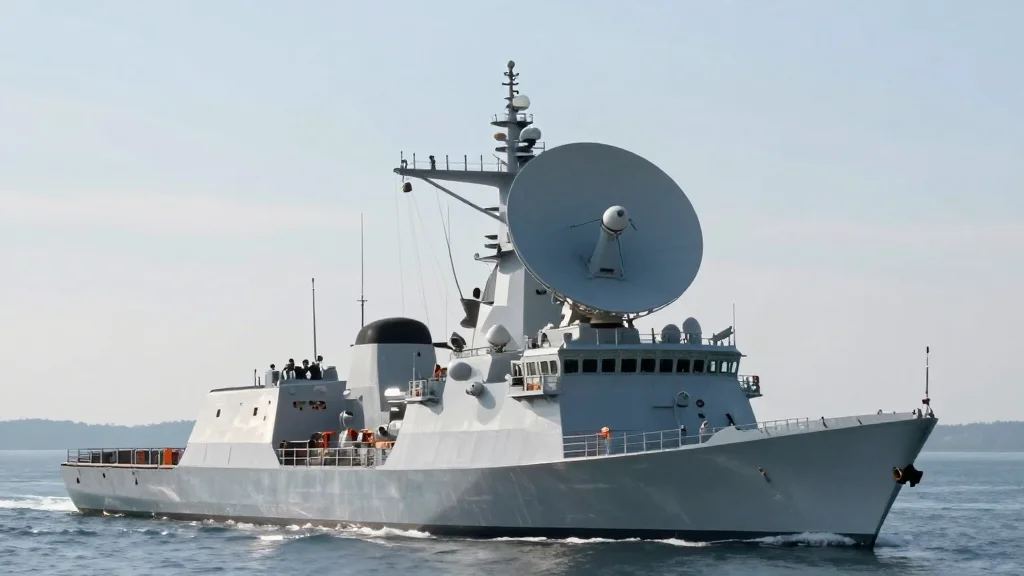
Canadian Navy to Trial All.Space Hydra 4 Terminal
Companies Mentioned
Why It Matters
The trial signals a shift toward flexible, high‑capacity, multi‑orbit satcom for naval forces, enhancing operational resilience and data throughput in contested maritime environments.
Key Takeaways
- •RCN testing All.Space Hydra 4 terminal in Victoria.
- •Hydra 4 supports Ka, Ku, L bands and Starlink, Iridium.
- •Potential fleet deployment on Halifax and Harry DeWolf vessels.
- •Hydra MAX roadmap promises up to 1 GHz Ka bandwidth.
- •Multi‑orbit connectivity improves naval communications across Arctic regions.
Pulse Analysis
The Royal Canadian Navy’s decision to trial a new satellite‑communications terminal reflects a broader shift in maritime defence toward flexible, high‑capacity connectivity. Traditional naval satcom has relied on single‑band, geostationary links that can be vulnerable to jamming and limited in bandwidth. Modern operations, especially in the contested Arctic and Pacific theatres, demand real‑time data exchange, high‑resolution imagery, and resilient links that can survive interference. Multi‑band, multi‑orbit solutions address these challenges by leveraging both military and commercial constellations, offering redundancy and higher throughput without the need for extensive hardware overhauls.
All.Space’s Hydra 4 terminal is built to operate across Ka‑band, Ku‑band and L‑band frequencies while simultaneously accessing the Starlink and Iridium constellations. This multi‑orbit capability enables a single antenna to maintain continuous links as vessels move between coverage zones, reducing the need for multiple dedicated terminals. The RCN’s shore‑based trials at the Maritime Forces Pacific base in Victoria will evaluate link stability, latency, and bandwidth under realistic maritime conditions. Early results could accelerate a fleet‑wide rollout on Halifax‑class frigates and Harry DeWolf‑class offshore patrol vessels, modernising Canada’s naval communications stack.
The next step on All.Space’s roadmap, Hydra MAX, promises up to 500 MHz of instantaneous bandwidth per beam and a total of 1 GHz aggregate in Ka‑band, compatible with emerging constellations such as Telesat Lightspeed and Amazon’s Leo. For the Canadian Navy, that translates into higher‑resolution sensor feeds, faster command‑and‑control data streams, and more robust anti‑jamming resilience across the High North. Industry observers see the trial as a bellwether for other allied fleets seeking to blend commercial satellite services with mission‑critical defence communications, accelerating the convergence of civilian and military satcom ecosystems.
Canadian Navy to Trial All.Space Hydra 4 Terminal
Comments
Want to join the conversation?
Loading comments...