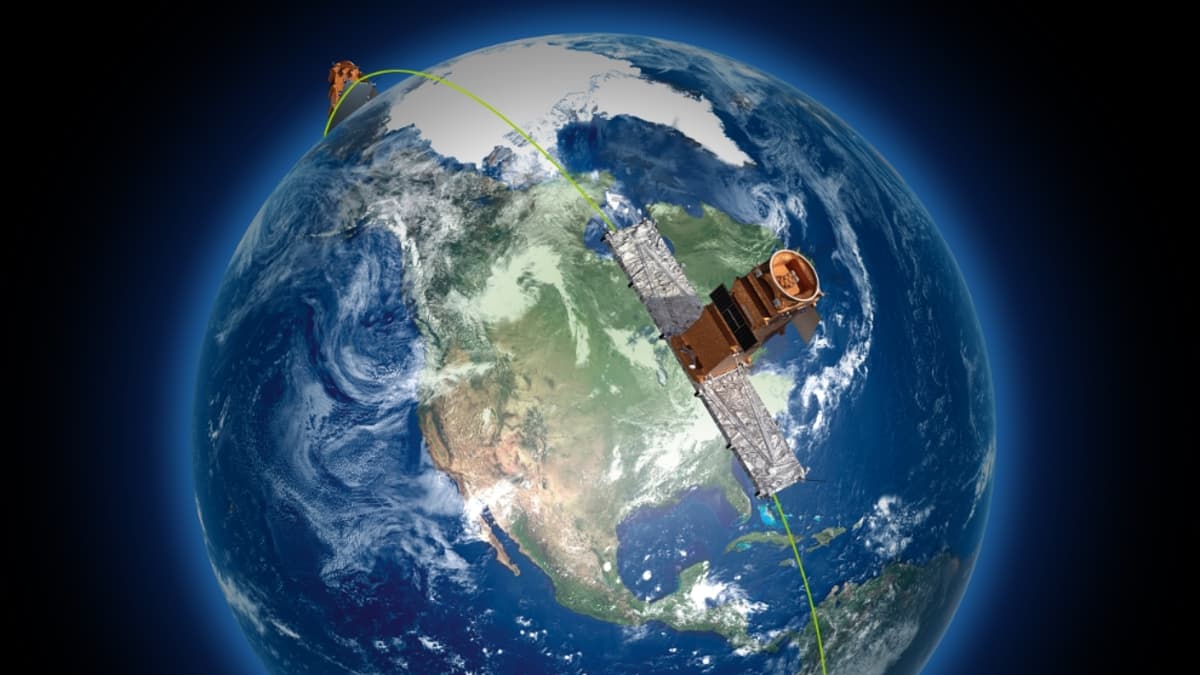
Canadian Space Agency Looking for Ground Segment Concept Studies for RADARSAT+
•January 28, 2026
0
Companies Mentioned

Why It Matters
A robust ground segment is critical for timely, high‑quality Earth‑observation data, strengthening Canada’s strategic autonomy and commercial SAR market position.
Key Takeaways
- •CSA seeks modern ground segment for RADARSAT+.
- •$1.012 billion federal investment backs next‑gen SAR satellites.
- •Proposal deadline set for March 24 2026.
- •MDA awarded long‑lead parts contract for RCM replenishment.
- •Study will assess technology maturity, risks, mitigation strategies.
Pulse Analysis
Canada’s commitment to synthetic‑aperture‑radar (SAR) technology has deep roots, dating back to the original RADARSAT program that pioneered civilian radar imaging. The recent $1.012 billion allocation underscores the government’s intent to keep the nation at the forefront of Earth‑observation capabilities, especially as climate monitoring, disaster response, and maritime surveillance demand ever‑more precise data. By advancing to RADARSAT+, Canada aims to deliver higher resolution imagery, faster revisit times, and expanded spectral bands, reinforcing its role in global SAR networks.
A ground segment is the operational backbone that transforms raw satellite telemetry into actionable intelligence. The CSA’s request for concept studies reflects the complexity of integrating emerging technologies such as cloud‑native processing pipelines, AI‑driven anomaly detection, and secure, high‑throughput data links. Evaluating technology readiness, identifying risk vectors, and outlining mitigation pathways are essential to avoid costly overruns and ensure mission continuity. Vendors will need to propose scalable architectures that can accommodate future satellite constellations while maintaining interoperability with existing national and allied infrastructures.
The commercial implications are significant. A modernized ground segment can accelerate data delivery to private firms, research institutions, and government agencies, unlocking new revenue streams in sectors like agriculture, oil‑and‑gas, and defense. Moreover, the open‑competition model invites innovative Canadian and international players, fostering a vibrant ecosystem around SAR services. With the proposal deadline in March 2026, stakeholders have a narrow window to shape a system that could define Canada’s space‑based observation capabilities for the next decade.
Canadian Space Agency looking for ground segment concept studies for RADARSAT+
0
Comments
Want to join the conversation?
Loading comments...