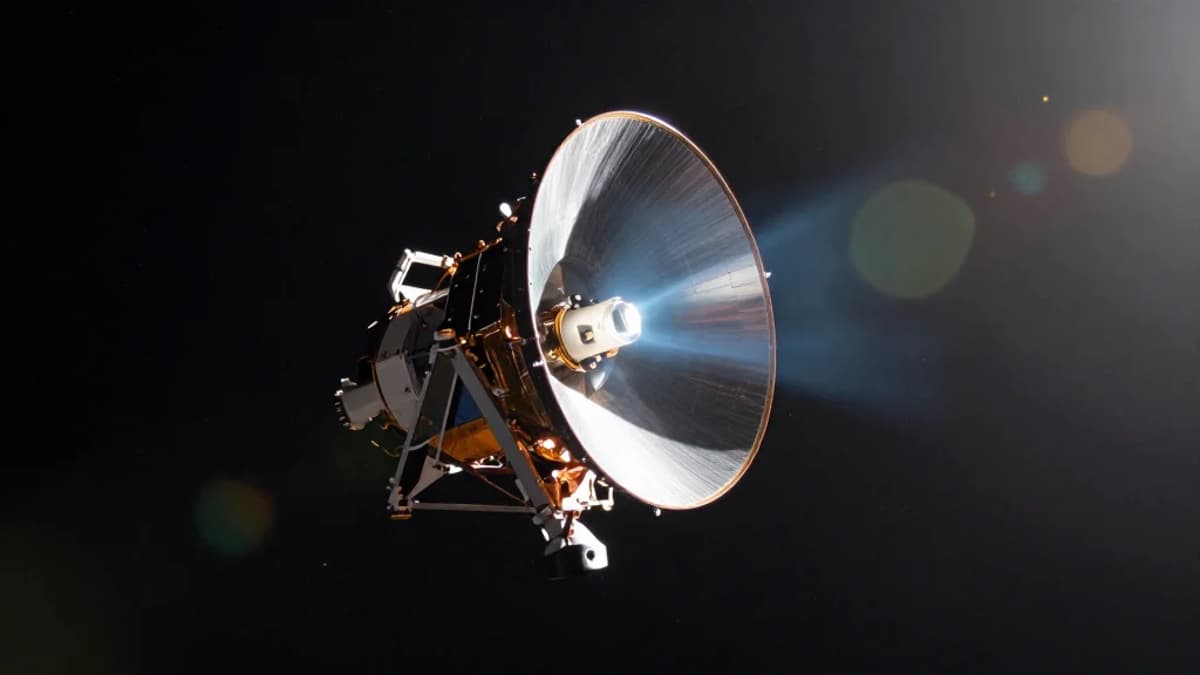
Chandra Catalog Now Contains 1.3 Million X-Ray Detections Across the Sky
•January 25, 2026
0
Why It Matters
The enlarged catalog provides an unprecedented dataset for studying high‑energy astrophysical phenomena, accelerating discovery across cosmology and galaxy evolution. Open access empowers both academia and industry to develop advanced analytics and AI models on a truly global X‑ray map.
Key Takeaways
- •Catalog lists 1.3 million X‑ray sources.
- •Data spans over two decades of observations.
- •Uniform processing enables cross‑mission comparisons.
- •Public access accelerates multi‑wavelength research.
- •Supports AI‑driven source classification.
Pulse Analysis
The Chandra X‑ray Observatory, launched in 1999, has become the workhorse for high‑energy astrophysics, delivering sharp images of black holes, supernova remnants, and hot gas in galaxy clusters. Its legacy data are now compiled in the Chandra Source Catalog (CSC), which this year reached a landmark 1.3 million distinct X‑ray detections—roughly ten times the size of the original release. By aggregating two decades of observations into a single, searchable repository, the CSC transforms a scattered archive into a coherent sky map that researchers can explore instantly.
The latest CSC version benefits from uniform re‑processing pipelines that correct instrumental drift, improve astrometric precision to sub‑arcsecond levels, and standardize flux measurements across all observations. Integrated web tools and a robust API allow scientists to cross‑match X‑ray sources with optical, infrared, and radio catalogs in real time, unlocking multi‑wavelength insights that were previously labor‑intensive. Early studies already demonstrate the catalog’s power, revealing new candidate quasars, refining the mass distribution of galaxy clusters, and pinpointing transient events for rapid follow‑up.
Beyond pure astronomy, the expanded catalog fuels data‑intensive applications such as machine‑learning classification of X‑ray sources and predictive modeling of high‑energy phenomena. Open access lowers barriers for startups and academic groups to develop AI tools that sift through millions of detections, accelerating the path from raw data to scientific breakthroughs. As upcoming missions like Athena and Lynx prepare to probe deeper into the X‑ray universe, the Chandra catalog will serve as a critical baseline, ensuring continuity and comparative analysis across generations of observatories.
Chandra catalog now contains 1.3 million X-ray detections across the sky
0
Comments
Want to join the conversation?
Loading comments...