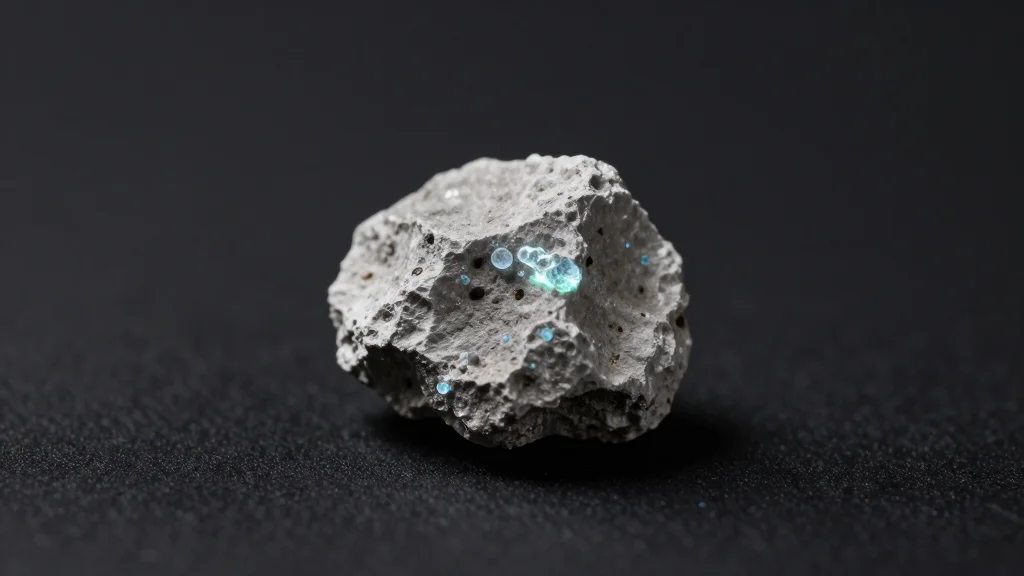
Chang'e Mission Samples Reveal How Exogenous Organic Matter Evolves on the Moon
Why It Matters
Understanding how exogenous organics survive and transform on an airless body informs models of volatile delivery to Earth and guides future astrobiology investigations. The results also provide a benchmark for interpreting organic signatures on other planetary surfaces.
Key Takeaways
- •Chang'e‑5 and Chang'e‑6 samples contain nitrogen‑bearing organics.
- •Organics appear in particle, surface‑adhered, and inclusion forms.
- •Isotopic signatures indicate impact‑driven evaporation‑condensation processes.
- •Solar‑wind implantation fingerprints confirm in‑situ lunar processing.
- •Findings provide a timeline for exogenous organic evolution on airless bodies.
Pulse Analysis
The Moon’s geologically quiescent surface makes it a natural archive for material that bombarded the inner solar system billions of years ago. While Apollo missions detected carbon and nitrogen, the Chang’e‑5 and Chang’e‑6 missions delivered fresh, uncontaminated regolith that allowed scientists to probe organics at the sub‑micron scale. By combining scanning electron microscopy, energy‑dispersive spectroscopy and NanoSIMS depth profiling, the team identified three distinct morphologies of organic matter, each revealing a different stage of post‑delivery alteration.
Isotopic analyses were pivotal in reconstructing the organics’ history. Lighter hydrogen, carbon and nitrogen ratios compared with carbonaceous chondrites suggest that high‑energy impacts caused rapid heating, volatilization and subsequent condensation onto mineral grains. This impact‑driven re‑processing created amorphous, nitrogen‑rich structures that differ from pristine cometary material. Moreover, the detection of solar‑wind‑induced hydrogen isotopic gradients provides the first direct evidence that these organics have been continuously irradiated, confirming their lunar origin and ruling out terrestrial contamination.
The broader implications extend beyond lunar science. By establishing a clear evolutionary sequence—delivery, impact modification, and space‑weathering—the study offers a template for interpreting organic signatures on other airless bodies such as asteroids, Phobos, or Mercury. It also refines estimates of how much prebiotic material could have been transferred to early Earth, a key factor in origin‑of‑life scenarios. Future sample‑return missions can leverage these analytical protocols to assess organic inventories across the solar system, enhancing our understanding of planetary habitability and resource potential.
Chang'e mission samples reveal how exogenous organic matter evolves on the moon
Comments
Want to join the conversation?
Loading comments...